Why Music Sets the Wedding Mood for Every Moment
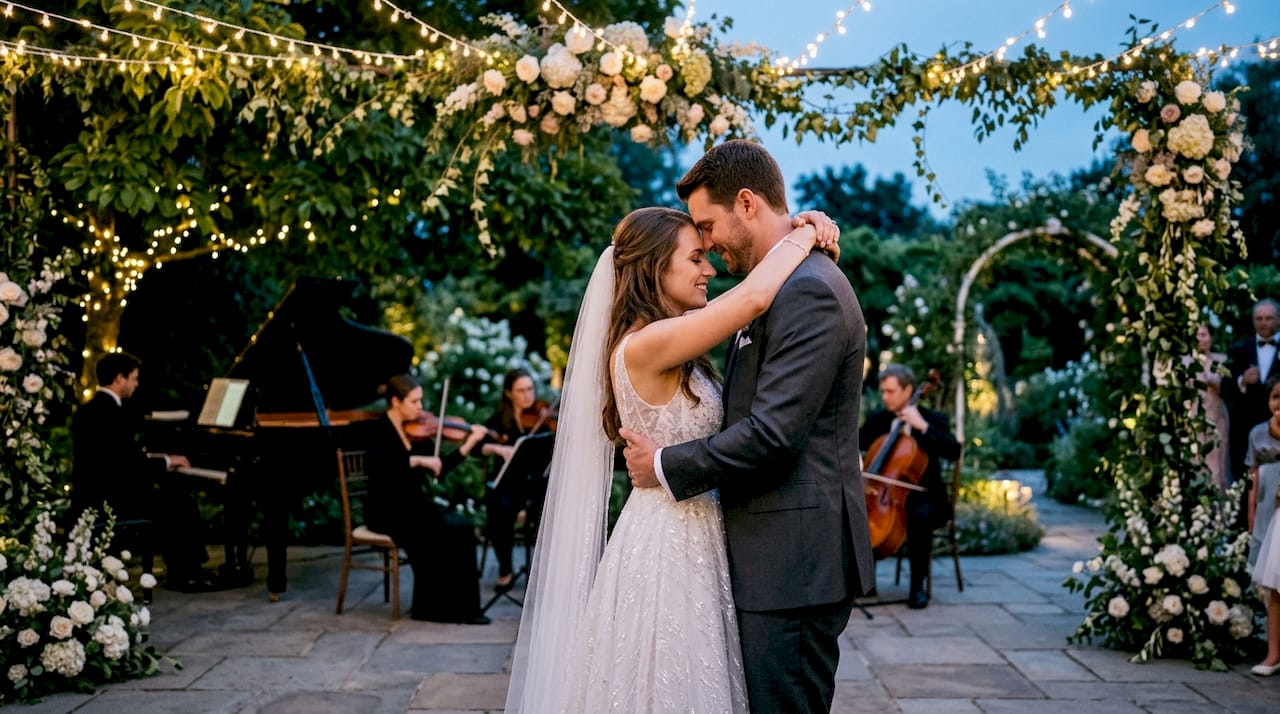
Music is the single most powerful tool for shaping the emotional atmosphere of your wedding day. Every tempo shift, every chord change, every pause between songs tells your guests how to feel and when to feel it. Research confirms that musical features like tempo and mode directly control perceived emotion with measurable precision. Understanding why music sets wedding mood gives you a planning advantage most couples overlook entirely.
Why music sets the wedding mood through tempo, mode, and energy
The science behind music and emotion is not abstract. A 2026 PLOS ONE study found that faster tempos up to 150 BPM rated significantly higher for vitality and lower for unease in major mode. That means a brisk, major-key processional does not just sound cheerful. It actively reduces anxiety in your guests and signals celebration.
Mode matters just as much as tempo. Major keys produce feelings of brightness and openness, while minor keys introduce depth, solemnity, or even melancholy. A minor-key prelude during the ceremony’s quiet waiting period creates reverence. Switching to a major-key recessional at 120 BPM signals pure joy. These are not stylistic preferences. They are emotional levers you can pull deliberately.
Beyond tempo and mode, spectral features shape how energizing a piece of music feels. A 2026 Scientific Reports study found that tempo and spectral flux predict perceived arousal with beta coefficients of 0.55 and 0.48 respectively. Spectral flux refers to how rapidly the sound’s frequency content changes. High spectral flux, common in percussion-heavy or layered arrangements, makes music feel more exciting and physically stimulating. This is why a string quartet playing a Bach prelude feels elegant rather than energizing, while a piano arrangement of a pop song with rhythmic variation feels alive.
Musical element | Emotional effect | Best wedding moment |
Fast tempo, major mode | High vitality, low unease | Recessional, first dance opener |
Slow tempo, major mode | Warmth, tenderness | Processional, first dance |
Slow tempo, minor mode | Solemnity, reverence | Prelude, candle lighting |
High spectral flux | Arousal, excitement | Cocktail hour transition, reception |
Pro Tip: When selecting ceremony music, choose pieces where the tempo matches the emotional pace you want guests to feel, not just the songs you love. A song you adore in a minor key at 60 BPM will create a very different atmosphere than the same melody arranged in a brighter key at 90 BPM.
How music cues shape the flow of your wedding day
A wedding is not one event. It is a sequence of distinct emotional states, each requiring a different musical approach. Music coordinates these transitions from ceremony to cocktail hour to reception, guiding guests from solemnity to warmth to celebration without anyone feeling jarred or lost.
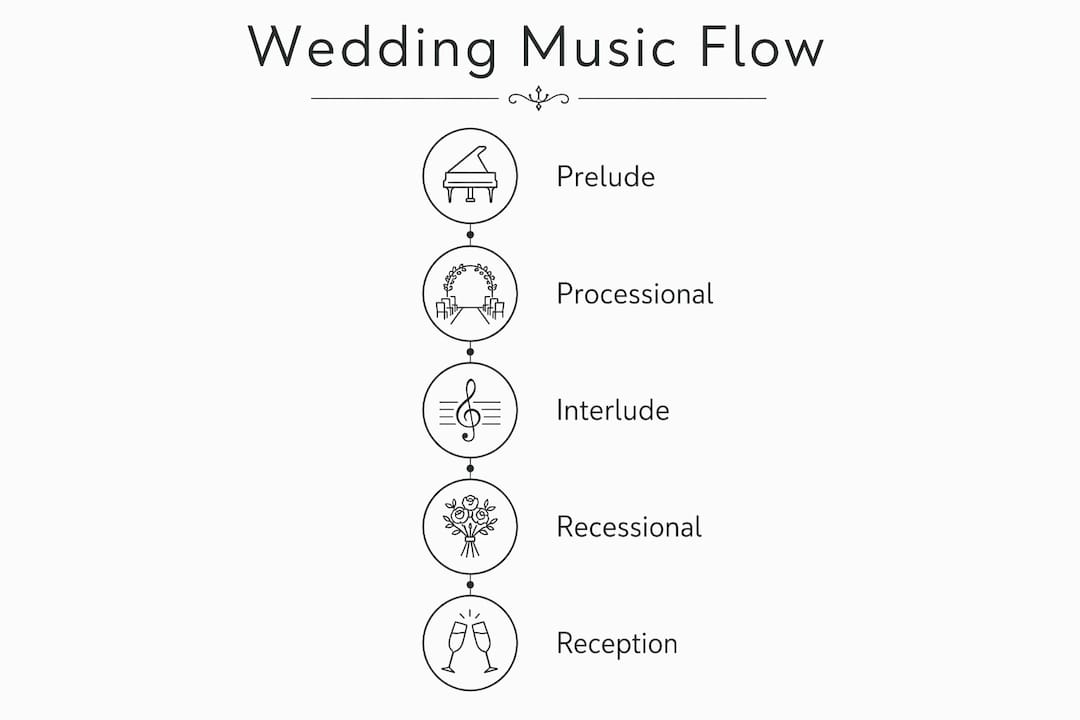
Here is how to think about the emotional arc of a typical wedding day and the music that serves each phase:
Prelude (30 minutes before the ceremony). Guests arrive and find their seats. Soft, mid-tempo instrumental pieces in major keys create a welcoming, calm energy. This is not background noise. It is the first emotional signal your guests receive.
Processional. The entrance of the wedding party and then the couple requires music that builds anticipation and signals significance. Tempo should feel measured and intentional, not rushed. A slower major-key piece with clear melodic structure works best here.
Ceremony itself. During readings, vows, and rituals, music either pauses entirely or plays softly underneath. The silence between musical moments is itself a tool. Music pacing shapes perceived timing, making moments feel longer or more comfortable depending on what precedes and follows them.
Recessional. This is the emotional release. Guests have been holding their breath through vows. The recessional should be bright, fast, and unambiguous in its joy. This is the moment for recessional songs that feel like a celebration erupting.
Cocktail hour. Energy should drop slightly from the recessional peak, then build gradually. Upbeat but conversational music keeps guests engaged without overwhelming conversation.
Reception and dinner. Music softens during dinner to allow speeches and conversation, then builds again toward dancing. Managing this arc requires either a skilled live musician or a very carefully sequenced playlist.
Pro Tip: Map your music choices against your event timeline before finalizing any song list. A great song in the wrong moment can flatten the emotional arc you have built across the entire day.
A well-planned music flow treats the wedding as a single continuous emotional experience rather than a series of disconnected moments. When music is planned this way, guests feel the day rather than just witness it.
Live music versus playlists: which sets the mood better?
The honest answer is that live music and playlists serve different functions, and the best weddings often use both strategically.
Where live music wins:
Adaptability in real time. Live musicians adjust tempo and dynamics when the flower girl stops halfway down the aisle or the officiant pauses longer than expected. A playlist cannot do this.
Emotional presence. A live performer creates a focal point and a sense of occasion that recorded music cannot replicate. Guests notice and respond to a live musician in the room.
Subtle mood control. The best wedding music works unnoticed, coordinating emotion rather than dominating the moment. A skilled live musician reads the room and adjusts without anyone realizing it.
Where playlists have advantages:
Consistency and cost. A curated playlist delivers exactly the same performance every time, with no risk of a musician having an off night.
Song-specific requests. If you need a specific recorded version of a song, a playlist delivers it precisely.
Extended coverage. Playlists work well for long cocktail hours or background dinner music where the emotional demands are lower.
Factor | Live musician | Playlist |
Real-time adaptability | High | None |
Emotional presence | Strong | Moderate |
Timing flexibility | Excellent | Fixed |
Cost | Higher | Lower |
Song variety | Depends on repertoire | Unlimited |
The impact of live performance on guest experience is measurable in how people talk about the wedding afterward. Guests rarely remember the playlist. They remember the pianist who played something unexpected and perfect during the cocktail hour.
Practical tips for choosing music that matches each wedding moment
Choosing music for your wedding is not about picking your favorite songs. It is about selecting pieces whose acoustic structure matches the emotional state you want to create at each specific moment. Emotion perception depends more on musical structure than on lyrics or personal familiarity, which means you have more flexibility than you think.
Assess the mood for each moment separately. Write down the emotion you want guests to feel during the processional, during dinner, and during the first dance. Then find music that matches those emotions acoustically, not just lyrically.
Build tempo continuity between adjacent moments. Jumping from a slow processional directly to high-energy cocktail music creates an emotional whiplash. Maintaining energy continuity between adjacent moments avoids jarring mood shifts. Transition gradually.
Do not let guest preferences override atmosphere. Incorporating requests is fine, but every song on your list should fit the emotional arc of the moment it plays in. A song that breaks the mood, even a beloved one, costs more than it gives.
Consider the processional music separately from everything else. This is the most emotionally loaded moment of the ceremony. It deserves its own dedicated decision, not a last-minute choice.
Coordinate with your vendors. Weddings with coordinated music planning among musicians, planners, and officiants run more smoothly and feel more emotionally coherent. Share your timeline and emotional intentions with your musician or DJ in advance.
Use R&B and soul strategically. These genres carry strong emotional resonance at weddings because of their emphasis on warmth, groove, and intimacy. They work especially well during cocktail hours and early reception.
Key takeaways
Music sets the wedding mood by controlling guests’ emotional responses through tempo, mode, and energy across every phase of the day.
Point | Details |
Tempo and mode drive emotion | Faster major-key music increases vitality; slower minor-key music creates solemnity. |
Each wedding phase needs its own music | Map songs to emotional states, not just personal favorites, for each moment. |
Live music adapts in real time | A live musician adjusts to timing changes and reads the room in ways a playlist cannot. |
Acoustic structure matters more than lyrics | Emotion comes from musical features, giving you flexibility in song selection. |
Coordination improves the whole day | Planning music with your musician, planner, and officiant creates a smoother emotional arc. |
What I have learned from playing hundreds of weddings
After performing at weddings across Southern California for years, the pattern I see most often is this: couples spend months choosing flowers and catering, then finalize their music two weeks before the wedding. The result is a beautiful venue with an emotional arc that never quite lands.
The couples whose weddings feel genuinely moving are the ones who treat music as a structural element, not decoration. They think about what they want guests to feel when they walk in, when the doors open for the processional, and when the first dance ends. They give their musician a timeline and a brief. They ask questions about tempo and key, not just song titles.
One thing I tell every couple I work with: the best wedding music is the kind no one consciously notices. Guests do not think “that was a great song.” They think “that moment was perfect.” That is what music does when it is chosen and performed well. It disappears into the experience and makes everything feel inevitable.
The misconception I hear most is that music is about personal taste. It is, partly. But the deeper truth is that music and wedding entertainment reflect who you are as a couple while simultaneously shaping how every guest in the room feels. Those two things are not in conflict. They require the same intentional planning.
— Petra
Bring your wedding’s emotional arc to life with Platinumpianist
Planning music that genuinely moves your guests requires more than a great song list. It requires a performer who understands pacing, reads the room, and adjusts in real time to keep the emotional arc intact from the first note to the last.
Platinumpianist brings a grand piano to your Southern California wedding and performs a fully customized set designed around your timeline and emotional intentions. Whether you need a solemn processional, a warm cocktail hour, or a reception that builds naturally toward celebration, Platinumpianist tailors every selection to the moment. If you are planning a wedding in the Los Angeles area, explore live pianist options or connect directly to discuss your vision. For Beverly Hills weddings, the Beverly Hills pianist page covers everything you need to know about booking live piano for your day.
FAQ
Why does music affect how guests feel at a wedding?
Music affects emotion through measurable acoustic features including tempo, mode, and spectral flux, which the brain processes in real time. Research confirms these features shape perceived mood reliably, independent of lyrical content or personal familiarity.
What tempo works best for a wedding processional?
A measured tempo in the range of 60 to 80 BPM in a major key creates the warmth and anticipation most couples want for the processional. Faster tempos signal celebration, while slower tempos signal solemnity.
Is live music better than a playlist for setting wedding mood?
Live music is more adaptable and emotionally present, adjusting to real-time timing changes that a fixed playlist cannot accommodate. Playlists work well for extended background coverage but cannot read the room the way a skilled musician can.
How many songs do I need for a wedding ceremony?
Most ceremonies require five to seven pieces covering the prelude, processional, any musical interludes, and the recessional. The exact number depends on ceremony length and whether music plays during rituals like the unity candle or ring exchange.
Can I use popular songs instead of classical music for my ceremony?
Popular songs work well in ceremonies when their acoustic structure matches the emotional tone of the moment. Because emotion comes from musical structure rather than genre, a pop song in the right key and tempo can be just as effective as a classical piece.
Recommended


