What Is a Wedding Reception Pianist? Your Hiring Guide
- Jun 7
- 8 min read
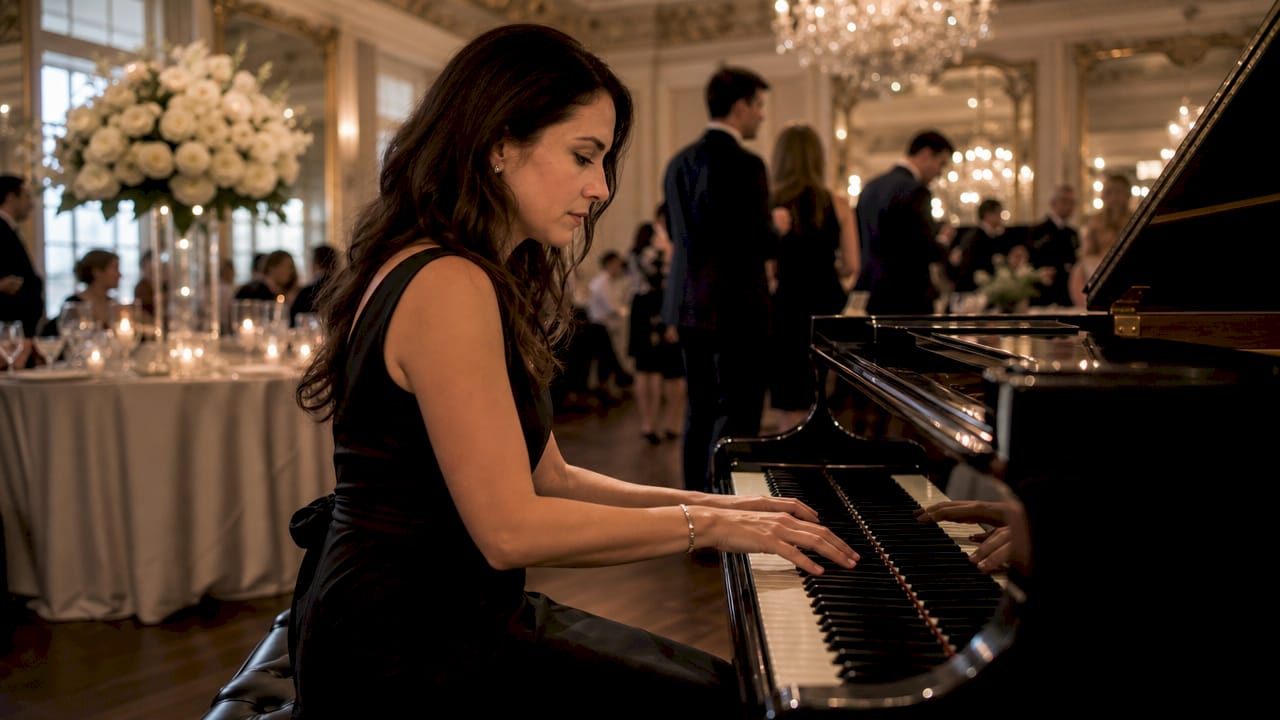
A wedding reception pianist is a professional live musician who performs instrumental piano music during your wedding reception to create atmosphere, set emotional tone, and personalize the event through real-time musical adaptation. Unlike a pre-recorded playlist, a live pianist reads the room, adjusts tempo, and responds to the energy of your guests in ways no speaker system can replicate. The difference is felt immediately. This guide covers the full role of a wedding pianist, music styles, booking logistics, costs, and what to ask before you sign a contract.
What does a wedding reception pianist actually do?
A wedding reception pianist performs across multiple phases of your event, not just one segment. Reception pianists typically cover the ceremony, cocktail hour, and wedding dinner as distinct performance sets, each requiring a different musical approach and energy level.
Here is what that looks like in practice:
Ceremony: Prelude music as guests are seated, processional pieces as the wedding party enters, and a recessional to close the ceremony on a celebratory note.
Cocktail hour: Background jazz, bossa nova, or light classical pieces that encourage conversation without overpowering it.
Wedding dinner: Dinner music that shifts between ambient and engaging, often including requests from the couple’s personal playlist.
Transitions: Fanfares, interludes, or extended pieces to fill gaps during toasts, cake cutting, or the first dance introduction.
A skilled pianist adjusts timing in real time to match the actual flow of your event. If the processional runs longer than expected, the pianist extends the piece. If the register signing takes an extra five minutes, the music fills that space without awkwardness. That kind of live responsiveness is what separates a pianist from a playlist.
Pro Tip: Ask your pianist to attend the rehearsal or at minimum walk through the ceremony timeline with your coordinator. Even 20 minutes of coordination prevents the most common timing errors.
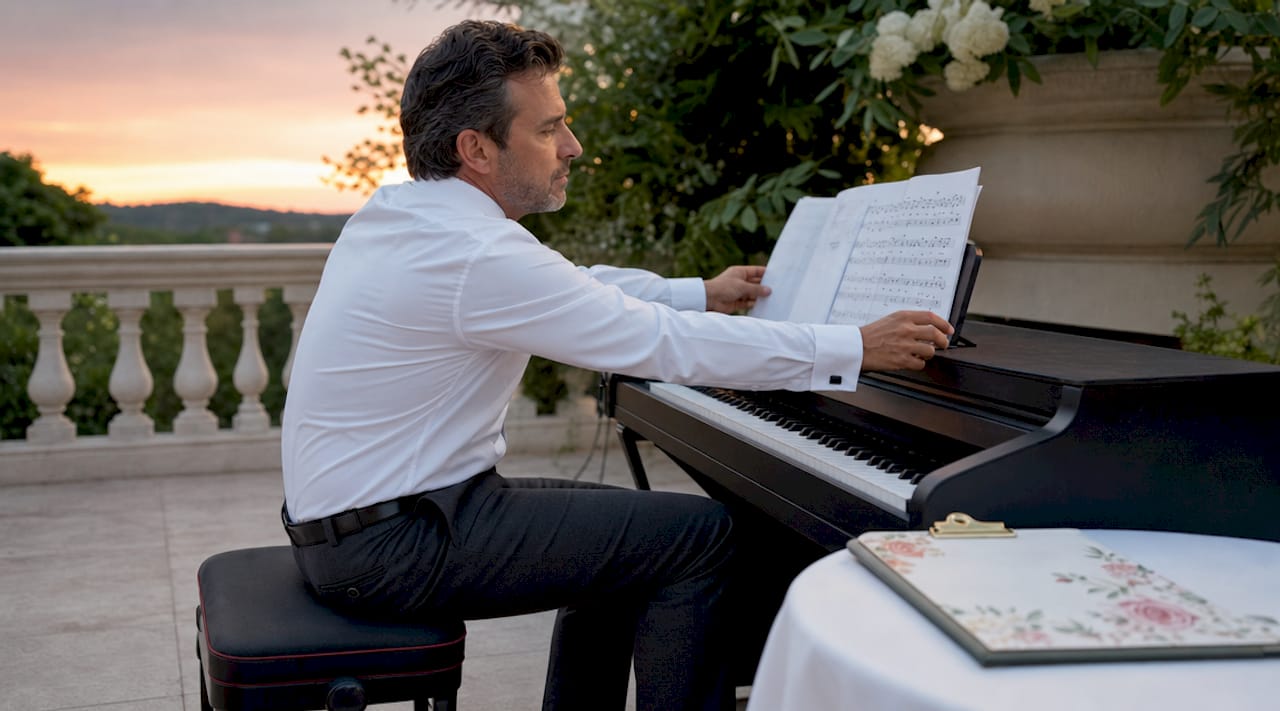
When covering both ceremony and cocktail hour back to back, pianists must coordinate instrument moves and resets efficiently. If the ceremony and reception are in different rooms or outdoor spaces, confirm this logistics detail early in your planning.
What music styles does a wedding pianist play?
A wedding pianist’s repertoire spans far more ground than most couples expect. Experienced pianists cover classical, jazz standards, instrumental pop, film scores, and personalized requests, often learning bespoke pieces for specific couples.
The most common style categories include:
Classical: Bach’s “Jesu, Joy of Man’s Desiring,” Pachelbel’s Canon, Debussy’s “Clair de Lune,” and Chopin nocturnes work beautifully for ceremonies and elegant dinner settings.
Jazz standards: Arrangements of Cole Porter, George Gershwin, and Bill Evans repertoire create a sophisticated cocktail hour atmosphere.
Instrumental pop and modern covers: Piano versions of Ed Sheeran, John Legend, Adele, or Coldplay give receptions a contemporary feel without the lyrics feeling intrusive.
Film scores: Hans Zimmer, John Williams, and Ennio Morricone pieces add cinematic depth to dinner music.
“The best wedding music feels like it was written for that exact moment. A pianist who knows your taste can make a Radiohead cover feel just as moving as a Beethoven sonata.”
Repertoire shifts from formal to celebratory as the event progresses, which is why you should share a detailed music brief with your pianist at least four weeks before the wedding. Include songs you love, songs you want avoided, and the general mood you are aiming for in each phase.
Piano with cello or saxophone adds a layer of sophistication that a solo pianist cannot achieve alone. If your venue is large or your guest list exceeds 150, a duo often fills the space more naturally than a solo instrument.
How to book a wedding reception pianist: costs and logistics
Booking a pianist for your wedding reception requires planning well ahead of your date. Popular pianists book 12 to 18 months in advance for peak season weekends, particularly May through October. If you are planning a Saturday wedding in summer, start your search the moment your venue is confirmed.
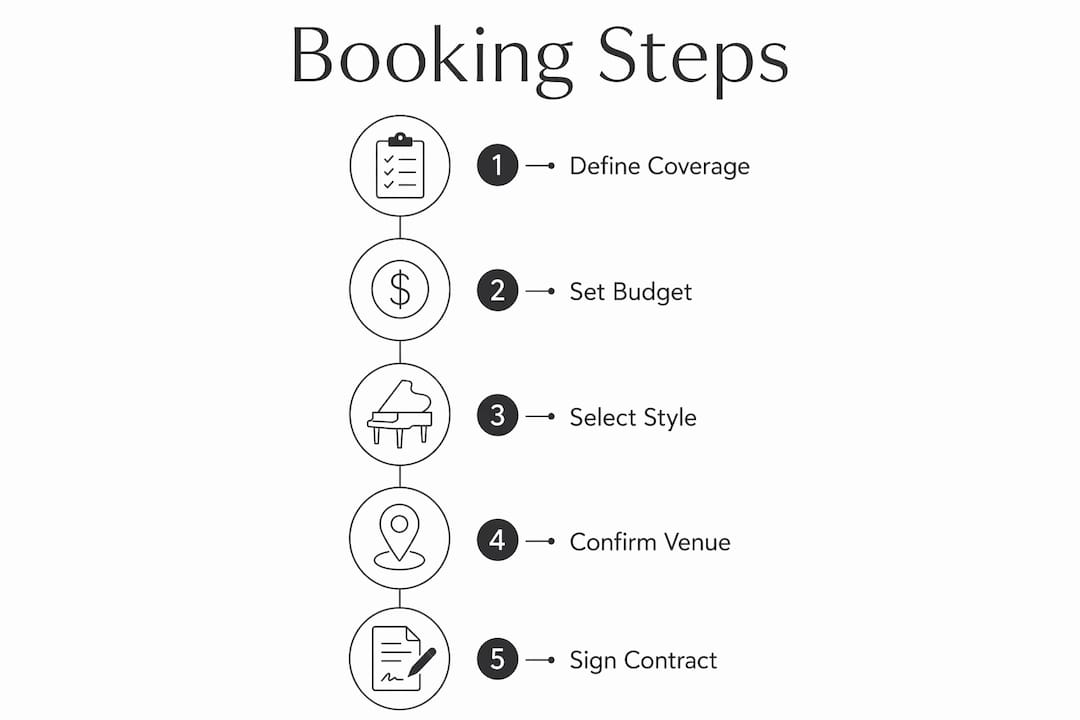
Here is a step-by-step approach to the booking process:
Define your coverage needs. Decide whether you need ceremony only, cocktail hour only, or full-day coverage including dinner. Each segment adds to the total cost and performance time.
Set a realistic budget. Package pricing varies by region and experience level. Package pricing examples show ceremony-only packages starting around a few hundred dollars, with full-day coverage running significantly higher depending on the market.
Confirm instrument logistics. Ask whether the pianist brings their own instrument. Many pianists bring professional digital pianos and PA systems when venues lack a suitable acoustic piano. Yamaha digital pianos, for example, replicate grand piano sound closely enough for most reception environments.
Review repertoire and request options. Ask for a sample setlist and confirm the process for adding custom requests. Most professional pianists accommodate three to five bespoke requests with advance notice.
Coordinate with other vendors. If you are hiring a DJ for the evening reception, confirm the handoff time and ensure the pianist and DJ have each other’s contact information.
Coverage segment | Typical duration | What to expect |
Ceremony only | 45 to 60 minutes | Prelude, processional, recessional |
Cocktail hour | 60 to 90 minutes | Background jazz or light classical |
Wedding dinner | 2 to 3 hours | Mixed repertoire, requests, ambient music |
Full day | 5 to 7 hours | All segments with breaks built in |
Pro Tip: Always ask whether the pianist has liability insurance and a signed contract. Verbal agreements are not sufficient for a professional booking at this price point.
For Southern California couples, reviewing a San Diego wedding pianist guide gives you region-specific advice on venues, outdoor setups, and local booking timelines.
Solo pianist, piano-vocalist, or instrumental duo: which fits your wedding?
The configuration you choose shapes the entire feel of your reception. Each option has a distinct impact on atmosphere, budget, and guest experience.
Configuration | Best for | Atmosphere | Relative cost |
Solo pianist | Intimate venues, elegant receptions | Refined, understated, timeless | Lowest |
Piano and vocalist | Couples wanting recognizable songs with lyrics | Emotional, personalized, engaging | Mid-range |
Piano and cello | Formal or classical-themed weddings | Rich, sophisticated, cinematic | Mid-range |
Piano and saxophone | Jazz-themed or upbeat cocktail hours | Lively, warm, festive | Mid-range |
Full piano duo | Large venues, 150+ guests | Full-bodied, versatile | Higher |
A solo pianist delivers timeless, intimate music that works in almost any setting. For smaller venues under 100 guests, a solo piano fills the room without overwhelming conversation. A piano-vocalist combination is the right choice when you want your first dance song performed live or when a specific lyric carries personal meaning for your relationship.
The ceremony to reception flow matters as much as the individual pieces. A duo that plays ceremony and cocktail hour creates a consistent sonic identity across the first two hours of your event, which guests notice even if they cannot articulate why.
Common misconceptions about hiring a wedding pianist
The biggest myth couples encounter is that every venue has a usable piano. Most do not. Hotel ballrooms may have a decorative upright that has not been tuned in years. Outdoor venues have no piano at all. Modern digital pianos emulate acoustic grands closely enough that a professional setup is indistinguishable to most guests, but you need to confirm this with your pianist before the contract is signed.
A few other misconceptions worth addressing:
“The pianist will just play background music.” A professional wedding pianist actively shapes the event. They watch for cues from your coordinator, adjust volume for speeches, and signal transitions.
“I can give the pianist a Spotify playlist and they will cover it.” Pianists need a written brief with specific song titles and the phase of the event each song belongs to. Vague direction produces generic results.
“Live music is always louder than a DJ.” A pianist with a properly calibrated PA system can play at conversation-friendly volumes that a DJ setup rarely achieves at low settings.
Pro Tip: Send your pianist a floor plan of the venue and the event timeline at least two weeks before the wedding. This single step eliminates the majority of day-of surprises.
Wedding reception music works best when planned as a deliberate musical arc from ceremony to reception, matching the shifting moods of the day. Couples who treat music as an afterthought typically end up with a disjointed experience that guests remember for the wrong reasons. The couples who brief their pianist thoroughly get a reception that feels cohesive from the first note to the last.
Key takeaways
A wedding reception pianist creates a live, adaptive musical experience that no playlist can replicate, making music selection and early booking the two highest-impact decisions in your wedding entertainment planning.
Point | Details |
Define coverage early | Decide which segments need live music before contacting any pianist. |
Book 12 to 18 months ahead | Peak season dates fill fast; early booking secures the best performers. |
Confirm instrument logistics | Most venues lack a quality piano; confirm your pianist brings their own. |
Brief your pianist in writing | A detailed music brief four weeks out produces a far better performance. |
Match configuration to venue size | Solo piano suits intimate settings; duos work better for 150-plus guests. |
Why live piano is the detail most couples underestimate
I have performed at hundreds of weddings across Southern California, and the pattern I see most often is this: couples spend months on florals and catering, then treat music as a last-minute checkbox. The result is a reception that looks beautiful but feels flat.
Live piano does something recorded music cannot. It responds. When a toast runs long, I extend the interlude. When guests start moving toward the dance floor, I shift the energy. When the couple shares their first dance, I play the version of that song that fits the exact tempo of how they are moving together. That kind of responsiveness is not a feature you can add to a Spotify playlist.
The other thing I have learned is that piano suits upscale weddings not because it is expensive, but because it is human. Guests feel the difference between a room with a live musician and a room with speakers, even if they never consciously register why. The energy is different. The attention is different. The memory is different.
My honest advice: prioritize live music the same way you prioritize your photographer. Both capture the emotional truth of your wedding day. One does it in images, the other does it in sound.
— Petra
Live piano for your Southern California wedding with Platinumpianist
Platinumpianist brings professional live piano entertainment directly to your wedding venue across Southern California, including Los Angeles, Orange County, San Diego, and Beverly Hills. Petra brings her own high-quality instrument to every event, so you never have to worry about venue piano availability or sound quality.
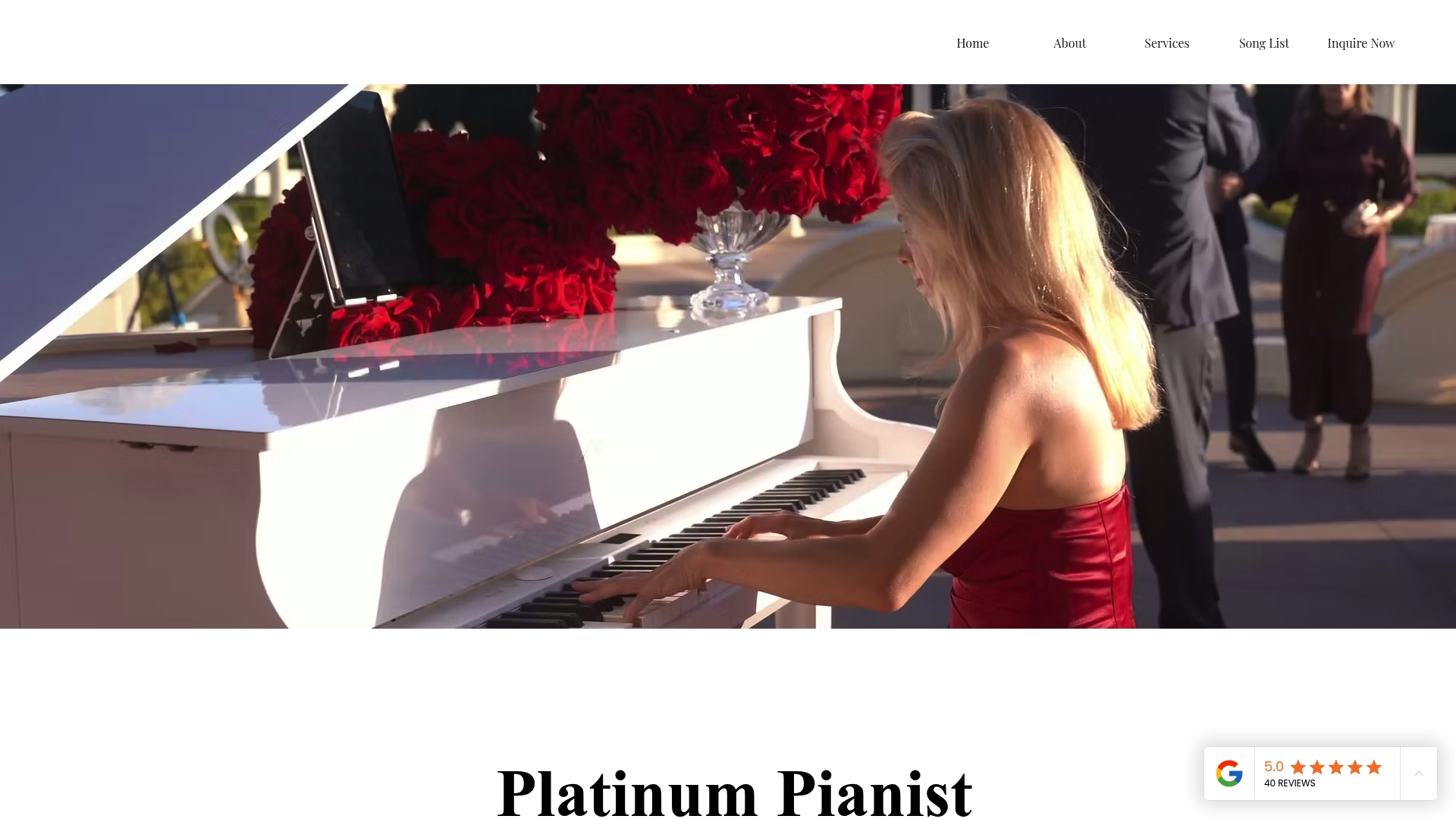
Every package is customized to your event timeline, music preferences, and venue layout. Whether you need ceremony coverage only or a full day of live music from processional through dinner, Platinumpianist delivers a polished, personalized performance. Explore wedding pianist services to review package options, listen to performance samples, and check availability for your date.
FAQ
What is a wedding reception pianist?
A wedding reception pianist is a professional musician who performs live piano music during your wedding reception to create atmosphere and adapt the musical experience to the event’s flow. Unlike a DJ or playlist, a live pianist responds in real time to the energy of the room and the timing of the event.
How much does a pianist for a wedding reception cost?
Pricing varies by region, experience, and coverage. Ceremony-only packages typically start at a few hundred dollars, while full-day coverage including ceremony, cocktail hour, and dinner runs significantly higher. Always request an itemized quote that specifies which segments are included.
Do I need to provide a piano at my venue?
No. Most professional pianists bring their own instrument. Many use high-quality Yamaha digital pianos with PA systems that replicate acoustic grand piano sound and work equally well indoors and outdoors.
How far in advance should I book a wedding pianist?
Book 12 to 18 months ahead for peak season weekend dates. Popular pianists fill their calendars quickly, and last-minute availability is rare for Saturday weddings between May and October.
What piano songs work best for a wedding reception?
Classical pieces like Debussy’s “Clair de Lune” and Pachelbel’s Canon suit ceremonies and elegant dinners. Jazz standards and instrumental pop covers work well for cocktail hours. The best approach is to share a written brief with your pianist covering your preferred genres and any specific songs you want included or avoided.
Recommended
