What Does a Wedding Musician Provide for Your Day
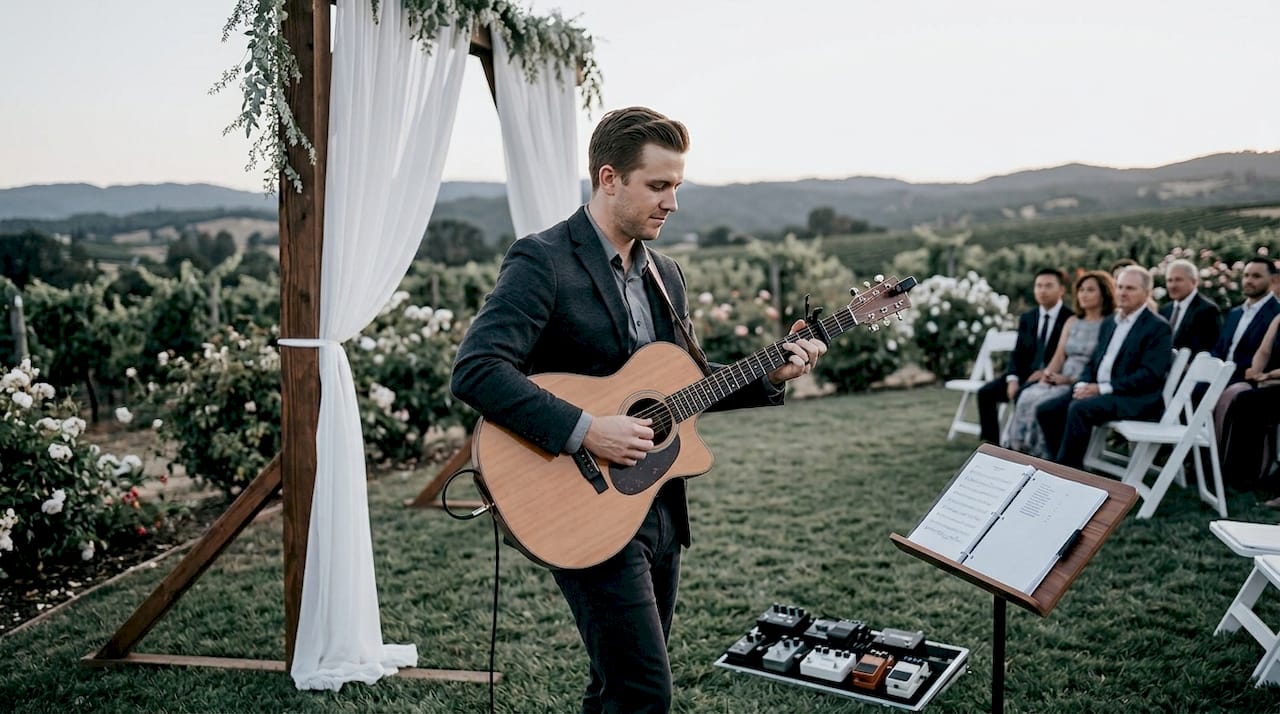
A wedding musician provides live, adaptive, and personalized musical performance that shapes the atmosphere, timing, and emotional arc of your entire wedding day. This goes far beyond playing a set list. Professional wedding musicians manage event flow, read the room in real time, coordinate with vendors, and deliver a curated sound experience across every segment of your celebration. Whether you hire a solo pianist like Platinumpianist, a string duo, or a full band, understanding the full scope of their services helps you make smarter decisions and get more from your investment.
What does a wedding musician provide as core services?
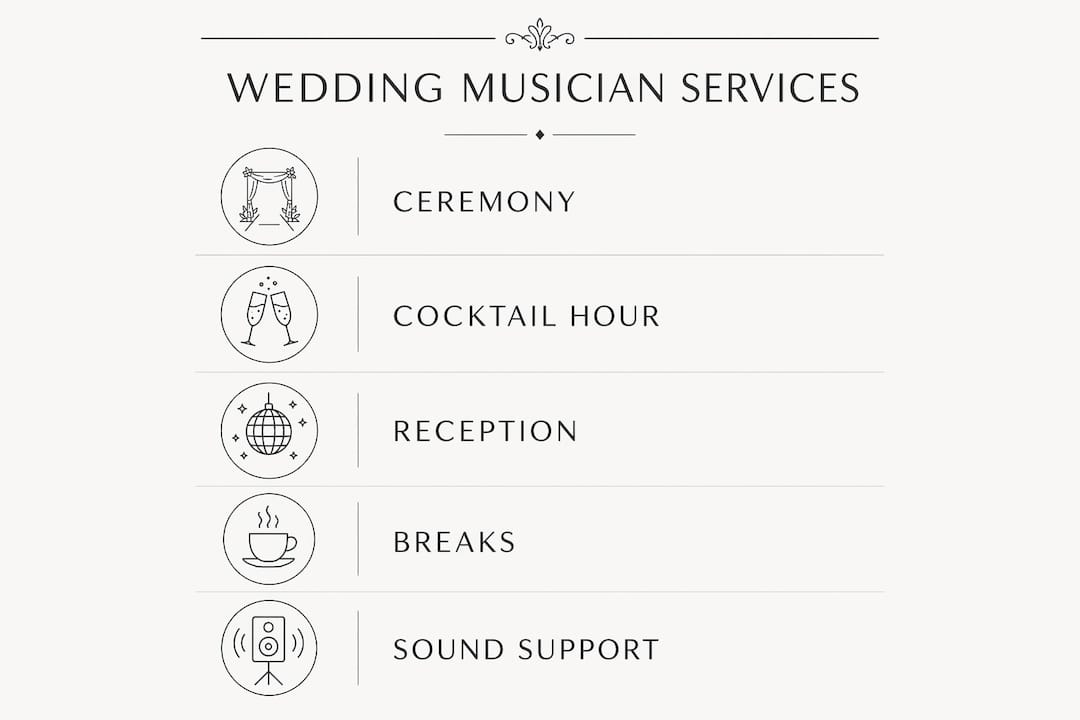
A wedding musician’s services cover multiple wedding segments, typically including ceremony music, cocktail hour, reception sets, and background music during breaks or the rehearsal dinner. Each segment has a distinct purpose, and a skilled musician treats them as separate performance environments, not one long gig.
The core services you can expect from a professional wedding musician include:
Ceremony music: Prelude music as guests are seated, processional for the wedding party, the bridal entrance, any musical interludes during the ceremony, and the recessional as the couple exits.
Cocktail hour: Ambient, conversational background music that keeps energy warm without overpowering guests who are mingling and eating.
Reception sets: Higher-energy performances timed around dinner, toasts, first dance, parent dances, and open dancing.
Break coverage: Pre-curated playlists or DJ support to maintain mood continuity during musician breaks, so there are no awkward silences.
Many professional musicians also bring their own sound and PA equipment as part of their package. This matters because audio quality directly affects how your guests experience the performance. Platinumpianist, for example, brings her own piano to events across Southern California, which removes a major logistical variable for couples and venues alike.
Pro Tip: Ask your musician whether their sound package includes a dedicated sound technician or if they self-manage levels. Sound mixing management across multiple segments requires real technical attention, and it affects every moment your guests hear music.
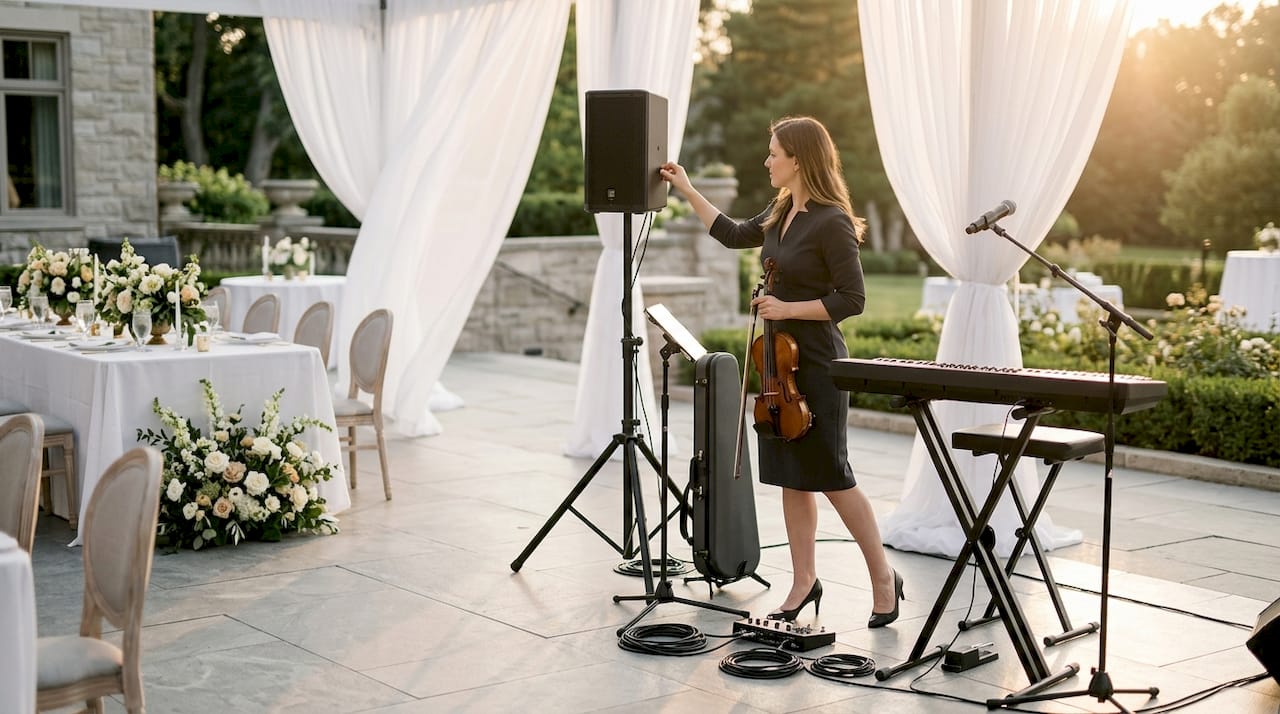
Live musicians also enhance guest engagement in ways a static playlist simply cannot replicate. A musician can hold a note longer during a slow processional, shift tempo when the dance floor fills up, or quietly fade out when the officiant signals the start of vows. That responsiveness is the defining advantage of live performance.
How wedding musicians tailor their performance to each segment
The style, energy, and instrumentation a wedding musician uses shifts significantly from one segment to the next. Understanding those differences helps you communicate your vision clearly during the planning process.
Wedding segment | Musical style | Typical instrumentation |
Ceremony | Soft, intimate, solemn | Solo piano, string quartet, acoustic guitar |
Cocktail hour | Warm, light, conversational | Piano duo, jazz trio, acoustic solo |
Reception dinner | Elegant, mid-tempo, background | Piano, small ensemble |
Reception dancing | High energy, dynamic, crowd-driven | Full band, piano with rhythm section |
Different ensembles suit different moments: soloists work best for intimacy and subtlety, small groups add texture and warmth, and full bands deliver the energy needed for a dance-floor finale. Choosing the right format for each segment is as important as choosing the right songs.
During the ceremony, music carries emotional weight that no other element can replicate. The moment your guests hear the first notes of the processional, the mood shifts. A skilled musician reads that room and adjusts dynamics accordingly, playing softer if the space is small and acoustically live, or with more presence in an outdoor venue where sound dissipates quickly.
The cocktail hour is where many musicians shine in ways couples don’t anticipate. Jazz standards, bossa nova, and acoustic pop create a social atmosphere without demanding attention. Guests feel the music without being distracted by it. This is also where a musician’s repertoire depth matters most, since a two-hour cocktail hour requires variety and judgment about when to shift styles.
Pro Tip: For the reception, discuss energy pacing with your musician before the day. The best performers adjust tempo and style in real time based on how the crowd responds, not just a pre-set list. Give them permission to make those calls.
The ceremony to reception flow is one of the most underplanned aspects of wedding music. A professional musician understands how to carry the emotional thread from one segment to the next, so your day feels cohesive rather than disjointed.
What operational responsibilities do professional musicians handle?
The behind-the-scenes work a professional wedding musician handles is where experience separates good performers from great ones. Most couples focus on song choices and miss the operational layer entirely.
Run-sheet management: Musicians track the timeline and adapt when speeches run long, dinner service is delayed, or the first dance gets moved. Run-sheet drift is one of the most common wedding-day problems, and experienced musicians mitigate it through preparation and communication.
Vendor coordination: Your musician communicates with your wedding planner, venue coordinator, and other vendors before and during the event. They confirm load-in times, sound check windows, and cue signals so everyone is aligned.
Technical setup and sound check: A professional arrives early to set up equipment, test levels, and confirm microphone coverage for the officiant, toasts, and any live vocal performances.
Break planning: Wedding bands require breaks and typically perform four to seven songs before resting. A professional musician prepares vibe-matched playlists or coordinates with a DJ to cover those gaps without losing momentum.
Contingency planning: Weather changes, technical failures, and last-minute venue shifts happen. Experienced musicians arrive with backup plans, spare cables, and the flexibility to adapt without disrupting your guests.
This operational layer is why hiring live musicians means hiring event management skills alongside musical talent. The music is the visible output. The coordination, timing, and problem-solving are what make it look effortless.
What to expect when hiring a wedding musician
Booking a wedding musician involves more than picking songs. The planning conversation you have before the day determines how well the performance fits your vision.
Here is what to cover when you meet with a prospective musician:
Musical preferences and must-play songs: Share your ceremony selections, first dance song, and any songs you want excluded. A good musician will tell you honestly if a request is outside their range or style.
Timeline and segment breakdown: Walk through your full wedding day schedule so the musician understands how much time each segment requires and where transitions happen.
Venue constraints: Outdoor venues, noise ordinances, and acoustically challenging spaces all affect sound setup. Confirm whether the venue allows amplification and what the load-in logistics look like.
Equipment and sound requirements: Ask whether the musician provides their own PA system and whether a sound technician is included. For larger venues, dedicated audio technical support is not optional.
Pricing and package structure: Pricing varies by ensemble size and service bundles. Soloists cost less than full bands, and combining ceremony and reception coverage into one package often yields better value than booking separately.
Experience with weddings specifically: Ask how many weddings they have performed and whether they have worked at your venue before. Wedding-specific experience means the musician understands cues, timing, and the emotional stakes in a way that general performers may not.
You should also ask about their contingency plan if they become ill or face a technical failure. A professional musician has a clear answer to this question. If they hesitate, that tells you something important about their level of preparation.
The importance of music at a Los Angeles wedding, for example, extends to venue selection itself. Some of the city’s most popular venues have specific acoustic profiles that favor certain instrumentation. Knowing this before you book saves costly surprises.
Key takeaways
A wedding musician provides live performance, event coordination, sound management, and real-time musical adaptation across every segment of your wedding day.
Point | Details |
Services span multiple segments | Ceremony, cocktail hour, reception, and breaks each require distinct musical approaches. |
Equipment provision matters | Confirm whether your musician brings their own PA and manages sound mixing across segments. |
Operational skills are non-negotiable | Run-sheet management, vendor coordination, and contingency planning are part of the job. |
Ensemble size affects cost and energy | Soloists suit intimate moments; full bands deliver dance-floor energy; bundled packages offer savings. |
Pre-event communication is critical | Discuss timelines, song preferences, venue constraints, and backup plans before the wedding day. |
Why wedding musicians are more than performers
When couples ask me what a wedding musician actually does, I tell them to think of it this way: the music is what your guests hear, but the real work is everything that makes the music land at exactly the right moment.
I have performed at weddings where the timeline shifted by forty minutes because the ceremony ran long. No one in the audience knew, because I adjusted the cocktail hour set in real time, extended certain pieces, and communicated with the planner through discreet cues. That kind of adaptability is not something you can hear on a demo recording. It only shows up on the day.
The biggest misconception I see couples carry into the planning process is that hiring a musician means handing over a song list and showing up. The couples who get the most out of live music are the ones who treat their musician as a collaborator. They share the full run of show, discuss the emotional arc they want, and give the musician room to make real-time decisions.
One thing I would push back on is the idea that a full band is always the premium choice. For many weddings, especially intimate ceremonies or elegant cocktail hours, a solo pianist creates a more powerful atmosphere than a six-piece band. The right choice depends on your venue, your guest count, and the feeling you want to create. Bigger is not always better. More intentional usually is.
— Petra
Bring your wedding to life with Platinumpianist
Platinumpianist offers professional wedding music for ceremonies, cocktail hours, and receptions across Southern California. Petra brings her own piano to every event, handles all sound setup, and works directly with your planner to keep the day on schedule and on tone. Whether you are planning an intimate garden ceremony or a grand Beverly Hills reception, her live piano performances are tailored to your timeline, your song choices, and your guests. Reach out to discuss your date, your venue, and how live music can shape every moment of your celebration.
FAQ
What services does a wedding musician typically provide?
A wedding musician provides live music for ceremony, cocktail hour, and reception segments, along with sound equipment setup, real-time performance adjustments, and coordination with your wedding planner and venue.
Do wedding musicians bring their own sound equipment?
Many professional wedding musicians include a PA system and sound setup in their package. Always confirm this before booking, and ask whether dedicated sound mixing is included or self-managed.
How many songs does a wedding musician need to know?
The number varies by musician and package, but a professional should cover your must-play requests and maintain a broad enough repertoire to fill each segment without repeating songs. Discuss your full timeline and song preferences during the planning conversation.
What happens during a wedding band’s breaks?
Wedding bands typically perform four to seven songs before taking a short break. Professional musicians prepare vibe-matched playlists or coordinate with a DJ to maintain music continuity so guests never notice the gap.
How much does a wedding musician cost?
Pricing depends on ensemble size, number of segments covered, and whether equipment is included. Soloists are generally less expensive than full bands, and bundled ceremony and reception packages often offer better value than booking each segment separately.
Recommended


