Wedding Music Ceremony to Reception Flow Guide
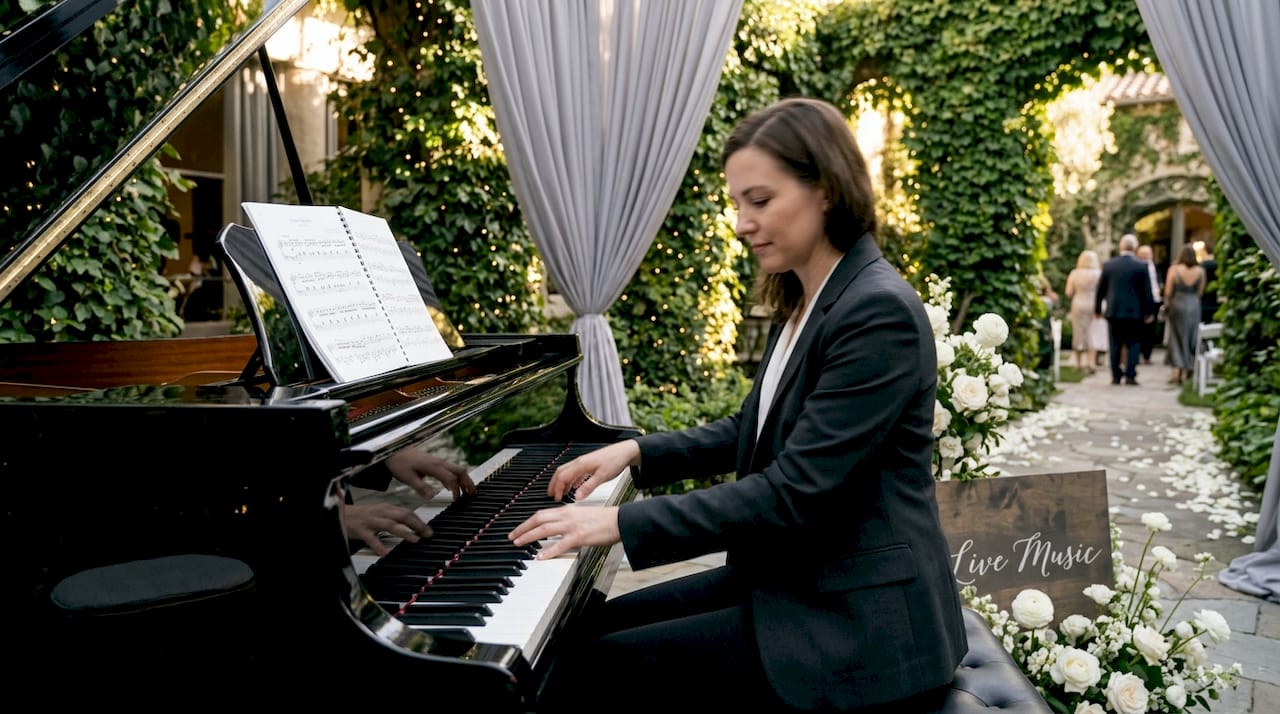
Wedding music ceremony to reception flow is the strategic sequencing of every musical moment from the first guest’s arrival through the final dance, designed to guide your guests through a coherent emotional experience. Most couples spend hours choosing their dress or venue but give music planning less than a week. That’s a mistake. The right flow transforms a collection of events into a single, felt story. This guide covers every phase, from the prelude through open dancing, with practical timing advice, song selection tips, and coordination strategies you can use right now.
What is wedding music ceremony to reception flow?
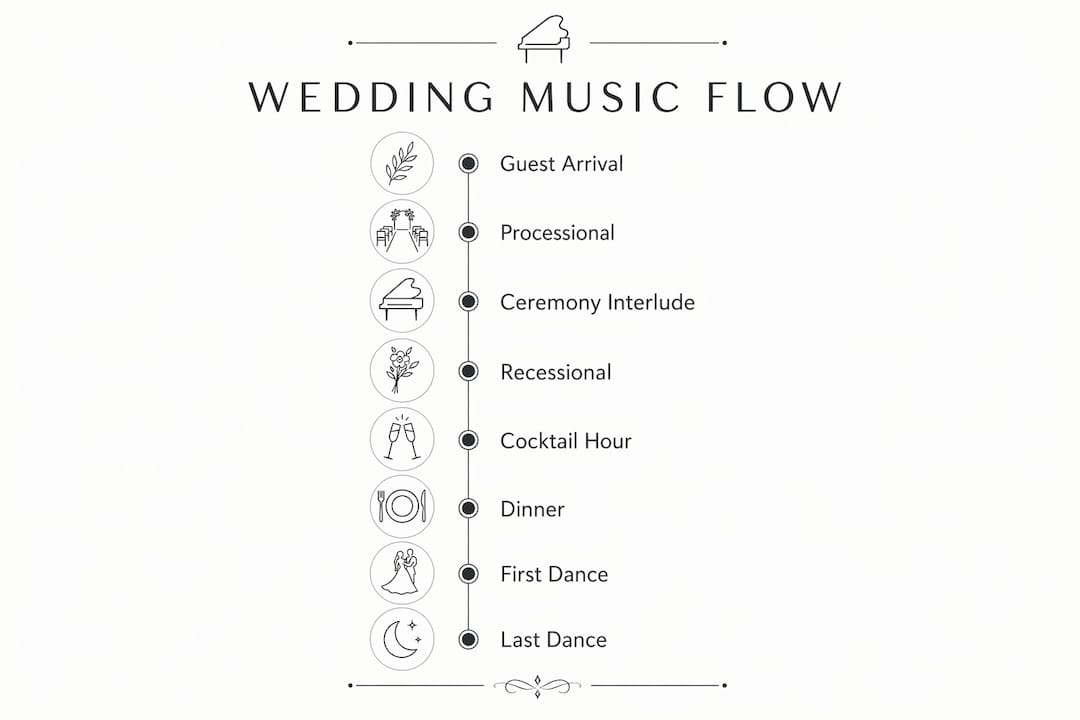
The wedding music ceremony to reception flow is the planned progression of distinct audio moments, each with its own mood and function, that connect your ceremony and reception into one continuous experience. A common structure includes a prelude of 15 to 30 minutes, a ceremony of 20 to 45 minutes, and then a postlude or bridge leading directly into the cocktail hour. Think of it less like a playlist and more like a film score. Each section sets a specific emotional tone that prepares guests for what comes next.
The phases most couples need to plan are:
Prelude (15 to 30 min): Background music as guests find their seats. Sets the overall mood and signals the formality of the day.
Processional: The emotional peak of the ceremony. Music must match the pace and length of the walk.
Ceremony music: Optional readings or instrumental interludes during the service itself.
Recessional: Celebratory exit music that shifts the energy from reverent to joyful.
Cocktail hour (45 to 60 min): Transition music that bridges the solemnity of the ceremony with the energy of the reception.
Grand entrance: A high-energy announcement moment for the wedding party and couple.
First dance and special dances: Intimate, focused moments requiring specific song choices.
Dinner music: Conversational background that keeps energy present without overpowering speech.
Open dancing: High-tempo celebration music that carries guests through the night.
Varying tempo and mood across these phases is not optional. A reception that jumps from a solemn recessional directly into loud dance music without a cocktail hour buffer will feel jarring. The emotional arc matters as much as the individual songs.
How do you plan and coordinate music timing and transitions?
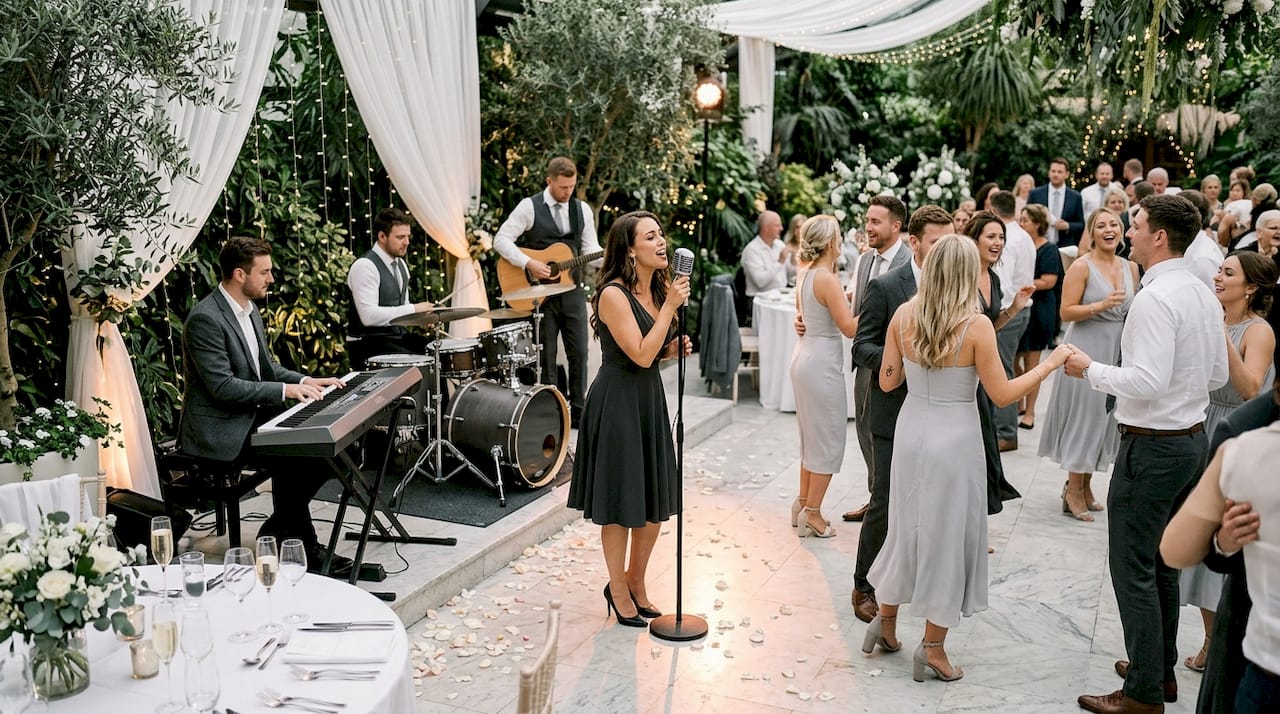
Smooth coordination is what separates a wedding that feels polished from one that feels scattered. Abrupt transitions pull guests out of the moment, so the goal is always gentle cues rather than hard stops and announcements.
Follow these steps to build a tight coordination plan:
Create a detailed cue sheet. List every song title, the start cue (what triggers it), the duration, fade instructions, and a backup option. Cue sheets listing every song and its fade instructions are the tools professional musicians rely on to execute flawless weddings. Your DJ or musician needs this document at least two weeks before the event.
Assign a single timing point person. Couples should avoid juggling timing questions during cocktail hour. Assign your wedding coordinator or a trusted vendor as the single contact who cues the DJ or musician for each transition. This frees you to be present in the moment.
Account for venue logistics. Separate audio setups are often necessary when ceremony and reception happen in different spaces. Cocktail hour music should begin the moment guests enter that space, not after a DJ has reset equipment. Confirm with your venue whether this requires a second sound system.
Build in buffer time. Weddings rarely run exactly on schedule. Add 10 to 15 minutes of buffer to each major transition, especially between the ceremony end and the grand entrance.
Use volume fades and mood matching for transitions. When moving from cocktail hour to dinner, plan a slight energy increase to signal the call to dinner, then settle into a warmer, quieter vibe once guests are seated.
Establish clear signals for key moments. Your officiant, coordinator, or a designated groomsman should give a physical or verbal signal to the musician before the recessional begins. Never rely on the musician to guess.
Rehearse the processional timing. A bridal party of eight with a 60-foot aisle may need six to eight minutes of continuous processional music. Walk the aisle yourself during rehearsal and time it.
Pro Tip: Send your cue sheet to every vendor involved in music, not just your DJ or musician. Your photographer and videographer use it too, so they know exactly when to position themselves for key moments.
What are expert tips for selecting songs that support flow?
Song selection is where most couples focus, but the real skill is in choosing music that serves the phase it belongs to, not just music you love in isolation.
Live musicians can adapt better to timing changes, while recorded music offers consistent selections. Many couples use a hybrid approach: live piano or string quartet for the ceremony and cocktail hour, then a DJ for the reception. This combination gives you emotional warmth during intimate moments and reliable energy during dancing. For guidance on choosing processional music specifically, the key is matching the song’s tempo to your walking pace before you fall in love with a title.
Here are the selection principles that actually hold up on the day:
Choose a consistent sonic theme. If your ceremony features classical piano, a hard rock grand entrance will feel disconnected. Decide early whether your day is classical, contemporary, jazz-influenced, or acoustic, then filter every song choice through that lens.
Match tempo to the event phase. Slow and melodic for the prelude and first dance. Moderate and conversational for cocktail hour and dinner. High-energy for open dancing.
Avoid songs that are too short for their role. A processional song that ends before the last bridesmaid reaches the altar creates an awkward silence. Check the song’s runtime against your actual aisle length and party size.
Plan a do-not-play list. Give your DJ or musician a written list of songs to avoid. This prevents well-meaning requests from derailing your carefully planned atmosphere.
Balance personal favorites with crowd-pleasers. Your first dance should be deeply personal. Your open dancing playlist should keep a 150-person crowd moving. These are different goals and require different song logic.
Designate formal songs for key moments. The processional, first dance, father-daughter dance, and cake cutting each need a pre-selected song. Do not leave these to improvisation.
Cocktail hour music works best when it shifts style toward lively jazz, light pop, or acoustic love songs. This maintains an elevated vibe while giving guests room to talk. For recessional song ideas that match different wedding styles, the rule is simple: choose something that makes you want to run down the aisle smiling.
Pro Tip: Listen to every song you select from start to finish, not just the chorus. Intros, outros, and lyric content in verses can create unintended moments if you only know the hook.
How to build a wedding music timeline
A sample timeline gives you a working framework. Adjust the durations based on your ceremony length, dinner style, and venue layout.
Time | Phase | Music Style | Duration |
60 min before ceremony | Guest arrival prelude | Soft instrumental or acoustic | 30 to 60 min |
Ceremony start | Processional | Chosen processional song(s) | 5 to 10 min |
During ceremony | Ceremony interludes | Optional instrumental pieces | 5 to 15 min |
Ceremony end | Recessional | Upbeat celebratory song | 3 to 5 min |
Cocktail hour | Transition and mingling | Jazz, acoustic pop, or light classical | 45 to 60 min |
Reception start | Grand entrance | High-energy announcement song | 2 to 3 min |
Post-entrance | First dance and special dances | Selected personal songs | 10 to 20 min |
Dinner service | Background dinner music | Soft instrumental or curated playlist | 60 to 90 min |
Post-dinner | Open dancing | High-energy pop, R&B, or genre of choice | 90 to 120 min |
Venues and dinner styles determine actual timing, and weddings rarely run exactly on schedule. Build cushion into every transition. Share this timeline with your DJ or musician, your wedding coordinator, your caterer, and your photographer at least two weeks out. When everyone works from the same document, delays get absorbed rather than compounded.
If events run early, your musician or DJ should have a list of filler songs ready for each phase. If events run late, know in advance which moments are non-negotiable (first dance, cake cutting) and which can be shortened (extended cocktail hour, extra dinner songs).
Common mistakes couples make in music planning
Most music problems on a wedding day trace back to decisions made weeks earlier, not the day itself.
Skipping the prelude. Guests who arrive to silence feel uncertain and awkward. A 20-minute prelude costs nothing extra and immediately signals that the event is well-organized.
Not coordinating timing cues. If your musician does not know when to start the processional, they will guess. Sometimes they guess wrong. A physical cue from your coordinator eliminates this entirely.
Choosing songs without checking length. A three-minute processional song for a party of ten walking a 100-foot aisle will end before everyone is seated. Always time the walk first.
Ignoring venue audio challenges. Outdoor ceremonies, multi-room venues, and spaces with hard surfaces all create different acoustic problems. Visit the venue with your musician or DJ before the wedding day.
Overloading the playlist with conflicting genres. Switching from classical to hip-hop to country within a single dinner hour pulls guests in too many directions. Pick a lane and stay in it, with gradual energy shifts rather than sharp genre pivots.
Failing to assign a day-of timing coordinator. A clear timeline point person frees couples to enjoy their wedding while ensuring DJs and vendors execute the music flow correctly. Without one, timing questions land on the couple during moments they should be savoring.
No contingency plan. Equipment fails. Songs skip. Have backup files, a second device, and at least two alternative songs for every key moment.
Key takeaways
Thoughtful wedding music flow requires a detailed cue sheet, a single timing coordinator, and song selections matched to the emotional purpose of each phase.
Point | Details |
Plan every phase in advance | Map prelude through last dance with specific songs, durations, and cues before the wedding day. |
Assign one timing coordinator | One point person for all music cues prevents confusion and keeps vendors synchronized. |
Match song tempo to phase | Slow for ceremony, moderate for cocktail hour and dinner, high-energy for open dancing. |
Use a cue sheet for all vendors | Share the full timeline with your DJ, musician, photographer, and caterer at least two weeks out. |
Build in buffer time | Add 10 to 15 minutes of cushion at each major transition to absorb natural delays. |
What I’ve learned from planning hundreds of wedding soundtracks
After performing at weddings across Southern California for years, the pattern I see most often is this: couples who plan their music flow in detail have a noticeably different day than those who leave it loose. Not because every song lands perfectly, but because the structure gives everyone, including the couple, permission to relax.
The moment I see most often go wrong is the gap between the recessional and the cocktail hour. Guests spill out of the ceremony space, and there is nothing playing. That silence lasts maybe 90 seconds, but it feels like ten minutes. It signals disorganization even when everything else is flawless. Starting cocktail hour music the second guests enter that space costs nothing and changes everything.
I also think couples underestimate how much live music changes the emotional register of a room. Recorded music fills space. Live music fills people. There is a responsiveness to a live performance that a playlist cannot replicate. A pianist can read the room and slow down during a tender toast or lift the energy when guests start drifting. That flexibility is worth planning for.
My honest advice: spend one focused afternoon building your cue sheet, assign your coordinator, and then let go. The music will carry the day if you have done the work upfront. For a deeper look at how to sequence your reception entertainment, the principles are the same whether you are in Orange County or anywhere else in Southern California.
— Petra
How Platinumpianist can bring your wedding music to life
Platinumpianist specializes in live piano entertainment for weddings across Southern California, bringing a grand piano to your venue for ceremony, cocktail hour, and reception. Every performance is customized to your musical style, timeline, and venue layout, with full coordination alongside your DJ, planner, and caterer.
Whether you need a classical processional, a jazz-inflected cocktail hour, or a pop-driven dinner set, Platinumpianist builds a program that fits your day from the first note to the last. Explore wedding music services to see sample playlists, hear recordings, and start planning your ceremony to reception flow with a live musician who understands every phase of your day.
FAQ
What is wedding ceremony music flow?
Wedding ceremony music flow is the planned sequence of songs covering the prelude, processional, any ceremony interludes, and the recessional. A typical ceremony runs 20 to 45 minutes, with each musical moment serving a distinct emotional function.
How long should cocktail hour music last?
Cocktail hour music typically runs 45 to 60 minutes and should begin the moment guests enter the cocktail space. Live musicians often shift to lively jazz or acoustic pop here to bridge the ceremony’s solemnity with the reception’s energy.
How do I avoid awkward silences between ceremony and reception?
Assign a timing coordinator and confirm that your musician or DJ has a separate audio setup ready for the cocktail space before the ceremony ends. Cocktail hour music should start immediately as guests arrive, not after equipment is reset.
How many songs do I need for a wedding processional?
The number depends on your bridal party size and aisle length. A party of eight with a 60-foot aisle may need six to eight minutes of continuous music. Time your rehearsal walk and choose songs or segments that cover that duration without an awkward cutoff.
Should I use live music or a DJ for my wedding?
Live musicians adapt better to timing changes, while DJs offer consistent recorded selections and a wider song catalog. Many couples use both: live music for the ceremony and cocktail hour, a DJ for the reception dance floor.
Recommended
