Wedding Entertainment Packages: What Couples Need to Know
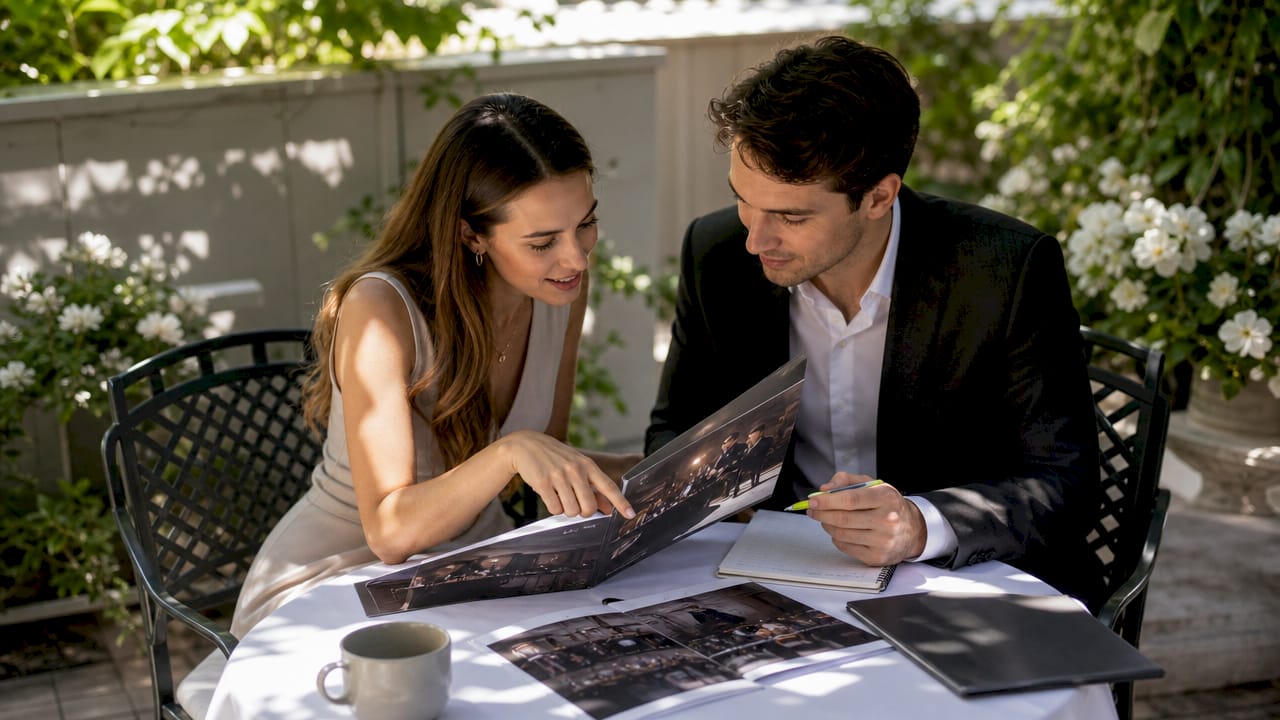
A wedding entertainment package is a bundled service offering that combines music, sound equipment, lighting, MC hosting, and optional add-ons into a single contract designed to cover your entire wedding day. Rather than hiring a DJ, a lighting company, and an emcee separately, you get one coordinated team managing every audio and visual element from ceremony to last dance. Providers like Electrified DJ Services and Platinumpianist build these packages around the idea that entertainment should feel connected, not pieced together. Understanding what these packages include, how they’re priced, and how to compare them is the fastest way to make a confident booking decision.
What is a wedding entertainment package?
A wedding entertainment package is a structured bundle of services covering the core entertainment needs of a wedding, typically including DJ performance, MC services, sound equipment, and lighting. Most packages are designed to span multiple event segments: the ceremony, cocktail hour, and reception. Bundled packages combine DJ, MC, lighting, and media vendors working as a coordinated team rather than standalone services, which improves timeline control and guest experience significantly.
The standard components you’ll find across most packages include:
DJ performance time covering ceremony music, cocktail hour background sets, and full reception dance floor coverage
Sound equipment including speakers, subwoofers, wireless microphones, and mixers calibrated for your venue
MC or emcee services for introductions, announcements, and keeping the event on schedule
Uplighting and dance floor lighting to set the visual tone of each segment
Optional add-ons such as photo booths, 360-degree video booths, monogram lighting, and virtual fireworks
Tiered package offerings are the industry standard. A basic tier covers core music and MC functions, while higher tiers layer in professional lighting, digital photo booths, and specialty visual effects. This structure lets you start with what you need and add features that match your budget and style.
Pro Tip: Ask every vendor to send you a written breakdown of what each tier includes operationally, not just a feature list. “Uplighting included” means nothing if you don’t know how many fixtures, what colors, and who sets them up.
How full-day packages differ from basic coverage
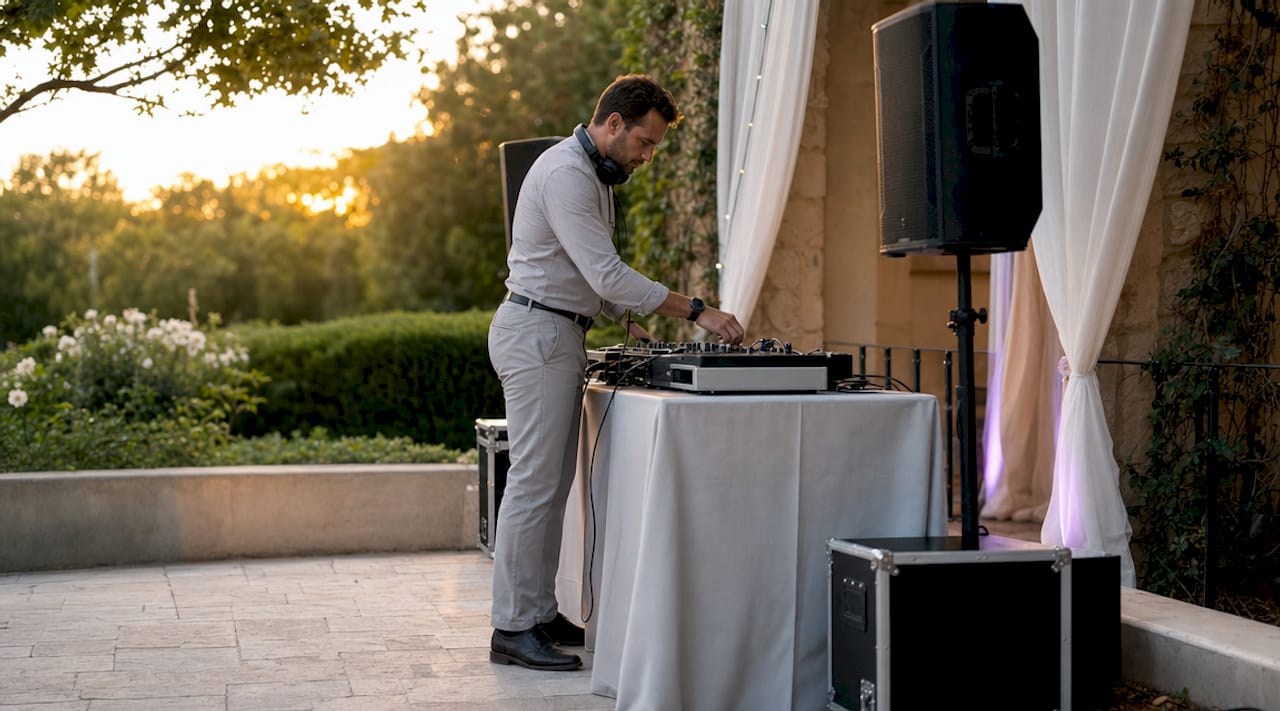
Full-day wedding entertainment packages provide continuous coverage from ceremony through reception, creating seamless flow and simplified logistics under a single contract. Basic or partial packages typically cover only the reception, leaving you to arrange separate solutions for ceremony music and cocktail hour. That gap creates real risk: mismatched sound quality, inconsistent volume levels, and the awkward silence that guests notice immediately.
Here’s what a full-day package typically manages that a partial package does not:
Ceremony audio setup with dedicated wireless microphones for the officiant and vows
Cocktail hour background music in a separate space, often requiring a second speaker system
Transition management between segments, including who controls audio zones and when
Reception coverage from grand entrance through last dance, including all announcements
Teardown coordination so your venue’s timeline isn’t disrupted at the end of the night
The operational advantage of a single team managing all of this is significant. Transition management between ceremony, cocktail hour, and reception requires explicit audio handoff plans to prevent dead air. When you book separate vendors for each segment, that handoff plan rarely exists in writing.
“The best full-day packages include a master timeline that every team member follows, so no one is waiting for a cue that was never communicated.” This level of internal coordination is what separates a professional entertainment system from a collection of hired acts.
Live music integration works particularly well within full-day packages. A pianist covering the ceremony and cocktail hour, followed by a DJ-led reception, gives your day tonal variety without requiring you to manage two separate vendor relationships. Platinumpianist structures her wedding entertainment services exactly this way, bringing her own piano to Southern California venues and coordinating directly with reception DJs for a smooth handoff.
What factors influence pricing and how to compare packages
Wedding DJ packages in 2026 typically range from $1,250 to nearly $5,000 depending on hours covered and bundled services, with popular mid-range offerings around $1,995 for six hours. Full live band packages generally start at $5,000 and climb from there. These numbers reflect equipment costs, staffing, travel, and the vendor’s experience level, not just time on the floor.
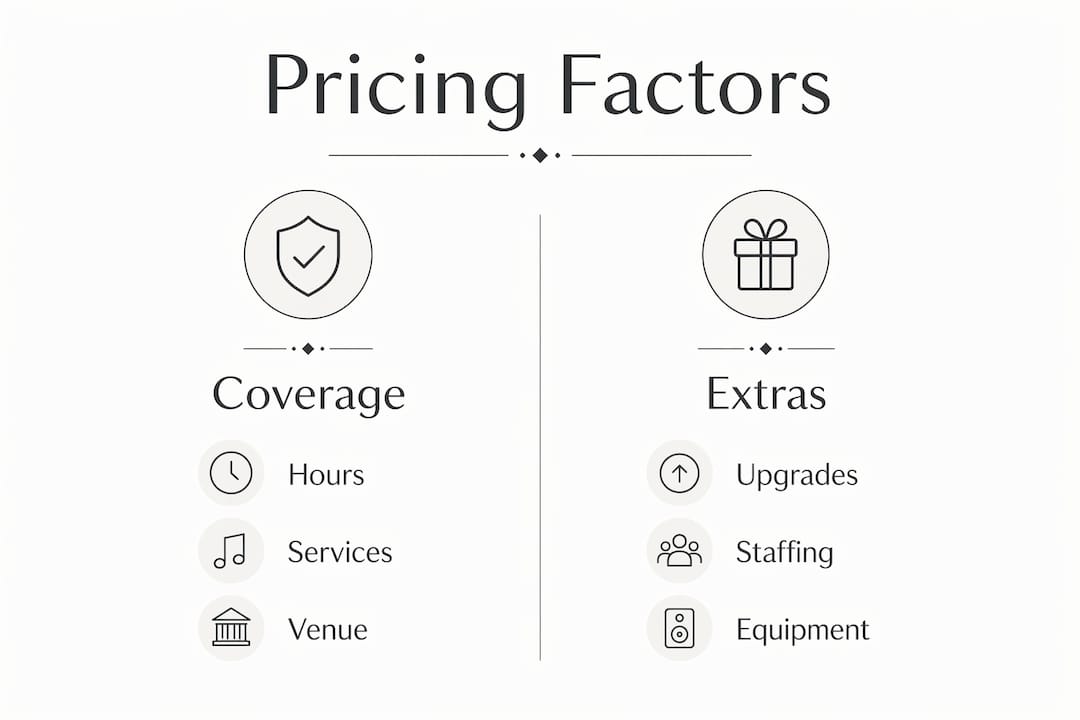
Pricing factor | What to ask |
Coverage hours | Does the quoted price include ceremony, cocktail hour, and reception? |
Equipment included | Are speakers, wireless mics, and lighting fixtures listed explicitly? |
Setup and teardown | Is load-in time billed separately or included in the flat rate? |
Travel costs | Is your venue within the vendor’s standard service area? |
Backup equipment | Does the vendor carry redundant gear in case of failure? |
The most common mistake couples make is comparing package prices without comparing what “included” actually means. Careful vetting of hours, equipment responsibilities, and contingency coverage is the only way to avoid gaps during the event. One vendor’s $2,500 package might include six hours, two wireless mics, and full uplighting. Another’s might cover four hours with basic speakers and no lighting at all.
Pro Tip: Build a side-by-side spreadsheet listing every line item from each vendor’s package. Price per hour of actual coverage is a more honest comparison metric than the total package cost.
Geographic pricing differences are real. Southern California vendors, particularly in Los Angeles, Orange County, and San Diego, price higher than national averages due to venue complexity, traffic logistics, and local demand. Confirming package inclusions like sound equipment, mic services, lighting, hourly coverage, setup fees, and travel costs before signing protects you from surprise invoices.
How to choose the right wedding entertainment package
The right entertainment choice depends on your venue’s size, sound limits, style, and your ability to plan ahead with vendors for special music requests and restrictions. Start with your venue, not your wishlist. A 200-person ballroom in Beverly Hills has different acoustic and logistical requirements than an outdoor garden ceremony in San Diego.
Use these criteria to narrow your options:
Venue size and layout: Multi-room venues require vendors with multiple speaker systems and the staff to manage them simultaneously
Event schedule: A six-hour reception needs different coverage than a ten-hour full-day event
Style preference: Live piano or acoustic sets create a different atmosphere than a DJ-driven dance floor. Both can coexist within one package
MC involvement: Decide how much guest interaction and crowd energy you want from your emcee before you book
Music restrictions: Communicate your “do not play” list and any cultural or religious music requirements in writing before signing a contract
Scalability: Ask whether the package can flex if your timeline shifts by 30 to 60 minutes on the day
Quality vendors signal professionalism through mastery of event logistics, not just musical skill. A vendor who asks detailed questions about your venue’s power access, setup windows, and sound ordinances is demonstrating exactly the kind of operational knowledge that prevents problems on your wedding day. If a vendor only talks about their playlist and never asks about load-in time, that’s a warning sign.
Live music adds a layer of personalization that recorded music cannot replicate. Platinumpianist’s approach to live piano at weddings in Southern California shows how a single instrument can anchor the ceremony and cocktail hour while a DJ handles the high-energy reception. That combination gives couples the best of both formats without doubling their vendor count.
What are popular entertainment upgrades?
A wedding entertainment upgrade refers to any add-on service that extends a base package with additional features designed to enhance atmosphere or guest engagement. Popular upgrades include uplighting, monogram lighting, photo booths, and specialty live musicians incorporated into DJ sets. Each one serves a specific purpose in the guest experience.
Uplighting: Washes venue walls in color to match your palette, transforming a plain ballroom into a branded space
Monogram lighting: Projects your initials or a custom design onto the dance floor or wall as a visual focal point
Photo booths and 360-degree booths: Give guests a physical or video memory to take home, extending engagement beyond the dance floor
Specialty instruments: A saxophonist playing over DJ tracks, or a pianist during cocktail hour, adds live energy without the full cost of a band
Intelligent lighting: Programmable moving lights that sync to music beats for a concert-level visual experience
Upgrade type | Typical add-on cost | Best for |
Uplighting (per fixture) | $25 to $50 per light | Venue transformation and color theming |
Monogram lighting | $150 to $300 | Personalized visual branding |
Photo booth (2 hours) | $500 to $900 | Guest engagement and keepsakes |
360-degree video booth | $800 to $1,500 | High-energy reception moments |
Live specialty musician | $300 to $800 | Ceremony and cocktail hour atmosphere |
Upgrades work best when they serve the flow of the event rather than compete with it. A 360-degree booth placed near the dance floor at peak energy hours generates far more use than one set up during dinner. Timing and placement are as important as the upgrade itself.
Key takeaways
A wedding entertainment package delivers the most value when you vet every line item, prioritize transition management, and match the package tier to your venue’s actual requirements.
Point | Details |
Define what’s included | Confirm hours, equipment, staffing, and contingency plans before signing any contract. |
Full-day packages reduce risk | Single-contract coverage eliminates audio gaps between ceremony, cocktail hour, and reception. |
Price reflects coverage depth | Packages range from $1,250 to $5,000 or more; compare cost per covered hour, not total price. |
Upgrades should serve the timeline | Add photo booths, uplighting, or live musicians where they enhance flow, not just as extras. |
Logistics signal vendor quality | Vendors who ask about power access and setup windows are more reliable than those who only discuss music. |
What I’ve learned from years of playing weddings
Every couple I work with comes in focused on the song list. That’s understandable. Music is emotional, and the ceremony playlist feels deeply personal. But the couples who have the smoothest wedding days are the ones who spent equal time thinking about logistics.
The most stressful moments I’ve witnessed at weddings had nothing to do with song selection. They happened when no one knew who was responsible for the microphone during the vows, or when the cocktail hour music cut out because the DJ was still setting up in the reception room. Those are coordination failures, not entertainment failures. They’re entirely preventable with a clear handoff plan and a vendor team that communicates.
My honest advice: before you ask a vendor what songs they know, ask them how they handle the transition from ceremony to cocktail hour. Ask what happens if a speaker fails. Ask who manages the timeline if the ceremony runs 20 minutes long. The answers to those questions tell you far more about what your wedding day will actually feel like than any demo reel.
I also think couples underestimate the power of live music for the quieter parts of the day. A pianist during cocktail hour creates a completely different atmosphere than a Spotify playlist. Guests linger longer, conversations feel more relaxed, and the whole event feels intentional rather than assembled. That’s not a sales pitch. It’s something I’ve watched happen at hundreds of events.
Prioritize the guest experience and the flow of the day. The extras are nice. The foundation is everything.
— Petra
How Platinumpianist can bring your wedding entertainment to life
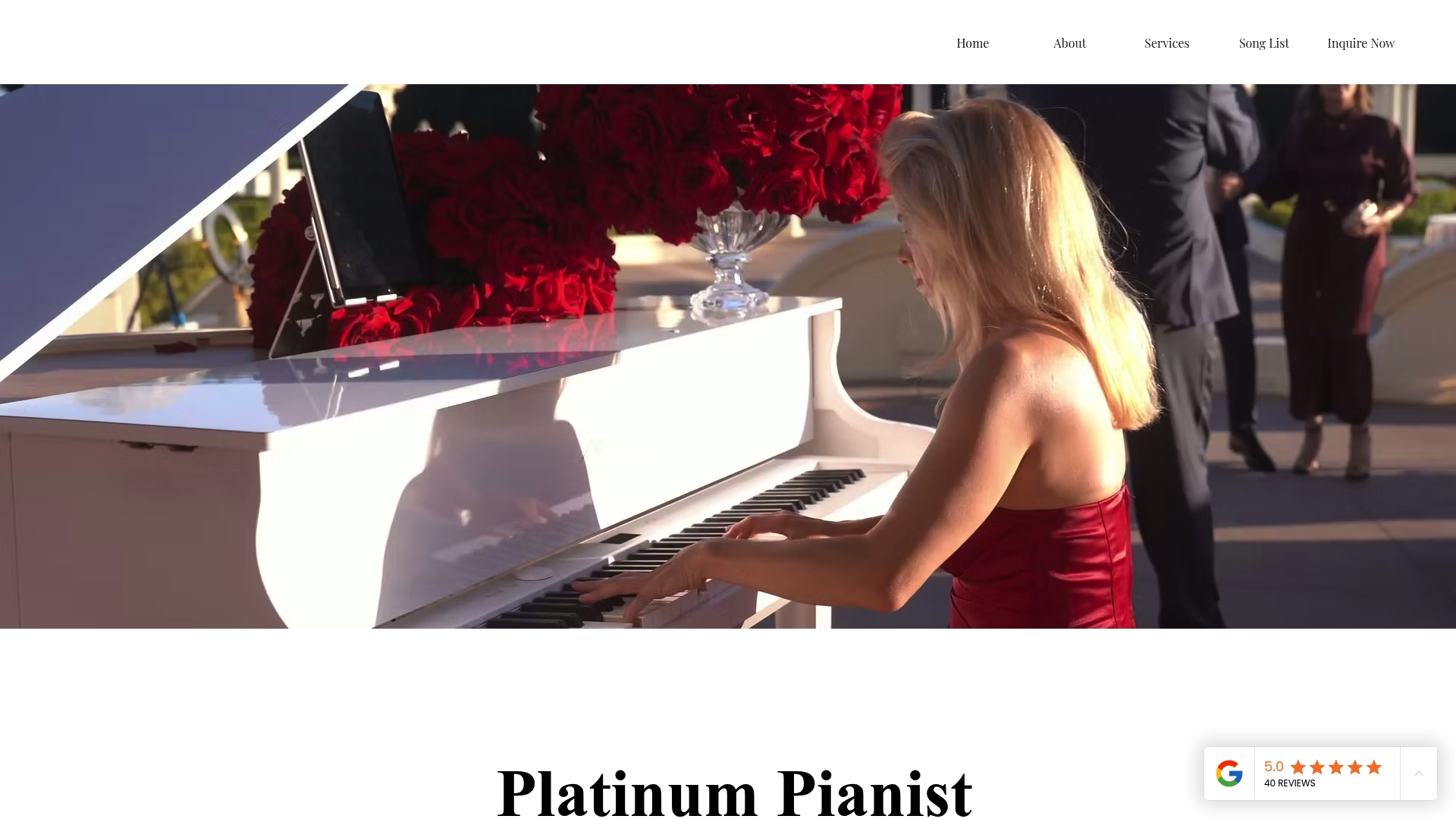
Platinumpianist offers live piano entertainment for weddings across Southern California, including Los Angeles, Orange County, and San Diego. Petra brings her own piano to your venue, covering ceremony and cocktail hour with a performance style that fits everything from intimate garden weddings to grand ballroom celebrations. Her wedding entertainment packages are designed to coordinate directly with your reception DJ or full-day entertainment team, giving you live music where it matters most without adding complexity to your vendor list. If you’re planning a wedding in Southern California and want entertainment that feels personal and polished, contact Platinumpianist to discuss a package built around your day.
FAQ
What is included in a standard wedding entertainment package?
A standard wedding entertainment package includes DJ performance time, sound equipment, wireless microphones, MC services, and basic lighting. Higher tiers add uplighting, photo booths, and specialty lighting features.
How much does a wedding entertainment package cost in 2026?
Wedding DJ packages typically range from $1,250 to nearly $5,000 depending on hours and bundled services. Live band packages generally start at $5,000 and increase with coverage hours and add-ons.
What is a wedding entertainment upgrade?
A wedding entertainment upgrade is an add-on service beyond a base package, such as uplighting, monogram lighting, a photo booth, or a live specialty musician. These features enhance atmosphere and guest engagement at an additional cost per item.
How do I choose between a DJ and live music for my wedding?
Your venue size, sound restrictions, and event style should drive the decision. Live music suits ceremonies and cocktail hours for atmosphere, while DJs excel at high-energy receptions. Many couples combine both within a single full-day package.
Why does transition management matter in a wedding entertainment package?
Transition management between ceremony, cocktail hour, and reception prevents dead air and audio gaps that disrupt guest experience. A clear handoff plan between entertainment segments is one of the most important operational details to confirm before booking.
Recommended
