Your Wedding Song List: What It Is and How to Build It

A wedding song list is a curated, moment-mapped collection of songs assigned to specific parts of your wedding day, from the prelude before guests are seated to the final song on the dance floor. It is not a single playlist shuffled on repeat. It is a structured musical plan that tells your DJ, band, or pianist exactly what to play, when to play it, and at what emotional intensity. Done well, it prevents dead air, controls the room’s energy, and makes every transition feel intentional. Done poorly, it turns your ceremony into an awkward guessing game and your reception into a generic party.
What is a wedding song list and how is it structured?
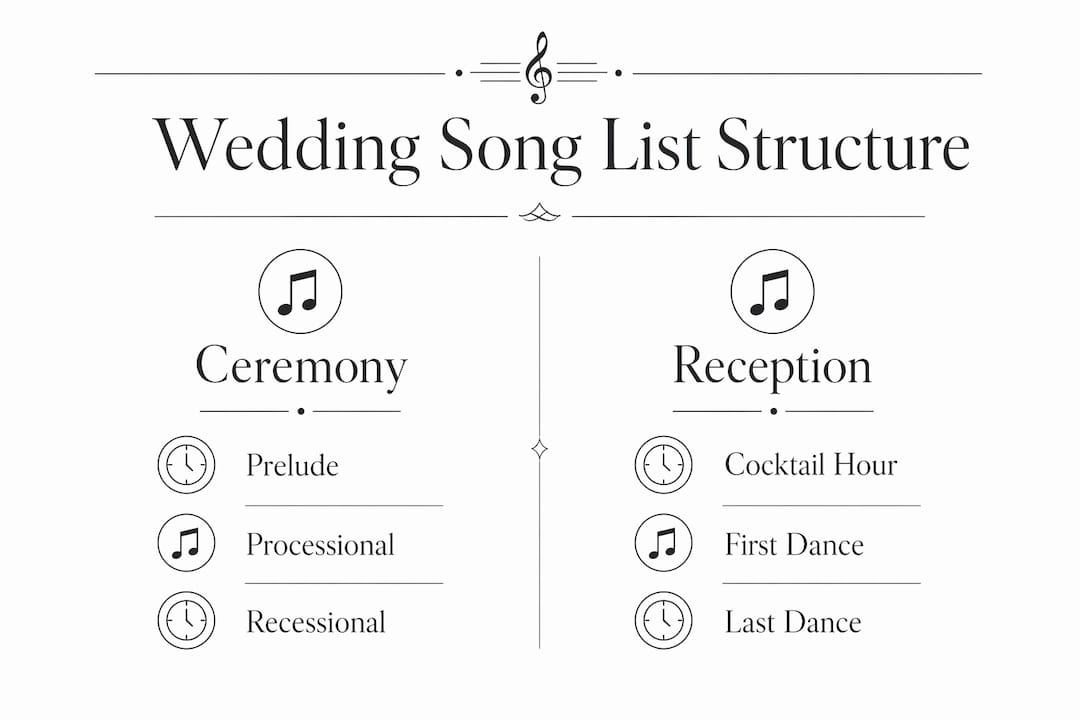
A wedding song list is a categorized set of songs mapped to specific moments across the wedding day to ensure music flows in the right order rather than one undifferentiated playlist. The standard moment order runs: prelude, processional, bridal entrance, ceremony music, recessional, cocktail hour, reception entrance, first dance, parent dances, dance floor songs, and last dance. Each category serves a distinct emotional function, and the songs within each category need to match that function precisely.
The numbers behind this structure are more specific than most couples expect. Wedding preludes typically run 30 to 60 minutes with 6 to 10 tracks, the ceremony itself uses about 5 to 7 songs, the cocktail hour needs 12 to 16 tracks, and a 4-hour reception requires 60 to 80 songs total. That volume surprises most couples who assume 20 or 30 favorites will cover the day. It will not.
Tempo and emotional tone shift dramatically between segments. The prelude sets a calm, welcoming mood. The processional builds anticipation. The recessional releases joy. The cocktail hour is conversational and light. The reception dance floor is high energy. Treating all of these as one undifferentiated list is the most common structural mistake couples make.
Pro Tip: Build your list in a spreadsheet with columns for moment, song title, artist, tempo, and notes for your vendor. This single document becomes the master reference for everyone involved in your wedding music.
Moment | Typical song count | Emotional purpose |
Prelude | 6 to 10 tracks | Welcoming, calm, sets the scene |
Processional and bridal entrance | 2 to 3 songs | Anticipation and emotion |
Ceremony (unity, signing, etc.) | 3 to 4 songs | Solemnity and meaning |
Recessional | 1 song | Joy and release |
Cocktail hour | 12 to 16 tracks | Relaxed, conversational |
Reception (entrance through last dance) | 35 to 45 songs | Celebration and dancing |
How to choose wedding songs without getting overwhelmed
The most effective approach to building a popular wedding playlist is to lock your 6 to 8 highest-emotion moments first, then delegate everything else. Locking key emotional moments early reduces decision overload and gives your DJ or musician a clear foundation to build around. Those anchor moments are the bridal entrance, recessional, first dance, father-daughter dance, mother-son dance, and last dance. Every other song on the list is secondary.
Here is a practical sequence for choosing your wedding songs:
Identify your anchor songs first. Choose the bridal entrance, first dance, and last dance before touching anything else. These are the moments guests remember and photograph.
Add parent dances and recessional. These carry strong emotional weight and often require more thought than couples anticipate.
Build your cocktail hour vibe. Decide on a genre or mood rather than individual songs. Jazz, acoustic pop, classical piano. Then let your musician or DJ fill the tracks.
Set dance floor expectations. Give your DJ a genre direction and 5 to 10 must-play songs rather than a rigid 40-song list. Experienced DJs read the room better than any pre-written list can.
Create a “never play” list. This is as important as the must-play list. If certain songs, artists, or genres would genuinely upset you or your guests, write them down and hand that list to your vendor.
One critical step most couples skip: check the lyrics of every song you choose. “Every Breath You Take” by The Police is one of the most commonly played wedding songs in history. It is a song about obsessive surveillance, not romance. The melody sounds tender. The words are not. Validating lyrics and context is not optional if you want songs to actually fit the mood you are creating.
For first dance inspiration, Spotify’s top first dance songs in 2024 included “Can’t Help Falling in Love” by Elvis Presley, “At Last” by Etta James, and “Joy of My Life” by Chris Stapleton. Use these as a starting pool, not a prescription. Your first dance should reflect your relationship, not a popularity chart.
Pro Tip: Share your Spotify “liked songs” playlist with your musician or DJ before your planning meeting. It gives them a fast read on your taste without requiring you to explain it in words.
Ceremony vs. reception: why these lists must stay separate
Separating ceremony and reception music into distinct playlists with specific songs for each moment prevents awkward silences and ensures the right mood at every stage. This is not just an organizational preference. It is a functional requirement. Ceremony music operates on precise cues tied to physical movement. The processional starts when the wedding party walks. The bridal entrance starts when the bride appears. A DJ or musician who does not have a clearly labeled, ordered ceremony list will guess at timing, and guessing causes mistakes.
Reception music operates differently. It responds to crowd energy, fills longer time blocks, and can flex based on how the night unfolds. Ceremony music often includes separate songs for the processional, recessional, unity ceremony, and signing of the register, each serving a distinct cue. Reception music is more fluid but still needs clear anchors for the entrance, first dance, and parent dances.
The genre gap between ceremony and reception is also significant. Ceremony music tends toward classical, acoustic, or orchestral arrangements. Reception music spans pop, R&B, country, and whatever gets your specific crowd moving. Mixing these into one list without clear labels creates confusion for vendors and tonal whiplash for guests.
Pro Tip: Send your ceremony song list as a separate document from your reception list, and label every song with its cue. “Bridal entrance: starts when doors open” is clearer than “Song 3.”
For help thinking through the ceremony to reception flow, Platinumpianist has a detailed guide that walks through how professional musicians handle these transitions in real time.
Common mistakes that derail wedding music plans
Most wedding music problems are predictable, and most are avoidable with early planning.
Skipping lyric checks. Romantic melodies with problematic lyrics are everywhere. Vet every song before it goes on the list, not after.
Merging ceremony and reception into one playlist. This creates cue confusion for vendors and tonal mismatches for guests. Keep them separate and clearly labeled.
Underestimating song volume. A 4-hour reception needs 60 to 80 songs. Couples who hand over 25 favorites will hear repeats or awkward gaps.
Locking every song on the reception list. Over-specifying the dance floor removes your DJ’s ability to read the room. Give direction, not a rigid script.
Failing to send detailed instructions to vendors. Providing DJs or musicians with an approved, ordered set list by ceremony and reception cues, along with volume and timing instructions, prevents mistimed music changes. A professional approach includes sending 10 to 12 approved prelude tracks with operational details. Most couples send a song title and nothing else.
The last point is where the most expensive mistakes happen. A DJ who does not know whether to fade out the cocktail hour music or cut it hard when the reception entrance begins will make a choice. It may not be the choice you wanted. Written instructions eliminate that ambiguity entirely.
For a look at songs that actively backfire at weddings, the hilariously bad wedding playlist guide from Platinumpianist is both entertaining and genuinely useful for building your “never play” list.
Key takeaways
A well-built wedding song list maps specific songs to specific moments, separates ceremony from reception, and gives vendors the cue-based instructions they need to execute without guessing.
Point | Details |
Structure by moment, not mood | Assign songs to specific cues rather than creating one long playlist. |
Lock anchor songs first | Choose bridal entrance, first dance, and last dance before anything else. |
Vet every lyric | Popular songs often carry meanings that contradict a wedding’s celebratory tone. |
Separate ceremony and reception lists | Each requires different timing logic, genre, and vendor instructions. |
Delegate the dance floor | Give your DJ a direction and a must-play list, not a rigid 40-song script. |
Why the best wedding music feels effortless but never is
I have played hundreds of weddings as a live pianist, and the ones that feel magical share one thing: the couples made deliberate choices about the moments that mattered most and trusted their musicians with the rest. The weddings that feel chaotic almost always trace back to a couple who either over-controlled every song or handed over nothing at all.
The biggest misconception I see is that a wedding song list is about picking your favorite songs. It is not. It is about picking the right song for each moment, which sometimes means setting aside a song you love because it does not fit the emotional arc of that specific minute. “Bohemian Rhapsody” is a great song. It is not a great bridal entrance song.
What I tell every couple I work with: spend 80% of your music energy on the 6 to 8 anchor moments and let go of the rest. The cocktail hour does not need to be a personally curated experience. The prelude does not need to tell your love story. Those segments exist to fill space beautifully, and a skilled musician or DJ handles that without your input. Save your creative energy for the moments guests will actually remember.
I also push back on the idea that your wedding music needs to be original or unexpected to be meaningful. “Can’t Help Falling in Love” is on Spotify’s top first dance list because it works. If it is your song, play it. Authenticity beats novelty every time.
For couples who want their music to genuinely reflect who they are as a couple, I always recommend reading about why wedding entertainment reflects your identity before finalizing any list.
— Petra
Let Platinumpianist bring your wedding music to life
Planning your wedding song list is one thing. Having a live musician who knows how to read a room, respond to emotional cues, and perform those anchor moments with precision is another.
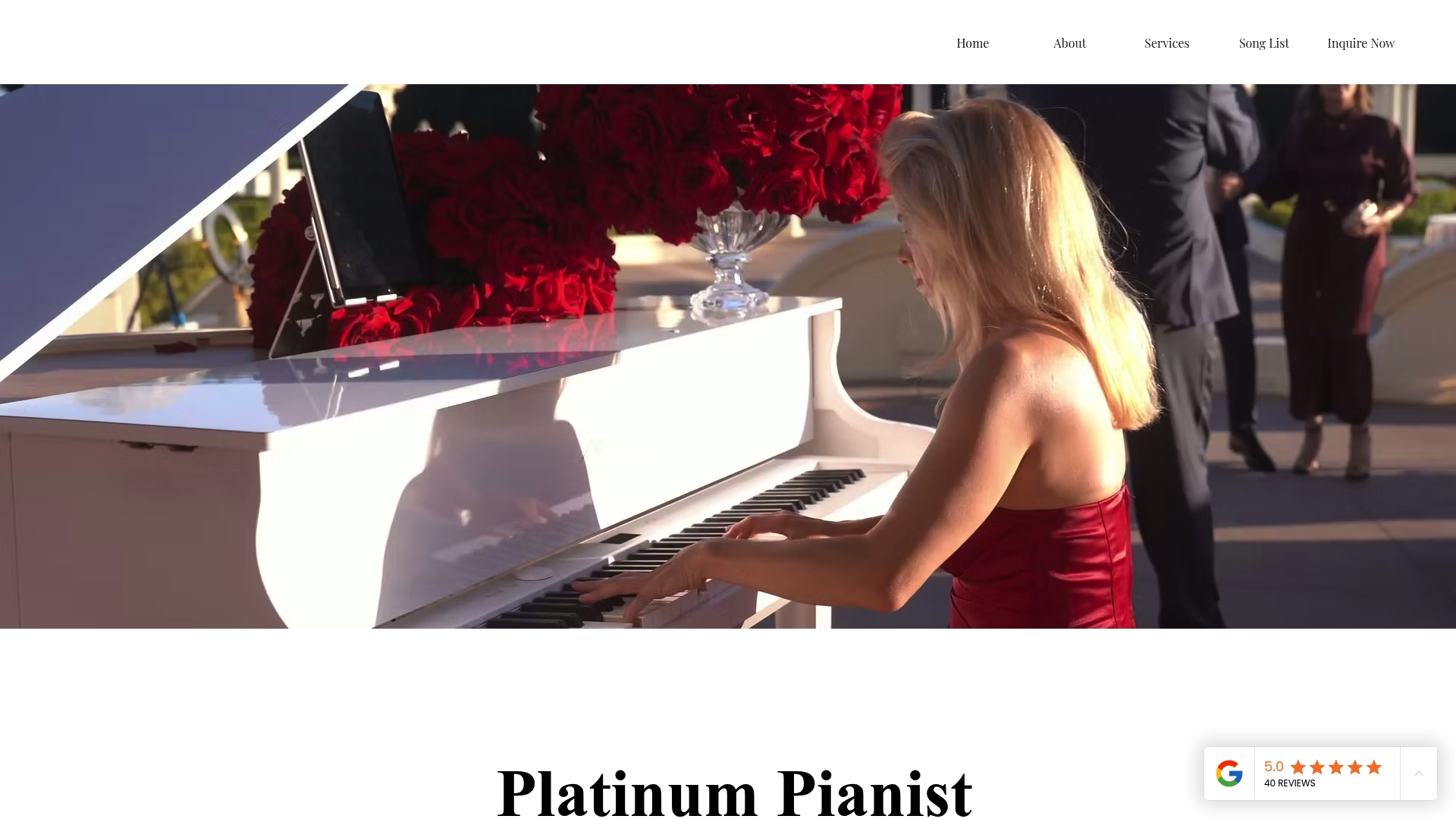
Platinumpianist works directly with couples in Southern California to lock in the songs that matter most, from the bridal entrance to the last dance, and performs them live on a grand piano she brings to your venue. Every wedding music service is built around your specific moment map, not a generic setlist. If you are planning a wedding in the Los Angeles area and want live piano that matches the vision you have been building, book a Beverly Hills pianist consultation and hear what your wedding day could sound like.
FAQ
What is a wedding song list?
A wedding song list is a structured, moment-based collection of songs assigned to specific parts of the wedding day, including the prelude, processional, first dance, and reception. It differs from a general playlist because each song is tied to a specific cue and emotional purpose.
How many songs do you need for a wedding?
Most weddings require 60 to 80 songs for a 4-hour reception, plus 5 to 7 additional songs for ceremony moments. The prelude alone typically needs 6 to 10 tracks to cover the 30 to 60 minutes before the ceremony begins.
What are the most important songs to choose yourself?
The bridal entrance, first dance, father-daughter dance, mother-son dance, recessional, and last dance are the six moments couples should choose personally. These are the emotionally charged moments guests remember, and they should reflect the couple’s specific relationship and taste.
How do you avoid picking the wrong wedding songs?
Always read the full lyrics of any song before adding it to your list. Many popular tracks, including “Every Breath You Take” by The Police, sound romantic but carry meanings that are inappropriate for a wedding. Melody alone is not enough to vet a song.
Should you give your DJ a full song list or just direction?
For the ceremony, give your DJ or musician a fully ordered, cue-based list with timing notes. For the reception dance floor, provide a must-play list of 5 to 10 songs, a “never play” list, and a genre direction. Over-scripting the dance floor prevents your DJ from responding to what the crowd actually wants.
Recommended
