What Is Wedding Music Consultation? A Couples' Guide

A wedding music consultation is a structured planning session where couples work directly with a professional musician, DJ, or music coordinator to design the complete soundtrack for their wedding day. This meeting covers every musical moment, from the ceremony prelude to the final reception song, and aligns music choices with the event’s emotional arc, venue, and timeline. The process is the backbone of wedding music planning, and skipping it is one of the most common reasons weddings end up with music that feels generic or off-tone. Platinumpianist builds every performance around this consultation process, treating it as the foundation for a truly personalized event.
What is wedding music consultation and what does it cover?
A wedding music consultation is a collaborative meeting, not a simple song request form. Couples and their music professional work together to map every moment of the day to a specific musical mood, instrumentation, and timing. The result is a custom plan that accounts for the ceremony, cocktail hour, and reception as distinct experiences with their own sonic identity.
The consultation covers far more than song titles. Professionals use it to assess venue acoustics, discuss the wedding’s visual style, review the event timeline, and identify any family traditions or cultural elements that need to be honored. This is also where the importance of wedding music becomes concrete. Music does not just fill silence. It signals transitions, sets emotional tone, and shapes how guests remember the day.
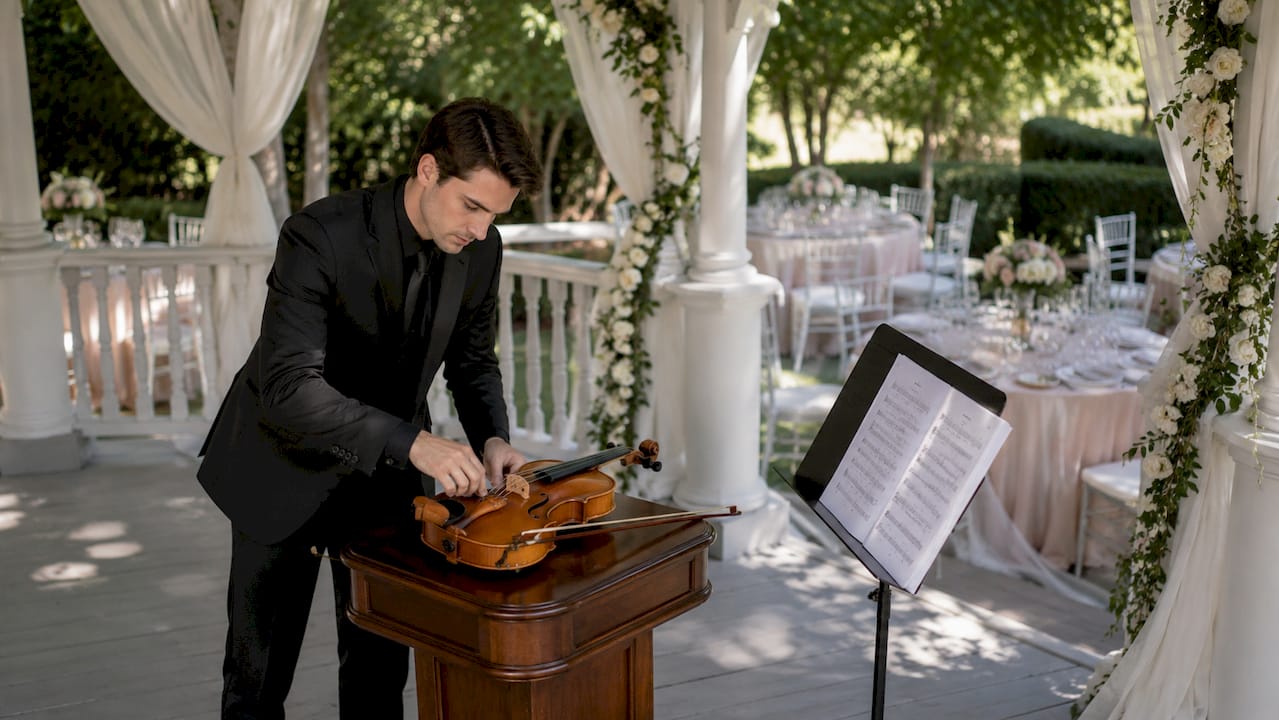
Wedding entertainment consultations also address logistics. Musicians confirm setup requirements, sound check timing, and any restrictions the venue imposes. Couples who treat this meeting as a true collaboration, rather than a checklist handoff, consistently get better results on the day.
What happens during a typical wedding music consultation?
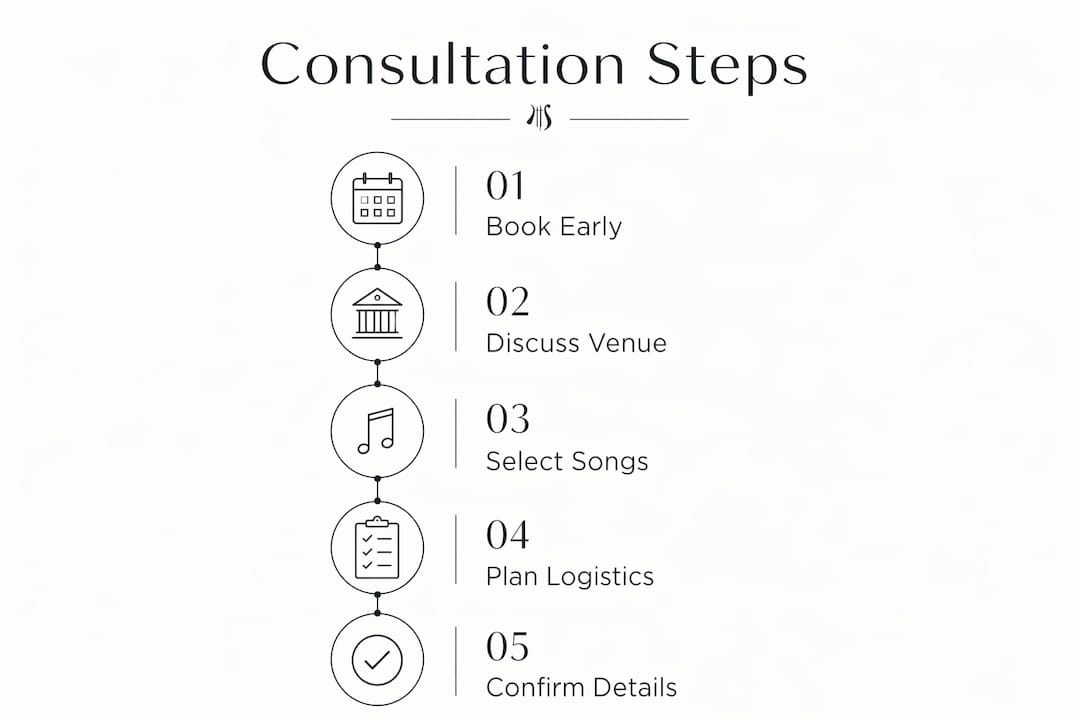
The consultation process follows five steps: inquiry, consultation, contract and deposit, final details, and day-of coordination. Each step builds on the last, so the wedding day itself runs without surprises.
Inquiry. Couples reach out with their wedding date, venue, and a rough sense of their musical preferences. The musician or coordinator confirms availability and shares their service overview.
Consultation. This is the core meeting, held virtually or in person. Couples share song ideas, discuss the event timeline, and talk through any special requests. The professional asks targeted questions about the couple’s taste, guest demographics, and key emotional moments.
Contract and deposit. Once the plan is agreed upon, a contract is signed and a deposit is paid to secure the date. Wedding music and entertainment typically consume 8–12% of the total wedding budget, so this step also clarifies the full fee structure.
Final details consultation. Held approximately one month before the wedding, this session locks in the final song list, confirms the timeline, and addresses any last-minute changes. Musicians arrive 30–60 minutes early on the day for setup, and final payments are typically due 10 days before the wedding.
Day-of coordination. The musician or coordinator works directly with the wedding planner or venue contact to execute the plan in real time.
Pro Tip: Book your musician or entertainment consultant 8–12 months ahead of peak wedding season. The best performers fill their calendars early, and late bookings limit your options significantly.
How do couples build custom wedding playlists with a music consultant?
Custom wedding playlists are built through a structured back-and-forth between the couple and their music professional. The goal is not just a list of favorite songs. It is a curated sequence that supports the emotional arc of the entire day.
The collaboration centers on three core tools:
Must-play list. Songs the couple considers non-negotiable. This typically includes the processional, first dance, and any songs tied to family traditions or personal milestones.
Do-not-play list. Hard-no songs are equally critical. Avoiding the wrong song prevents awkward moments and keeps the atmosphere consistent. A song that carries a painful association for the couple or their family can derail an otherwise perfect moment.
Flexible fill list. Songs the couple likes but does not require. The musician draws from this list to read the room and adjust energy levels throughout the event.
Emotional mapping is the professional technique that ties these lists together. Rather than selecting songs purely by personal taste, emotional mapping assigns music to the feeling each moment is meant to create. A romantic, slow processional signals reverence and love. An energetic grand entrance signals celebration. The recessional signals joy and release. This framework ensures the music serves the moment, not just the couple’s Spotify history.
Couples should also prepare approximately 100–150 total songs to cover the full day, including ceremony prelude, cocktail hour, and reception. The ceremony prelude alone runs about 30 minutes, which translates to roughly 10 songs. Having a deep pool gives the musician flexibility to respond to the room.
Pro Tip: Build your must-play list first, then your do-not-play list. Only after both are complete should you start filling in the flexible middle. This order prevents the common mistake of building a playlist that sounds great on paper but creates tonal whiplash at the actual event.
Professional musicians also use the consultation to assess guest social chemistry. Knowing the age range, cultural backgrounds, and energy level of the guest list helps the consultant recommend distinct musical zones. The cocktail hour might call for jazz standards or classical piano. The dance floor calls for something entirely different. Treating these as separate sonic environments, rather than one continuous playlist, keeps every guest engaged at the right moment.
What factors shape music selection and instrumentation?
Music selection is not just about taste. Venue size, acoustic properties, and wedding style all determine which instrumentation actually works in a given space.
Factor | Consideration | Recommendation |
Venue size | Large halls need fuller sound | Duo, trio, or quartet over solo instrument |
Outdoor setting | Wind and ambient noise affect acoustics | Amplified solo or small ensemble with PA system |
Wedding style | Traditional vs. contemporary themes | Classical repertoire vs. modern arrangements |
Aisle length | Longer aisles need longer or looped music | Plan for fade-out or loop options |
Guest demographics | Mixed age groups need varied styles | Segment music by event phase |
Venue acoustics are the most overlooked factor in music planning. A solo piano or violin can sound thin and hollow in a large cathedral or outdoor amphitheater. The same instrument fills a small chapel beautifully. Matching the musician setup to the space is not a luxury consideration. It is the difference between professional sound quality and an embarrassing audio experience.
Flow management is a related concept that most couples never hear about until something goes wrong. Music timing must sync with physical movement during the ceremony. If the bridal party walks faster or slower than expected, the processional song needs to loop or fade gracefully rather than cut off abruptly. A skilled musician handles this in real time. A rigid playlist cannot.
Wedding style also shapes instrumentation choices. A garden party wedding in Southern California pairs naturally with light acoustic piano or a string duo. A black-tie ballroom event calls for a full classical repertoire or a jazz ensemble. Platinumpianist, for example, brings a live grand piano to events across Southern California, which creates a visual and sonic statement that a DJ setup simply cannot replicate.
How to prepare for your wedding music consultation
Arriving at a music consultation organized and ready makes the entire process faster and more productive. Couples who come prepared get better results because the professional can spend time on creative decisions rather than gathering basic information.
Preparation checklist before the consultation:
Write down 10–15 songs you know you want, even if you are not sure where they fit in the day
List 5–10 songs you absolutely do not want played, for any reason
Have your wedding day timeline ready, including ceremony start time, cocktail hour length, and reception end time
Know your venue name and size so the consultant can assess acoustic needs
Think about any cultural traditions, family requests, or special dedications that need to be honored
Prepare questions about the musician’s experience with your venue type or musical style
The processional music choice is often the hardest decision couples face. Having a shortlist of three to five options ready before the consultation saves significant time and gives the professional something concrete to work with. Couples who arrive with no ideas at all spend most of the consultation on discovery rather than planning.
Share your wedding day schedule in as much detail as possible. The consultant needs to know how long each phase lasts to recommend the right number of songs and manage transitions. A well-built wedding song list is built around the timeline, not the other way around.
Key takeaways
A wedding music consultation is the single most effective step couples can take to guarantee their music matches the emotional and logistical reality of their wedding day.
Point | Details |
Start with a definition | A consultation is a structured planning session, not a song request form. |
Follow the five-step process | Inquiry through day-of coordination ensures nothing is missed. |
Build three lists | Must-play, do-not-play, and flexible fill give the musician room to perform well. |
Match music to the venue | Acoustics and space size determine which instrumentation actually sounds good. |
Prepare before you arrive | Bring a timeline, song ideas, and questions to make the session productive. |
What I have learned from years of wedding music consultations
The biggest mistake I see couples make is treating the consultation like a transaction. They hand over a song list and expect the musician to execute it mechanically. That approach misses the entire point. A skilled musician reads the room in real time and adjusts. The consultation is where you give that musician the context to make good decisions on your behalf.
The second most common mistake is ignoring acoustics until it is too late. I have played venues across Southern California where couples were surprised that their chosen setup sounded thin or muddy. Venue size and surface materials change everything. A conversation about acoustics during the consultation prevents a problem that cannot be fixed on the wedding day.
The consultations I remember most are the ones where couples came in with a clear emotional vision, not just a song list. One couple described their ceremony as “quiet reverence followed by pure joy.” That single phrase told me everything I needed to know about the processional versus the recessional. The music wrote itself from there. That kind of clarity only comes from a real conversation, and that conversation is exactly what a wedding music consultation is designed to create.
— Petra
Platinumpianist: personalized wedding music consultation in Southern California
Planning wedding music is easier when you work with a musician who brings both expertise and a live instrument to the table. Platinumpianist offers personalized wedding entertainment consultations for couples across Southern California, covering everything from ceremony song selection to full reception flow.
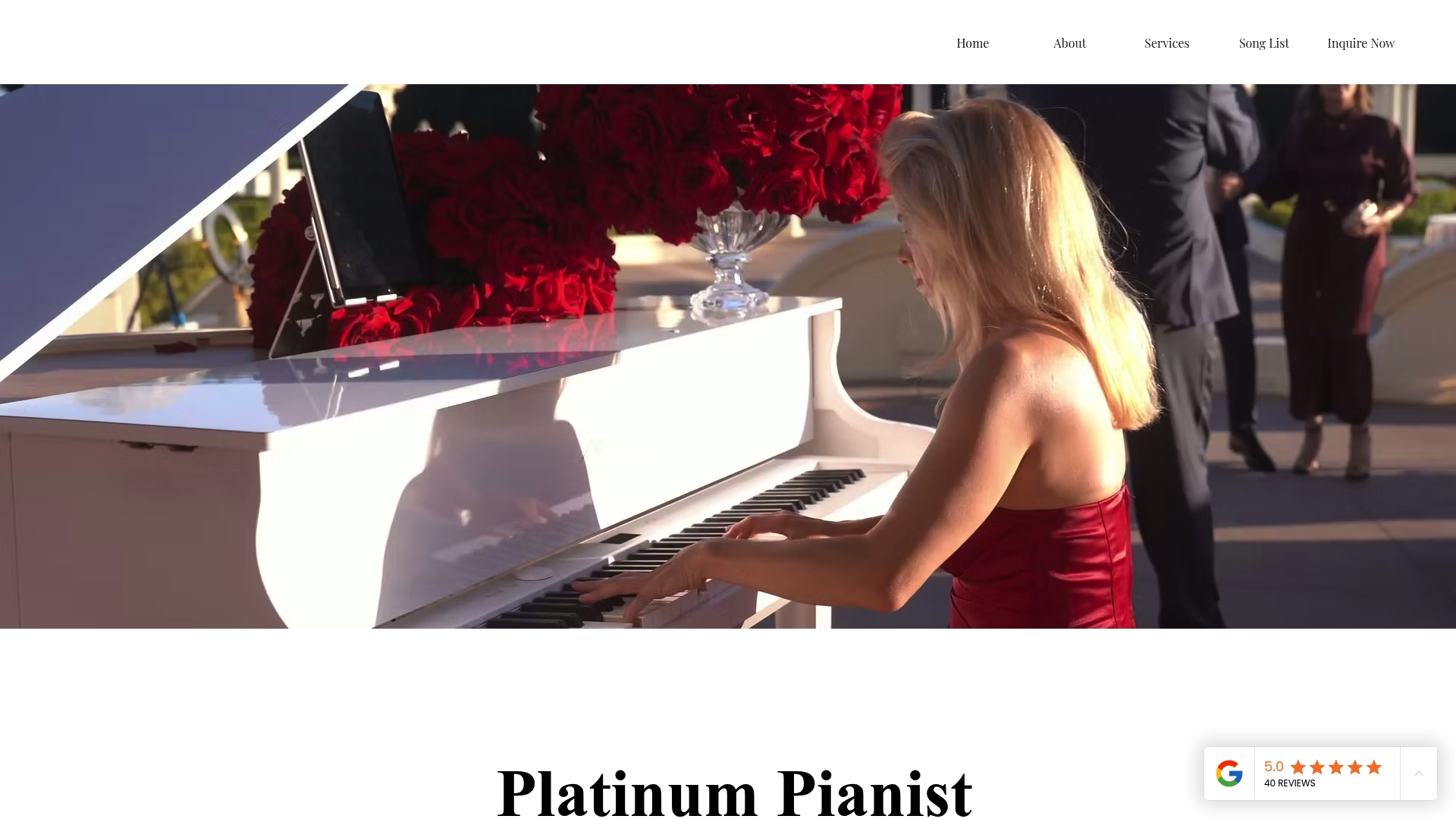
Petra brings her own grand piano to every event, which means the sound quality and visual impact are built in from the start. Whether you are planning an intimate garden ceremony or a large ballroom reception, the consultation process covers acoustics, timing, custom playlists, and day-of coordination. Couples looking for a Beverly Hills wedding musician can schedule a consultation directly to start building a music plan that fits their day.
FAQ
What is a wedding music consultation?
A wedding music consultation is a planning session between a couple and their music professional to design the full soundtrack for the wedding day. It covers song selection, timing, instrumentation, and emotional mapping for every key moment.
How far in advance should couples book a music consultant?
Couples should book their musician or music consultant 8–12 months before the wedding, especially for peak season dates. Late bookings significantly limit the available talent pool.
What should couples bring to a music consultation?
Couples should bring a wedding day timeline, a list of must-play and do-not-play songs, and their venue details. Knowing the venue size helps the consultant recommend the right instrumentation for the space.
How many songs does a wedding typically need?
A full wedding day requires approximately 100–150 songs to cover the ceremony, cocktail hour, and reception. The ceremony prelude alone runs about 30 minutes, which equals roughly 10 songs.
What is emotional mapping in wedding music planning?
Emotional mapping is the practice of assigning music to the feeling each wedding moment is meant to create, rather than selecting songs based on personal taste alone. It ensures the music supports the atmosphere of each specific moment, from the processional to the last dance.
Recommended


