Wedding First Dance Piano: Songs, Tips, and Planning
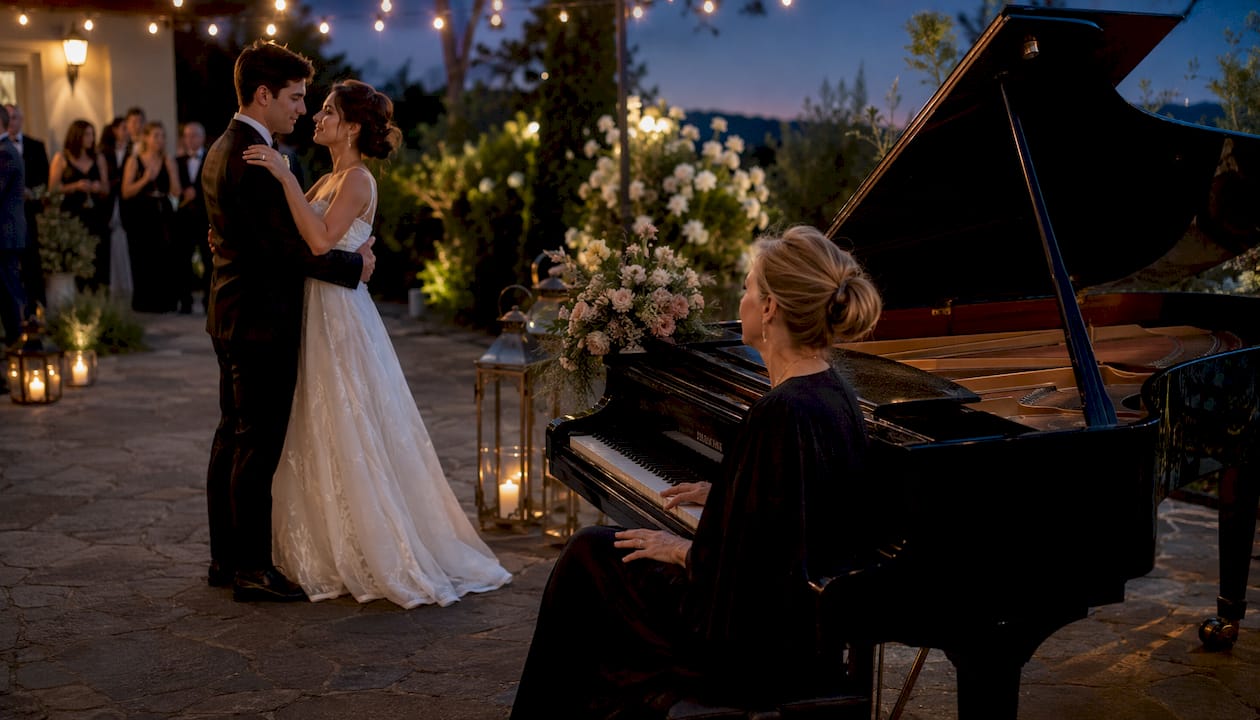
A wedding first dance piano is exactly what it sounds like: a piano performance, live or pre-recorded, that accompanies the couple’s first dance at their reception. Live piano is the stronger choice when your venue and budget allow it. The instrument’s dynamic range and the pianist’s ability to adjust tempo in real time make the moment feel genuinely alive rather than choreographed. If a live pianist isn’t in the cards, a high-quality recorded piano arrangement works as a solid backup. For instant song ideas, start with three proven picks: “Can’t Help Falling in Love” by Elvis Presley (slow, waltz-friendly, universally recognized), “All of Me” by John Legend (moderate tempo, deeply personal lyrics), and “Perfect” by Ed Sheeran (gentle 6/8 feel, easy to dance to). Industry guidance from The Knot recommends trimming your first-dance song to about 60–90 seconds, which keeps guest attention locked in and gives the moment a clean, cinematic shape.
Table of Contents
Rehearsal and coordination: cues, MC timing, and venue logistics
Hiring a pianist in the U.S.: timing, rates, and what’s included
What to expect when you hire a live pianist: Petra’s practical notes
Coordinating the piano first dance with the rest of your reception
Why the first dance piano moment is more fragile than couples think
Platinumpianist: live piano for your Southern California first dance
Curated piano-friendly first-dance songs by mood
Piano translates almost any genre beautifully, but some songs land better than others when the backing track disappears and it’s just keys. Here’s a working library organized by feel.
Romantic classics
“Can’t Help Falling in Love” (Elvis Presley) — 3/4 waltz feel, ~3:00 original; cut to 75s after the second chorus. Lyric-safe, universally beloved.
“At Last” (Etta James) — slow jazz swing, ~3:02; works beautifully as a 70s piano-only arrangement. Among the most popular first-dance songs in recent years.
“The Way You Look Tonight” (Frank Sinatra) — medium swing, ~3:25; piano carries the melody without needing a full band.
“La Vie en Rose” (Édith Piaf) — slow, ~3:10; the piano version strips it to pure romance.
Modern pop in piano arrangement
“All of Me” (John Legend) — ~4:29 original, moderate tempo; cut to 80s by playing verse + chorus + final chorus. Lyrics are wedding-perfect. Contemporary pop hits like this one translate exceptionally well to piano.
“Perfect” (Ed Sheeran) — 6/8 time, ~4:23; one of the top-ranked first-dance songs for good reason. Piano version softens the guitar-driven original.
“A Thousand Years” (Christina Perri) — slow, ~4:45; piano is already the lead instrument. Edit to 75s by cutting the bridge.
“Thinking Out Loud” (Ed Sheeran) — medium, ~4:41; piano arrangement removes the R&B groove and gives it a ballad feel.
“Make You Feel My Love” (Adele/Bob Dylan) — slow, ~3:32; piano-only version is intimate and emotionally direct.
Instrumental and cinematic
“River Flows in You” (Yiruma) — slow, ~3:40; already a solo piano piece, no arrangement needed. Works especially well for couples who want no lyrics at all.
“Kiss the Rain” (Yiruma) — moderate, ~3:50; slightly more movement than “River Flows in You,” suits couples who want a gentle rhythmic pulse.
“Comptine d’un autre été” (Yann Tiersen) — slow-moderate, ~2:25; short enough to use nearly in full. Cinematic without being dramatic.
“Clair de lune” (Debussy) — slow, ~5:00; edit to 90s by playing the opening theme and first development. Signals elegance immediately.
Gentle up-tempo picks
“Better Together” (Jack Johnson) — easy-going, ~3:27; piano arrangement keeps the warmth without the acoustic-guitar casualness.
“Your Song” (Elton John) — medium, ~3:40; the piano is the song’s identity. Couples who want something joyful rather than tearful love this one.
“Bloom” (The Paper Kites) — slow-moderate, ~3:21; understated and intimate, suits smaller, more personal receptions.
Pro Tip: For any song over 3:30, ask your pianist to map out a 75-second edit before your first rehearsal. Hearing it cut early saves you from falling in love with a version that’s too long to dance to comfortably.
Why live piano makes the first dance feel different
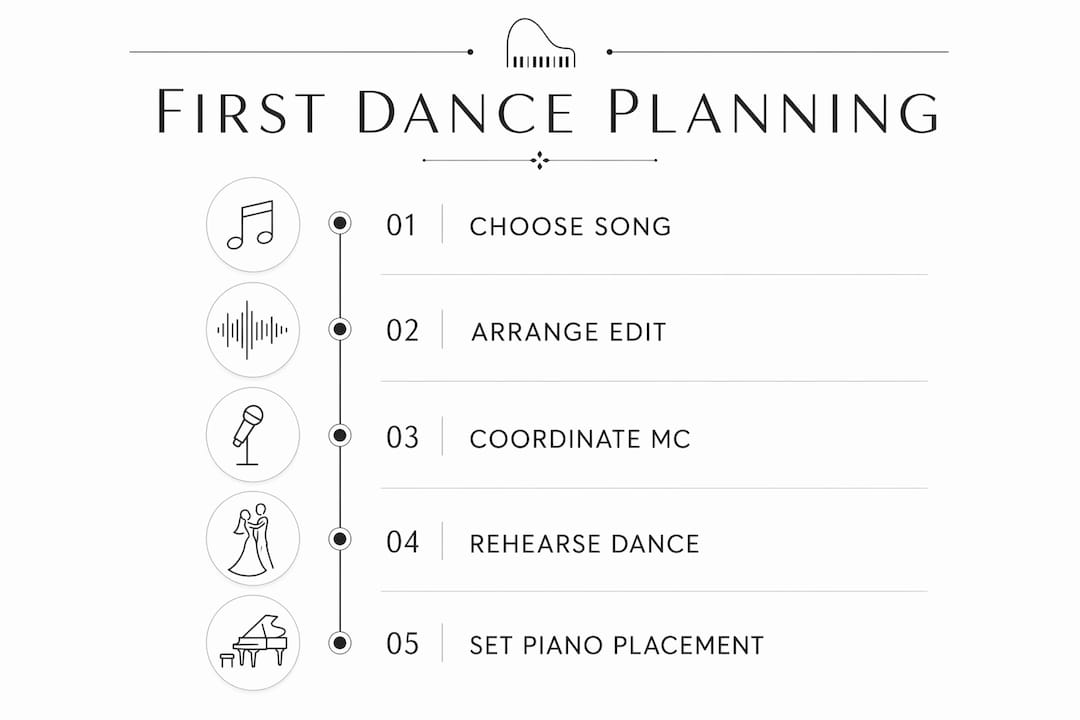
Piano creates a kind of intimacy that recorded music rarely matches in a live setting. The dynamic range of the instrument, from a barely-there whisper to a full, resonant chord, gives the moment texture that a speaker playing a Spotify track simply cannot replicate. Live piano creates an immersive, personal atmosphere that guests feel physically: they lean in, they go quiet, and the room shifts.
The practical advantage of a live pianist goes beyond atmosphere. A skilled pianist can adjust tempo and dynamics in real time to match your pacing. If you’re moving slower than expected, the pianist slows with you. If the moment calls for a longer outro, they hold it. A recorded track cannot do that. It ends when it ends, and if you’re mid-spin, that’s your problem.
Recorded piano arrangements are a legitimate option when budget is the deciding factor or when the venue is too small to accommodate a piano setup. They’re predictable, they never have an off night, and a well-produced arrangement sounds polished. The tradeoff is rigidity: you dance to the track, not the other way around.
For venue logistics, consider these factors before deciding:
Space: A portable piano shell needs roughly 5 x 4 feet of floor space plus the pianist’s bench.
Power: Most professional pianists bring their own amplification; confirm whether the venue has accessible outlets or whether battery power is needed.
Outdoor sites: Southern California outdoor venues often have ambient noise (wind, traffic, crowd). A pianist with a portable piano shell and on-board sound system handles this better than a bare acoustic instrument.
Sound coverage: For rooms over 150 guests, ask whether the pianist’s system can fill the space or whether the venue’s PA needs to be patched in.
Pro Tip: If your venue is under 80 guests and indoors, live piano almost always wins on both cost and impact. For larger outdoor receptions, confirm amplification specs before booking.
For a deeper look at why piano suits upscale receptions specifically, this guide on piano at weddings covers the dynamics and expression angle in detail.
How to pick the perfect piano first-dance song
The best first-dance song balances personal meaning with practical danceability. A song that makes you cry every time you hear it is only useful if you can also move to it for 75 seconds without tripping over the beat. Wedding editorial guidance consistently recommends checking both emotional resonance and tempo before committing.
Questions to ask yourselves before deciding:
What tempo feels natural to dance to? (Slow waltz, moderate ballad, or something with a little swing?)
Do the lyrics reflect your relationship, or do they tell someone else’s story?
Does the song have a long instrumental intro that will feel awkward before you start moving?
Will your photographer and videographer have enough time to position themselves if the song starts abruptly?
Are you choreographing, or improvising? Choreography needs a fixed edit; improvisation benefits from a live pianist who can stretch or compress.
Red flags to watch for:
Lyrics about heartbreak, loss, or unrequited love. “Make You Feel My Love” is borderline; the piano version softens the longing, but listen carefully.
Tempos under 60 BPM that make movement feel stilted rather than slow and romantic.
Songs with a 60-second instrumental intro. You’ll be standing on the floor waiting, and so will your guests.
Songs over 4:30 with no obvious edit point. If the chorus only arrives at 2:00, a 75-second edit will feel incomplete.
When you want a pop song but prefer the piano’s elegance, ask your pianist about a custom arrangement. Experienced wedding pianists convert modern pop songs into piano arrangements regularly, and the result often sounds more sophisticated than the original. For a full breakdown of how custom song requests work, this planning guide walks through the process step by step.
How pianists build a 60–90 second first-dance moment
The 60–90 second guideline exists for a reason: guest attention peaks at the start of the first dance and drops sharply after about 90 seconds. A tight edit keeps the moment feeling complete rather than overstayed.
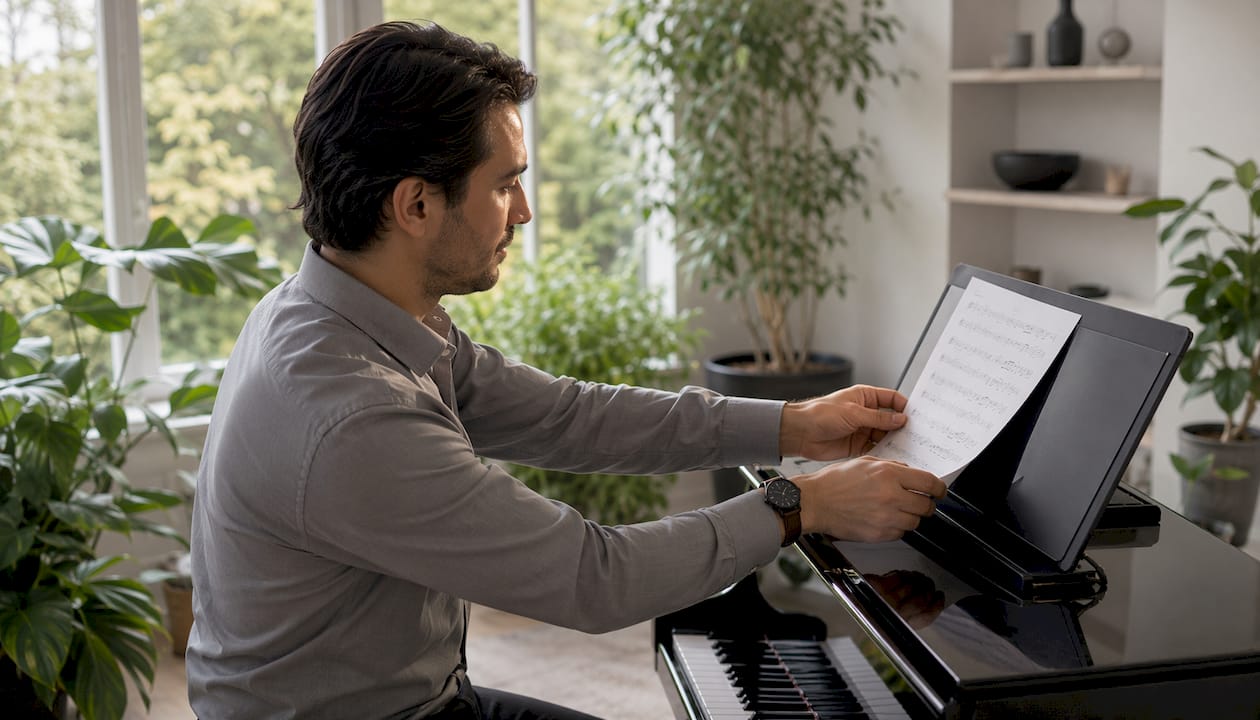
A typical 75-second edit blueprint works like this: shorten or skip the intro, play one verse, move directly into the chorus, and end on the final line of the chorus with a brief outro. No bridge, no key change, no second verse. Clean and deliberate.
Song section | Approx. seconds | Edit instruction |
Intro | — | Shorten to 4 bars or cut entirely |
Verse | 10–30s | Play in full |
Pre-chorus | — | Play if short; cut if over 10s |
Chorus | — | Play in full |
Outro | — | Slow final phrase, resolve to tonic chord |
For medleys, the key is a smooth harmonic transition. A pianist can modulate between two songs in the same key or a closely related one (e.g., C major to G major) without the seam being audible to guests. Tempo changes work best when the second song is within 10–15 BPM of the first. A jarring tempo shift mid-dance pulls guests out of the moment.
A live pianist can shorten, skip, or expand sections on the fly to match your real-time pacing, which is something a recorded track cannot do. That adaptability is the single strongest argument for live performance when choreography is involved.
Rehearsal and coordination: cues, MC timing, and venue logistics
One rehearsal with your pianist, even a 20-minute run-through, eliminates most of the awkward pauses that plague first dances. Pianists recommend starting music exactly when the couple is ready, using a subtle visual cue rather than a verbal one, so the start feels natural on camera.
Rehearsal checklist:
Run the full 60–90 second edit at least twice with the actual choreography or improvised movement.
Confirm the visual cue (a nod, a look toward the pianist) that signals “start now.”
Time the cut: know exactly where the song ends and practice stopping there.
Walk through the transition from the first dance to the next event (toasts, open dancing, dinner).
Venue logistics checklist:
Piano placement: position for sightlines from the dance floor and from the photographer’s likely position.
Power: confirm outlet location and cable run before the day.
Outdoor contingency: have a weather plan if the ceremony or reception is outside.
Sound check: run a brief level check before guests arrive.
Sample MC cue script:
After the first dance, the MC signals the transition: “Please give them a round of applause!” The pianist holds the final chord until the applause begins, then fades. This overlap prevents dead silence between the dance and the next event.
Copy the day-of timeline to: your photographer, your videographer, your MC or DJ, your venue coordinator, and the pianist. Everyone should have the same document.
For practical dance floor setup considerations, this guide on wedding dance floor logistics covers placement and flow in useful detail.
Hiring a pianist in the U.S.: timing, rates, and what’s included
Book a live pianist 3–9 months before your wedding date. Peak wedding season (May through October) fills calendars fast, especially in markets like Southern California, New York, and Chicago. Waiting until 6 weeks out in June is a gamble.
Solo pianist rates in the U.S. vary significantly by market, experience, and what’s included. Entry-level pianists in smaller markets may start around $300–$500 for a two-hour block. Experienced professionals in major metro areas, particularly those who bring their own instrument, sound system, and offer custom arrangements, typically range higher. Always ask for an itemized quote rather than a flat number, because travel fees, extended play time, and additional setup costs can change the total substantially.
What’s commonly included in a standard first-dance booking:
One pre-event consultation (song selection, edit discussion, logistics)
A custom 60–90 second edit of your chosen song
Day-of setup and sound check
Performance of the first dance
Basic amplification (pianist’s own system)
What often costs extra:
Travel beyond a set radius (typically 20–30 miles)
Extended cocktail hour or dinner music
Additional instruments or vocalists
Rush arrangements requested within 2 weeks of the event
Contract items to confirm before paying a deposit: start time, load-in window, set list or song list, power requirements, cancellation policy, and overtime fees. A professional pianist will have all of this in writing.
For couples in Southern California, Platinumpianist’s local service coverage explains what’s included for events across the region.
What to expect when you hire a live pianist: Petra’s practical notes
A professional pianist arrives with more than talent. Platinumpianist, for example, brings a portable white or black piano shell, a full sound system, and handles all the technical setup independently. You don’t need to source an instrument or coordinate with the venue about a house piano.
Here’s what a standard engagement typically covers:
Instrument (portable piano shell in your choice of finish)
Sound system sized to the venue
Pre-event music planning consultation
Custom arrangement or edit of your first-dance song
Day-of setup, sound check, and performance
A common scenario: a couple books an outdoor garden wedding and realizes two weeks out that the venue has no covered power outlet near the ceremony space. A prepared pianist has already confirmed this during the booking consultation and arrives with a battery-powered amplification solution. No scramble, no last-minute vendor calls.
Live piano isn’t background music. When the room goes quiet and the first notes of your song fill the space, every guest feels it. That moment belongs to you, and the pianist’s job is to protect it, not just play it.
Pro Tip: Position the piano at a 45-degree angle to the dance floor rather than flush against a wall. This gives the pianist a clear sightline to the couple for visual cues, and it gives your photographer a clean shot of both the pianist and the couple in the same frame.
For more on how live piano transforms the energy of an event, this piece on live piano performances covers the experiential side in depth.
Sample first-dance timelines and short setlists
Three reception flows, three different ways the first dance can sit in the evening.
Classic formal reception Cocktail hour (piano plays standards and light classical) → Guests seated for dinner → Grand entrance → First dance (“Can’t Help Falling in Love,” 75s piano edit) → Welcome toasts → Dinner service (piano continues softly) → Open dancing begins.
Quick-formal reception Grand entrance → First dance immediately (“All of Me,” 80s edit) → Toasts → Dinner → DJ or band takes over. The piano plays only for the first dance; everything else is DJ. This works well when the venue is small or the couple wants a single, high-impact live moment.
Relaxed-celebratory reception Cocktail hour (piano plays a mix of pop arrangements and instrumentals) → Casual seated dinner → First dance mid-dinner (“River Flows in You,” full 3:40 version or 90s edit) → Open dancing with DJ. The longer instrumental version works here because the atmosphere is already relaxed and guests aren’t waiting for the dance to end before they can move.
Short setlist suggestions for before and after the first dance:
Before: “Clair de lune” (Debussy), “Your Song” (Elton John), “Bloom” (The Paper Kites)
After: transition to a slightly brighter tempo, such as “Better Together” or a jazz standard, before handing off to the DJ or band
For the handoff from piano to DJ or band, the pianist should end on a resolved chord and hold for two beats while the DJ brings up the next track at low volume. The overlap should be 3–5 seconds, not a hard cut. Guests barely notice the transition when it’s done this way.
Coordinating the piano first dance with the rest of your reception
The first dance doesn’t exist in isolation. Where it sits in the schedule, and how it connects to what comes before and after, shapes how the whole evening feels.

Place the first dance after the grand entrance and before toasts if you want it to feel like the emotional centerpiece of the evening. That sequence (entrance → first dance → toasts) builds a natural arc: arrival, intimacy, celebration. Music sets the mood for every wedding moment, and the first dance is where that mood crystallizes.
If dinner is served first, the first dance works well as the opening of the dancing portion of the evening. Guests are fed, relaxed, and ready to watch. The pianist can play softly through dinner and then shift register for the first dance, signaling the transition with a change in volume and tempo.
A few coordination tips that save headaches on the day:
Give your venue coordinator a written timeline with the first dance marked as a fixed point, not a floating one.
Tell your photographer and videographer the exact song and edit length so they can plan their positioning.
If a DJ or band follows the pianist, confirm the handoff plan in advance: who signals whom, and what the first song after the first dance will be. A comparison of live music options can help you decide what follows the piano moment.
Keep the first dance within 10 minutes of the grand entrance. Longer gaps let the energy dissipate.
The transition from first dance to open dancing is the most important handoff of the evening. The pianist’s final chord should feel like a door opening, not a door closing.
Key Takeaways
A live piano first dance, edited to 60–90 seconds and coordinated with your MC and photographer, creates the most memorable and controlled version of this moment.
Point | Details |
Song choice: meaning plus danceability | Pick a song that moves you emotionally and has a tempo you can actually dance to for 75 seconds. |
Prefer live piano when possible | Live piano allows real-time tempo and dynamic adjustments that recorded tracks cannot match. |
Edit to 60–90 seconds | Industry guidance recommends trimming first-dance songs to 60–90 seconds to hold guest attention. |
Rehearse with your pianist | One 20-minute run-through eliminates most timing and cue problems before the wedding day. |
Platinumpianist for Southern California couples | Platinumpianist brings a portable piano shell, sound system, and custom arrangement to your venue. |
Why the first dance piano moment is more fragile than couples think
Most couples spend months choosing their song and about 20 minutes thinking about how it will actually sound in the room. That gap is where first dances go sideways.
The song choice matters less than the execution. A mediocre song played live by a skilled pianist who watches the couple, adjusts the tempo when they slow down, and holds the final chord until the applause starts will always outperform a perfect song played from a speaker while the couple dances slightly out of sync with a fixed edit.
What couples consistently underestimate is the role of the pianist as a real-time collaborator, not just a performer. The best first-dance piano moments happen when the pianist is watching the floor, not the sheet music. That requires a pianist who knows the arrangement cold and has the experience to read the room. Booking early, rehearsing once, and communicating the visual cue clearly are the three things that separate a first dance people talk about from one they politely applaud.
Live piano is also not inherently “soft” or “background.” Experienced pianists fill a space dynamically and set the tone for the evening’s energy. The first dance can be the loudest, most emotionally present moment of the reception if the pianist plays it that way. Couples who ask for “something quiet and romantic” sometimes get exactly that when what they actually wanted was something that stopped the room.
Tell your pianist what you want the room to feel. Not just the song. The feeling.
Platinumpianist: live piano for your Southern California first dance
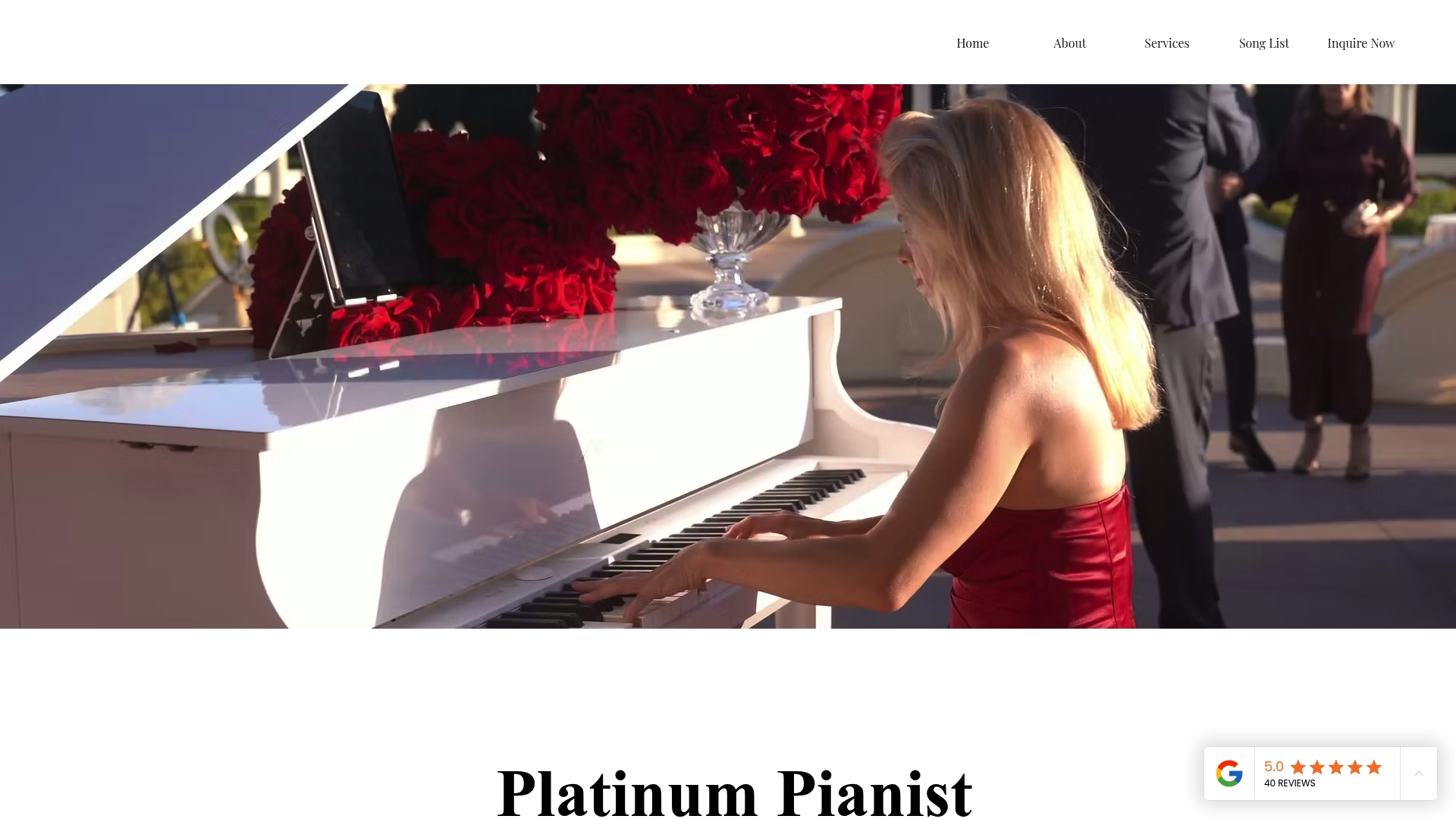
Platinumpianist brings a portable piano shell (white or black finish), a full sound system, and a custom-arranged first-dance edit directly to your venue across Southern California, from Beverly Hills and Los Angeles to Carlsbad and Temecula. You don’t coordinate with a venue about a house piano or rent amplification separately. Everything arrives with Petra.
A standard first-dance booking includes:
One pre-event planning consultation (song selection, edit length, logistics)
A custom 60–90 second piano arrangement of your chosen song
Day-of setup, sound check, and performance
Portable piano shell and on-board sound system
Couples who want cocktail hour or dinner music in addition to the first dance can discuss extended packages. To check availability for your date, book your Beverly Hills event or inquire for Los Angeles directly through the booking page.
Further reading and authoritative sources
These resources are worth bookmarking at different stages of your planning.
The Knot: Classic First Dance Songs — Start here for song trends and curated lists organized by style. Useful for narrowing your shortlist before talking to your pianist.
Brides: 91 Best First Dance Songs — Broader list with lyric notes and mood tags. Good for couples who want options beyond the obvious classics.
Brides: Spotify’s Top First Dance Songs of 2024 — Data-backed look at what couples actually chose in 2024, useful for gauging whether your pick is a crowd-pleaser or a genuine personal choice.
Arnie Abrams Pianist: 50 First Dance Songs That Sound Magical on Piano — Practitioner perspective on which songs translate best to piano arrangements. Read this before finalizing your song.
JAM Duo: First Dance Wedding Music Guide — Covers hiring logistics, live music coordination, and cue timing. Useful for the planning and rehearsal phase.
Skoove: Wedding Piano Songs — Covers piano-specific song recommendations with context on why each works for ceremony and reception moments.
Recommended


