What Is Wedding Cocktail Music? A Couple's Guide
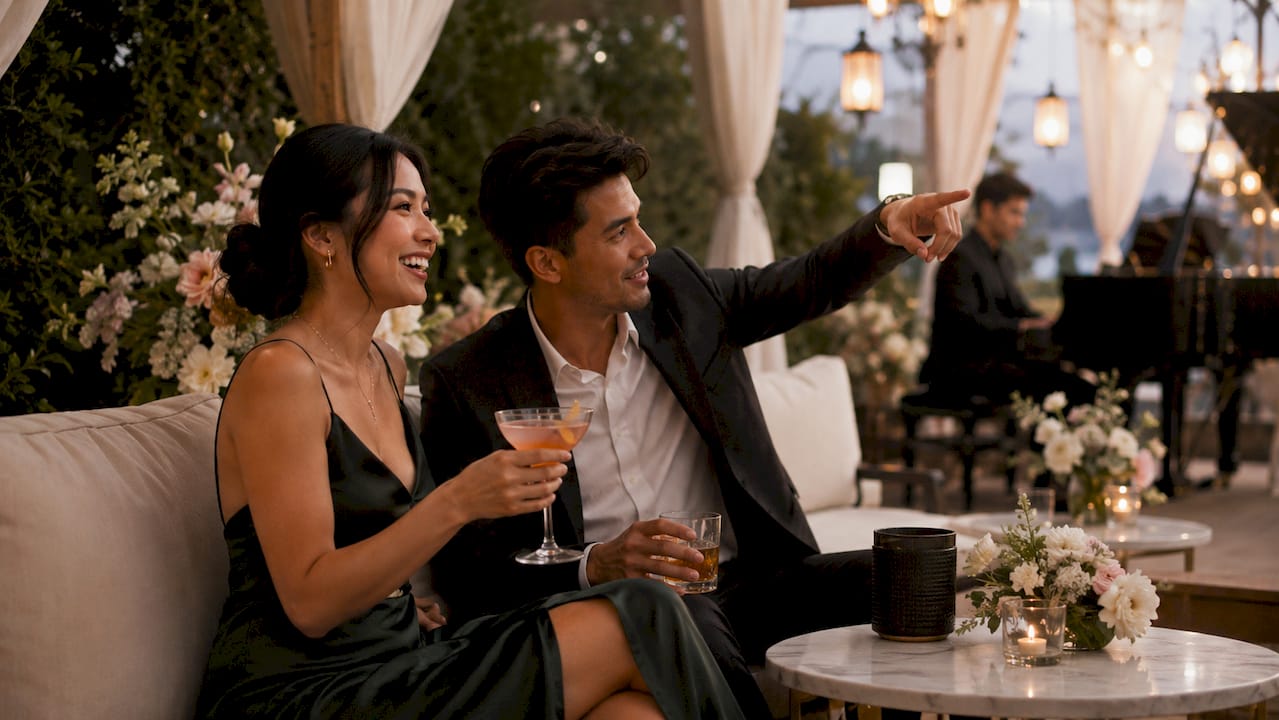
Wedding cocktail music is the curated background music played during the cocktail hour to create a relaxed, social atmosphere that carries guests from the ceremony into the reception. This segment of your wedding day is often underplanned, yet it shapes how your guests feel during one of the most socially active hours of the event. The right cocktail music keeps energy warm without tipping into dance party territory. Platinumpianist, a Southern California live piano service, treats this hour as one of the most musically deliberate parts of any wedding.
What is wedding cocktail music and why does it matter?
Wedding cocktail music is background music, not performance music. Its job is to fill the room with sound that makes conversation feel natural and comfortable. Guests are greeting each other, finding their seats, and processing the emotion of the ceremony. The music underneath all of that needs to support those moments, not compete with them.
This hour also carries a specific emotional function. The ceremony ends with high feeling. The reception opens with high energy. The cocktail hour sits between those two peaks, and the music must bridge that emotional shift without jarring anyone. Think of it as a musical exhale before the celebration accelerates.
Couples often mistake this segment for a warm-up dance set. That is the most common planning error in cocktail hour music. High-energy tracks fatigue guests before the reception even starts, which directly reduces dance floor participation later in the night.
What are the ideal characteristics of wedding cocktail music?
The single most important characteristic is volume. Professional audio standards set cocktail hour music at 65–70 dB. That is roughly the volume of a normal conversation. At that level, guests standing three feet apart do not need to raise their voices or strain to hear each other.
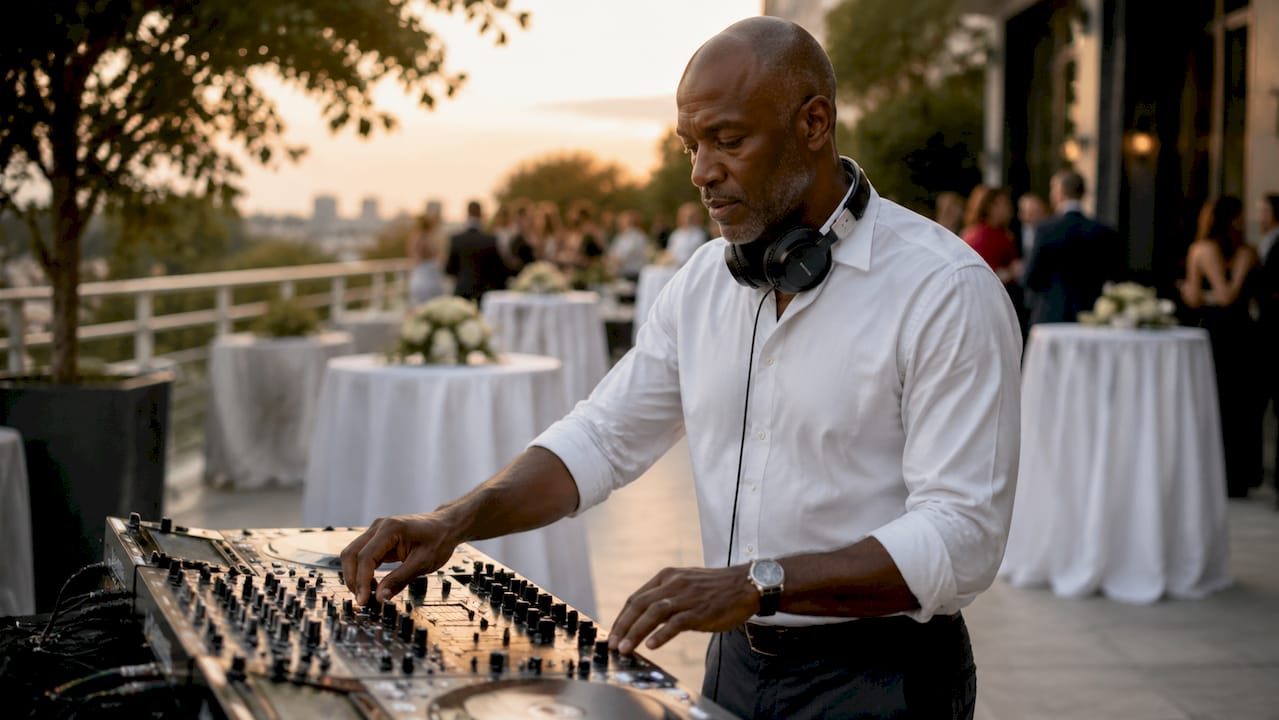
Tempo matters just as much as volume. The music should feel warm and inviting, not sleepy or urgent. Genres like jazz standards, bossa nova, acoustic pop, and soul all hit that middle ground naturally. They carry enough melodic interest to register as music without demanding attention.
The key characteristics of effective cocktail hour music are:
Volume: 65–70 dB, allowing easy conversation without shouting or straining
Tempo: Relaxed but not slow. Think mid-tempo jazz or soft acoustic covers
Genre: Jazz standards, bossa nova, soul, Motown, acoustic pop, or chill lounge
Energy: Noticeably lower than reception music to preserve guest stamina
Mood: Warm, social, and celebratory without being distracting
One mistake couples make is choosing music they personally love without considering how it functions in a room full of people. A song that feels intimate on headphones can feel intrusive at cocktail hour volume.
Pro Tip: Ask your performer or DJ to play a sample track at the venue volume before guests arrive. If you can hear every lyric clearly from across the room, it is too loud.
How to plan your wedding cocktail hour music
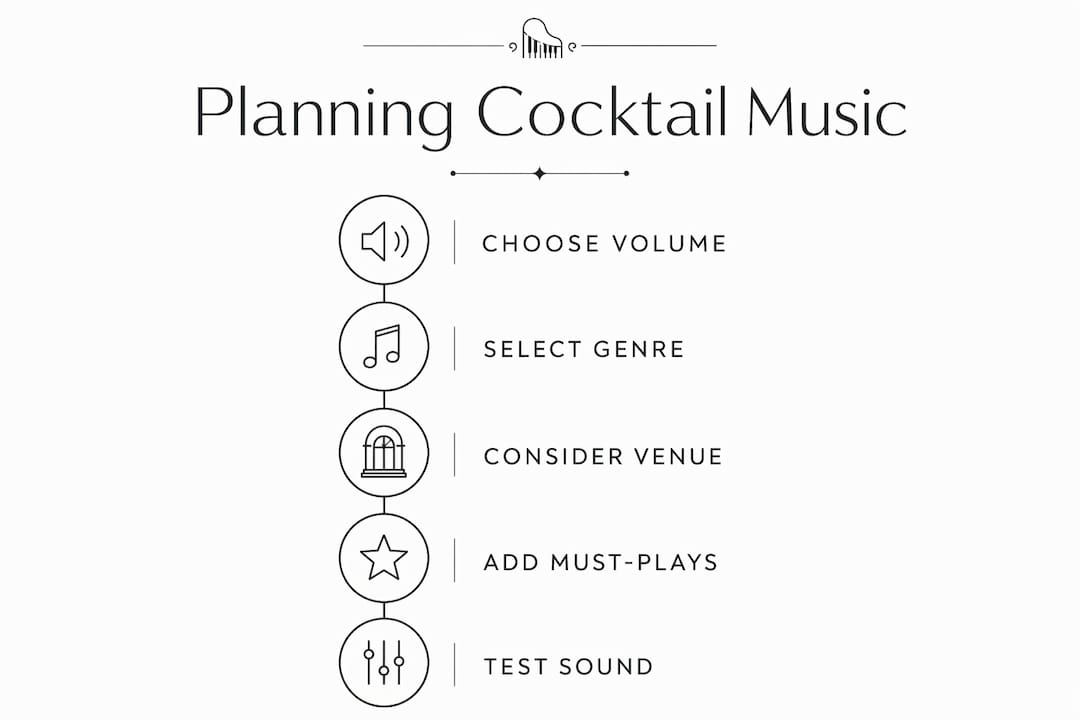
Effective wedding cocktail hour music planning starts with quantity. A standard cocktail hour runs 45–75 minutes, which requires approximately 15–20 songs to maintain steady ambiance. That number assumes each track runs three to four minutes. Gaps between songs break the mood, so your list needs to be longer than you think.
Here is a practical planning sequence:
Set your timing target. Plan for 60 minutes but build a 90-minute music buffer. Cocktail hours frequently run long due to photography, late arrivals, or ceremony overruns. Running out of music creates awkward silence.
Match music to your wedding theme. A garden ceremony in Malibu calls for different music than a black-tie ballroom in Beverly Hills. Your venue, dress code, and overall aesthetic should guide genre selection.
Consider your guest demographics. A crowd with a wide age range responds well to Motown and jazz standards. A younger, more uniform crowd may enjoy acoustic covers of current pop songs.
Give performers a mood brief, not a rigid playlist. Genre or mood briefs allow live musicians to read the room and adjust in real time. A fixed playlist cannot do that.
Deliver your instructions early. Finalize music requests at least two weeks before the wedding. This gives performers time to prepare arrangements and source any specific songs.
Pro Tip: Instead of listing 20 specific songs, give your musician three genre anchors and two or three “must-play” tracks. That combination gives them creative flexibility while honoring your preferences.
Building your wedding song list with this structure takes less time than a full playlist and produces better results on the day.
How does the venue affect cocktail hour music?
Venue type is one of the most overlooked variables in cocktail hour music planning. Sound behaves completely differently in a ballroom versus an outdoor courtyard versus a barn. Each space requires a different audio setup to avoid dead air or uneven sound distribution.
Outdoor spaces, barns, and ballrooms each present distinct acoustic challenges. Outdoor venues lose sound quickly and need more speaker coverage. Ballrooms with hard floors and high ceilings create echo that muddies music at higher volumes. Barns absorb sound unevenly depending on their construction.
Venue type | Key acoustic challenge | Audio solution |
Ballroom | Echo and reverb at high volume | Lower volume, directional speakers |
Outdoor courtyard | Sound dispersal and wind interference | Additional speaker coverage, monitor placement |
Barn or rustic space | Uneven absorption, dead spots | Multiple smaller speakers distributed throughout |
Indoor garden or atrium | Glass and hard surfaces amplify treble | EQ adjustments to reduce harshness |
Live performers carry a significant advantage here. Live musicians read the room and adjust tempo, volume, and energy dynamically as the space fills with guests. A static playlist cannot detect that the room has gotten louder as 150 people arrived, but a live pianist can. That real-time adjustment prevents the music from getting lost or becoming intrusive as the crowd grows.
If your ceremony and cocktail hour happen in separate spaces, each location needs its own dedicated audio setup. Sharing equipment between spaces creates logistical delays and often results in one space sounding noticeably worse than the other.
What genres work best for a wedding cocktail hour?
Genre choice sets the emotional tone of the entire cocktail hour. The right genre makes guests feel welcome and relaxed. The wrong one makes them feel like they are waiting for something to start.
Jazz standards, bossa nova, acoustic pop, soul, and Motown are the most consistently effective choices across different wedding styles and guest demographics. Each genre promotes conversation and creates a warm social atmosphere without demanding attention.
Genre | Mood it creates | Best for |
Jazz standards | Sophisticated, timeless, relaxed | Formal weddings, older guest mix |
Bossa nova | Warm, romantic, slightly exotic | Garden weddings, destination events |
Acoustic pop covers | Familiar, approachable, current | Younger crowds, casual venues |
Soul and Motown | Joyful, nostalgic, celebratory | Diverse age groups, outdoor receptions |
Chill lounge | Modern, understated, ambient | Contemporary venues, minimalist aesthetics |
Genre also needs to match your guest age range. A crowd spanning multiple generations responds best to jazz or Motown because those styles carry broad cultural familiarity. A younger, more uniform guest list can handle acoustic covers of current artists without alienating anyone.
Pro Tip: If you are unsure which genre fits your wedding, describe the feeling you want guests to have when they walk into the cocktail space. “Warm and celebratory” points to soul or Motown. “Elegant and calm” points to jazz or bossa nova. That description is more useful to a performer than a song list.
Cultural context matters too. If your wedding honors specific cultural traditions, weaving in music from that tradition during the cocktail hour is a natural and meaningful touch. A live musician can adapt music styles to blend cultural influences without disrupting the overall flow.
Key takeaways
Wedding cocktail music is background music designed to facilitate conversation and ease the emotional transition from ceremony to reception, not a preview of the dance floor.
Point | Details |
Volume target | Keep music at 65–70 dB so guests can talk without straining. |
Plan for overruns | Build a 90-minute music buffer even if you expect a 60-minute hour. |
Genre over playlist | Give performers a mood brief rather than a fixed song list for better real-time results. |
Venue acoustics matter | Each venue type needs a dedicated audio setup to avoid dead air or uneven sound. |
Live beats static | Live musicians adjust volume and tempo as the room fills, which a playlist cannot do. |
What I have learned after years of playing cocktail hours
Couples almost always underestimate this hour. They spend months choosing the first dance song and the reception playlist, then hand the cocktail hour to whoever is available with a Spotify queue. The result is music that is either too loud, too quiet, or tonally wrong for the moment.
The most common misconception I hear is that cocktail music just needs to be “something nice in the background.” That framing misses the point entirely. This hour is when your guests form their first impression of the reception. If the music feels off, the whole event feels slightly off, even if no one can name why.
What actually works is treating the cocktail hour as its own musical act with a beginning, a middle, and a build toward the reception. I start softer and more intimate, then gradually increase warmth and energy as the room fills. By the time guests are called to dinner, they are already in a celebratory mood. A static playlist cannot do that. It plays the same energy at minute one as it does at minute sixty.
The other thing I tell every couple: do not skip the venue walkthrough with your musician. The difference between a courtyard and a ballroom is not just aesthetic. It changes everything about how the music lands. Knowing the space in advance is the difference between music that fills the room and music that gets lost in it.
— Petra
Bring your cocktail hour to life with Platinumpianist
The cocktail hour deserves the same care as every other part of your wedding day. Platinumpianist provides live piano entertainment for weddings across Southern California, bringing a full piano setup directly to your venue. Whether you are hosting an intimate garden ceremony in Malibu or a formal reception in Beverly Hills, the music is tailored to your space, your guests, and your vision.
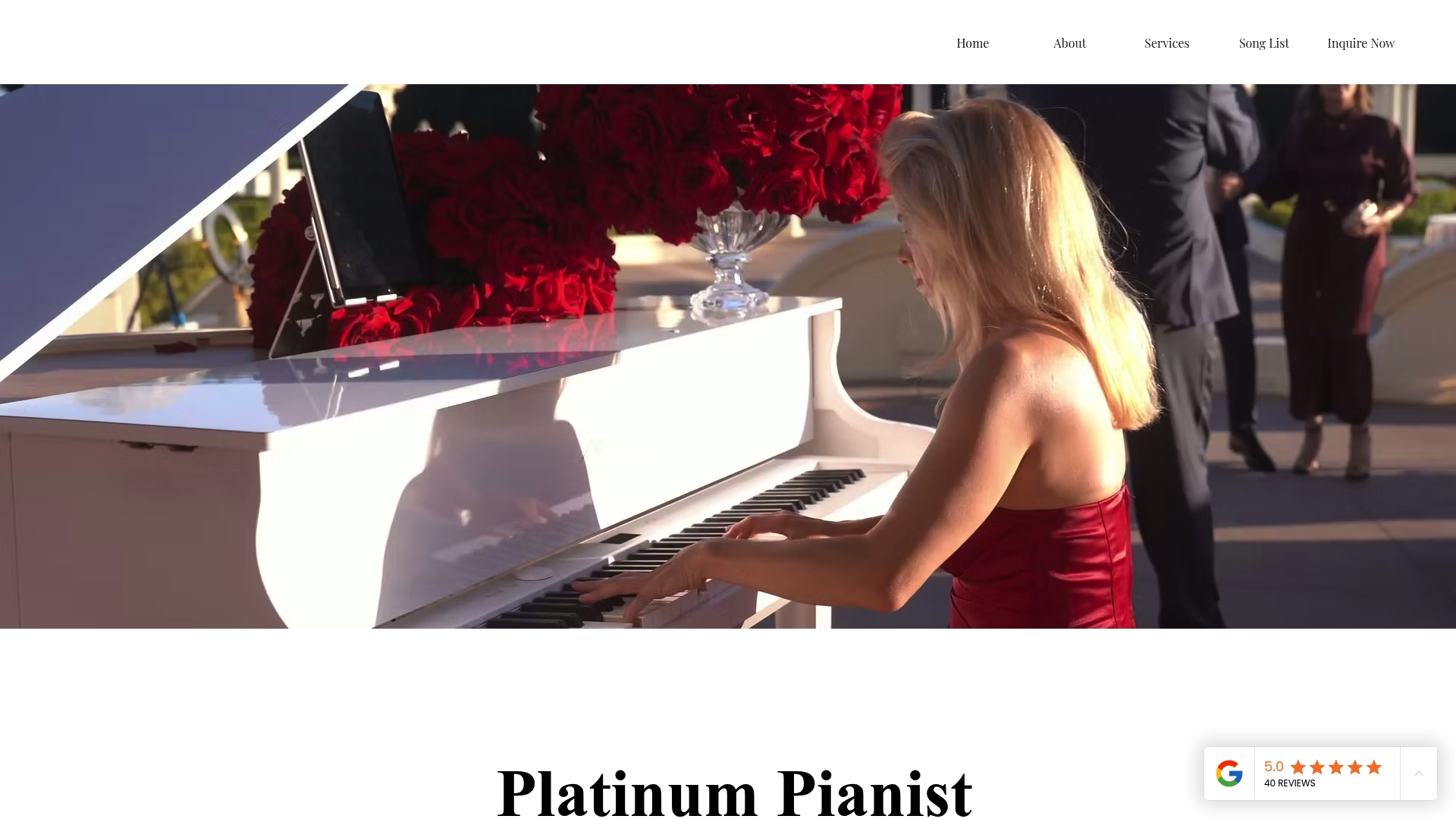
Platinumpianist reads the room in real time, adjusting tempo and volume as your cocktail hour unfolds. No dead air, no awkward transitions, and no generic playlists. If you are planning a wedding in the Los Angeles area, explore live pianist services for your cocktail hour and reception. You can also review wedding entertainment packages to find the right fit for your event.
FAQ
What is the difference between cocktail music and reception music?
Cocktail music is background music designed to support conversation at 65–70 dB. Reception music is louder, higher energy, and built for dancing and celebration.
How many songs do I need for a cocktail hour?
Plan for 15–20 songs to cover a 45–75 minute cocktail hour. Build a 90-minute buffer to account for overruns.
Should I hire a live musician or use a playlist for cocktail hour?
Live musicians adjust volume and tempo in real time as the room fills, which a static playlist cannot do. For most weddings, a live performer produces a noticeably better guest experience.
What type of music works best for a wedding cocktail hour?
Jazz standards, bossa nova, acoustic pop, soul, and Motown are the most effective genres. All promote conversation and create a warm, celebratory atmosphere without overwhelming guests.
When should I finalize my cocktail hour music instructions?
Deliver your music instructions and any specific song requests to your performer at least two weeks before the wedding day.
Recommended


