What Is a Wedding Evening Reception? Your Full Guide
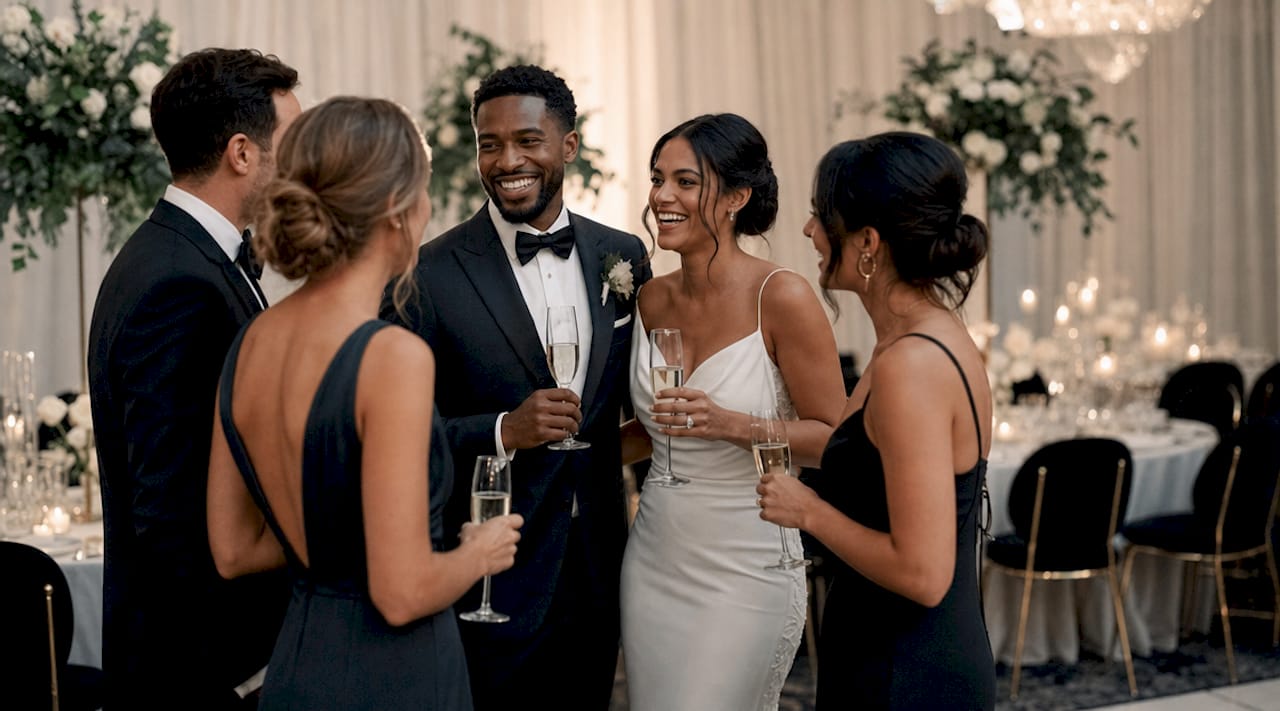
A wedding evening reception is the festive social celebration held after the marriage ceremony, where newlyweds and their guests mark the occasion through music, dancing, food, and shared joy. Unlike the formal ceremony or a seated wedding breakfast, the evening reception centers on entertainment and free-flowing socializing. Standard evening receptions run between 4 and 6 hours, typically starting around 6 or 7 pm and wrapping up by midnight. This guide covers everything you need to know about the format, planning, and creative possibilities of a wedding evening reception.
What is a wedding evening reception?
A wedding evening reception is a distinct event, separate in tone and structure from earlier wedding formalities. Where the ceremony is solemn and the wedding breakfast is formal, the evening reception is deliberately relaxed and high-energy. Think of it as the party layer of your wedding day.
Evening receptions focus on drinks, dancing, and lighter dining rather than a plated three-course meal. This format also allows couples to expand their guest list for the evening only, inviting friends, colleagues, or extended family who were not present at the ceremony. That flexibility makes the evening reception one of the most socially inclusive parts of any wedding celebration.
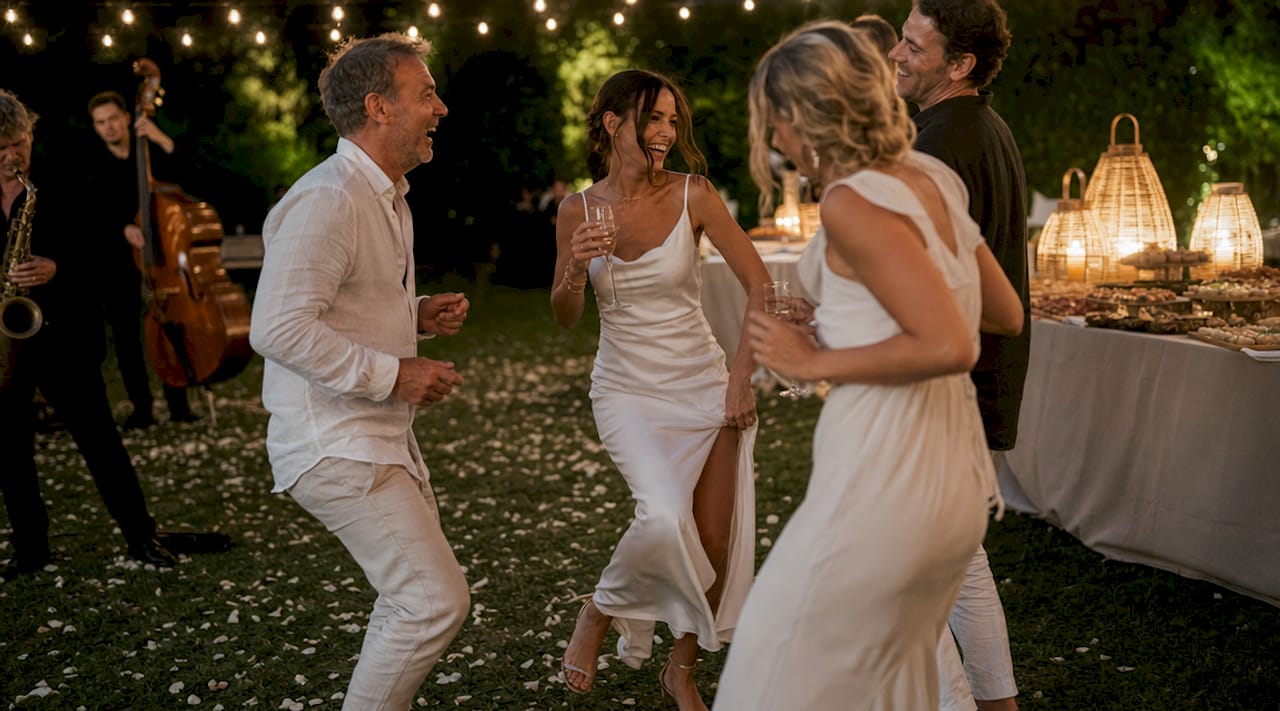
The core components are consistent across most weddings: a DJ or live band, a buffet or snack-style spread, a dance floor, and a loose schedule anchored by a few key moments like the first dance and cake cutting. The atmosphere is intentionally festive rather than ceremonial.
What typically happens at a wedding evening reception?
The sequence of events at an evening reception follows a recognizable rhythm, even when the details vary by couple. Here is how a typical evening unfolds:
Guest arrival and welcome drinks. Evening guests arrive, often to background music and a drinks reception. This is when the couple greets extended family and friends joining for the first time.
First dance. The couple takes the floor for their first dance together, signaling the official start of the celebration. This moment sets the emotional tone for the night.
Buffet or food service opens. Rather than a formal sit-down dinner, evening receptions favor buffet-style dining or grazing tables that guests can access throughout the night.
Speeches or toasts. If any toasts were not delivered at the wedding breakfast, the evening reception can include a short round. Keep these brief to protect the party energy.
Cake cutting. The couple cuts the wedding cake, often accompanied by a specific song and a photographer capturing the moment.
Open dancing. The dance floor opens fully, and the DJ or band shifts into a higher gear. This is the heart of the evening and typically runs for two to three hours.
Late-night food reveal. Many couples now include a surprise late-night snack, such as a pizza station or slider bar, to re-energize guests around the 10 pm mark.
Last dance and send-off. The final song signals the close of the night, often followed by a sparkler exit or confetti send-off.
Pro Tip: Assign a show caller, whether that is your MC, wedding planner, or DJ, to manage vendor cues and keep the timeline moving. A dedicated show caller prevents the couple from micromanaging and keeps the event flowing without dead air.
The atmosphere at an evening reception is noticeably different from the ceremony. Guests are looser, conversations are louder, and the energy builds rather than settles. That shift is intentional and worth designing for.
How to plan a successful evening reception
Solid evening reception planning comes down to booking early, structuring your timeline in blocks, and protecting the moments that matter most.
Booking and logistics
Secure your venue and catering 9 to 12 months in advance, especially for peak wedding season dates in Southern California. Finalize your guest count and submit your timeline to all vendors two weeks before the event. Late changes create confusion across your entire vendor team.
Timeline structure
Structured reception timelines use five distinct blocks: arrival, seating and entrance, dinner or food service, formalities, and open dancing. Each block has an anchor moment that cannot move, with flexible transitions built around it. This protects your key memories while absorbing the small delays that every live event produces.
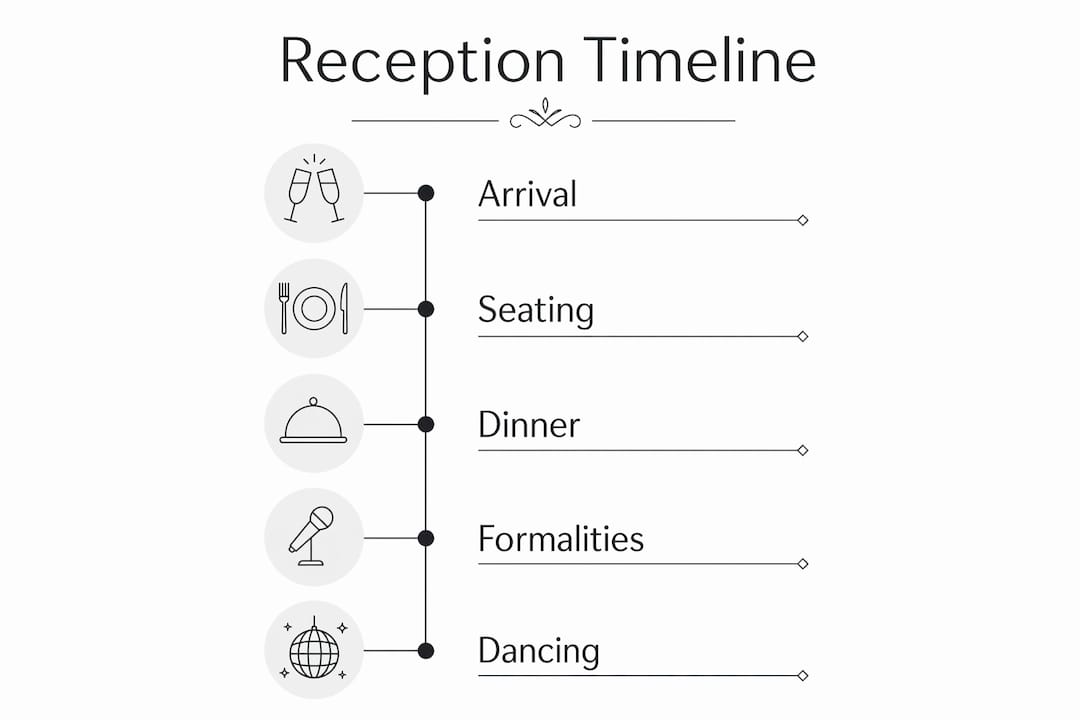
Block | Timing | Anchor moment |
Arrival and welcome | 6:00 pm to 6:30 pm | Guest greeting and drinks |
Entrance and first dance | 6:30 pm to 7:00 pm | Couple’s first dance |
Food service | 7:00 pm to 8:30 pm | Buffet opens |
Formalities | 8:30 pm to 9:00 pm | Speeches, cake cutting |
Open dancing | 9:00 pm to midnight | Last dance send-off |
Managing speeches
Speech fatigue is a real threat to reception energy. Limit total toast time to 30 minutes with a five-minute cap per speaker. Brief, focused toasts land harder than rambling ones, and your guests will thank you for it.
Seating and layout
Arrange tables and lounge areas around the perimeter of the dance floor rather than in front of it. Guests who want to sit should never feel like they are blocking the action. Clear sightlines to the stage or DJ booth also help the entertainment feel connected to the whole room.
Pro Tip: Build a master vendor timeline and share it with every supplier, including your caterer, photographer, and entertainment. When everyone operates from the same document, transitions happen without the couple needing to direct traffic.
Wedding evening reception ideas and entertainment options
The best evening receptions treat the night as a story with chapters. Successful receptions use intentional lighting changes, musical cues, and surprise moments to sustain engagement from the first dance to the last song. That storytelling approach is what separates a memorable night from a forgettable one.
Here are the entertainment and atmosphere options worth considering:
Live music. A live pianist, band, or string quartet creates an atmosphere that no playlist can replicate. Live piano music adds warmth and spontaneity, responding to the room’s energy in real time.
DJ with curated sets. A skilled DJ reads the crowd and adjusts tempo and genre to keep the dance floor full. Pair a DJ with a live musician for a hybrid set that covers both ambiance and high-energy moments.
Specialty acts. Saxophonists, magicians, caricature artists, and photo booths give guests something to do between dances and create natural conversation starters.
Interactive food stations. Schedule food stations in 45 to 60 minute windows rather than leaving a buffet open all night. Timed stations create social hubs and prevent the long lines that stall guest flow.
Lighting design. Uplighting, pin spots on centerpieces, and a well-timed shift to warmer tones after dinner signal the transition from dining to dancing without a single announcement.
Late-night snack reveal. A surprise food moment around 10 pm, such as a taco cart, grilled cheese station, or dessert bar, re-energizes guests and extends the party naturally.
Pro Tip: When choosing your reception entertainment, think about what reflects you as a couple rather than what is trending. Guests remember authenticity far longer than novelty.
The pacing of entertainment matters as much as the entertainment itself. Avoiding slow transitions and long speeches preserves the natural energy that builds across the night. Every lull is a moment when guests check their phones or head for the exit.
Evening reception vs. full-day reception: what is the difference?
The distinction between an evening reception and a full-day reception affects your guest list, budget, and overall event structure. Understanding the difference helps you choose the format that fits your vision.
Factor | Evening reception | Full-day reception |
Guest list | Can include evening-only guests | All guests attend from ceremony onward |
Dining style | Buffet, grazing tables, late-night snacks | Formal sit-down meal with multiple courses |
Formality | Relaxed, party-focused | More structured with ceremony and meal formalities |
Duration | 4 to 6 hours | 8 to 12 hours |
Budget | Lower food and venue costs | Higher overall spend on catering and staffing |
Evening receptions differ from full-day receptions in guest attendance, meal style, and cost. The evening-only format is not a lesser version of a full wedding. It is a deliberate choice that prioritizes dancing and socializing over formal dining. Many couples use it to include a wider circle of friends without the cost of feeding everyone a three-course meal.
The full-day format suits couples who want a single cohesive experience for all guests. The evening-only format suits couples who want a high-energy celebration that is accessible to more people. Neither is wrong. The right choice depends on your priorities and your budget.
Key takeaways
A wedding evening reception is a structured yet flexible celebration that succeeds when entertainment, food, and timing work together as a single designed experience.
Point | Details |
Core definition | An evening reception is a post-ceremony celebration focused on music, dancing, and lighter dining. |
Timing and duration | Most evening receptions run 4 to 6 hours, starting around 6 or 7 pm. |
Planning lead time | Book venues and caterers 9 to 12 months ahead and finalize details two weeks before the event. |
Speech management | Cap total toast time at 30 minutes with a five-minute limit per speaker to protect dance floor energy. |
Entertainment approach | Treat the night as a story with chapters, using lighting, music, and food reveals as intentional transitions. |
What I have learned from playing weddings across Southern California
After performing at weddings from Beverly Hills to San Diego, the pattern I see most often is this: couples spend months choosing flowers and almost no time designing the flow of their evening. The result is a beautiful room with a stalled dance floor by 9 pm.
The couples whose receptions I remember most are the ones who treated the evening as a live performance, not a checklist. They briefed their vendors together. They capped their speeches before anyone asked. They planned a late-night food moment that genuinely surprised their guests. One couple I worked with in Orange County had their caterer wheel out a full taco station at 10:15 pm with zero announcement. The room erupted. That moment cost less than an extra hour of open bar and generated more energy than anything else that night.
The other thing I have seen consistently is that live music changes the room in a way that even the best DJ cannot fully replicate. A live instrument responds to the crowd. When I see guests starting to drift, I shift tempo and register without anyone asking. That responsiveness is something a playlist simply cannot do.
My honest advice: invest in your timeline before you invest in your centerpieces. A well-paced evening with modest decor will outlast a stunning room with a dead dance floor in every guest’s memory.
— Petra
How Platinumpianist can make your evening reception unforgettable
Planning a wedding evening reception in Southern California means you have access to some of the most beautiful venues in the country. The entertainment you choose for that space sets the tone from the moment guests arrive.
Platinumpianist brings a grand piano directly to your venue, performing live throughout Beverly Hills, Los Angeles, Orange County, and San Diego. Whether you need elegant background music during cocktail hour or a dynamic live performance to anchor your first dance, wedding music services from Platinumpianist are tailored to your timeline and your taste. If you are planning a reception in the Beverly Hills area, you can also explore the Beverly Hills pianist options for your specific date. Reach out early. Peak season dates fill quickly.
FAQ
What is the difference between a wedding reception and an evening reception?
A wedding reception is the broader term for any post-ceremony celebration, while an evening reception specifically refers to a party-focused event held in the evening, often with a buffet rather than a formal meal. Evening receptions frequently include guests who were not present at the ceremony.
How long does a wedding evening reception last?
Most wedding evening receptions last between 4 and 6 hours, typically running from around 6 or 7 pm to 10 pm or midnight, depending on venue rules and the entertainment schedule.
What entertainment works best for an evening reception?
Live music, a DJ, specialty acts like saxophonists or photo booths, and interactive food stations all work well. The most effective approach combines a live musician for ambiance with a DJ or band for high-energy dancing.
How do you keep guests engaged throughout the evening?
Structure the night with distinct chapters: arrival, first dance, food service, formalities, and open dancing. Add a surprise late-night food reveal around the 10 pm mark to re-energize the room and keep guests on the dance floor.
When should you book vendors for an evening reception?
Book your venue and caterer 9 to 12 months before the wedding date. Finalize your guest count and share your master timeline with all vendors at least two weeks before the event to avoid last-minute coordination issues.
Recommended

