Wedding Ceremony Planning Guide for Newly Engaged Couples
- 4 days ago
- 8 min read

A wedding ceremony is the formal ritual that joins two people in marriage, built around a defined sequence of events that couples can shape to reflect their own story. Most ceremonies follow the same core structure: processional, opening words, vows, ring exchange, pronouncement, and recessional. What separates a forgettable ceremony from a deeply moving one is how couples fill that structure with meaning. This guide covers the standard order of events, personalization strategies, guest involvement, music choices, and practical planning tips to help you build a ceremony that feels completely yours.
What is the typical order of events in a wedding ceremony?
A standard non-religious ceremony runs 20–30 minutes, while religious ceremonies take 45–60 minutes to include prayers and cultural elements. Knowing this upfront helps you set realistic expectations with your venue, vendors, and guests.
The sequence below applies to most ceremonies, religious or civil:
Prelude music — Begins 15–30 minutes before the ceremony starts. Guests are seated while music plays.
Processional — Lasts 3–5 minutes. The wedding party walks in, followed by the couple.
Welcome and opening words — 2–3 minutes. The officiant greets guests and introduces the ceremony’s tone.
Readings — 2–5 minutes. A poem, scripture, or personal passage read by a guest or family member.
Address — 3–7 minutes. The officiant speaks about love, commitment, or the couple’s story.
Vows — 3–8 minutes. The couple speaks their promises to each other.
Ring exchange — 2–3 minutes. Rings are presented and placed.
Unity ritual — 2–3 minutes. Optional, but adds a visual, symbolic moment.
Pronouncement and kiss — 2–3 minutes. The officiant declares the couple married.
Recessional — 2–3 minutes. The couple and wedding party exit.
Pro Tip: Build your ceremony timeline backward from your venue’s hard end time. Add a 10-minute buffer before the recessional to absorb any delays.
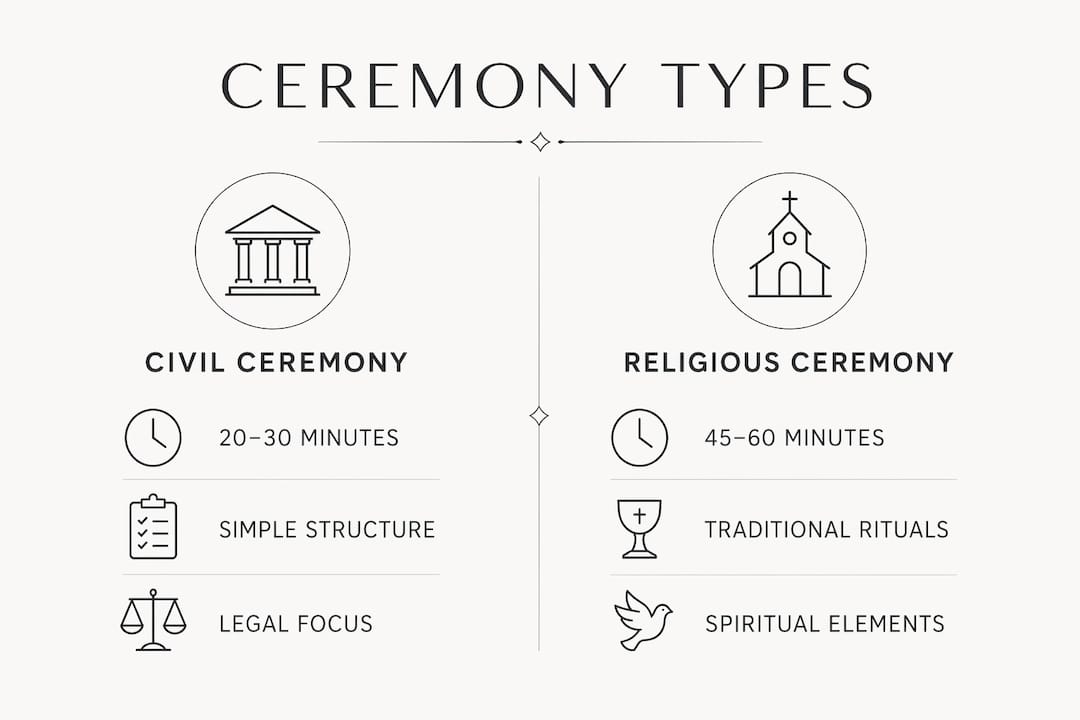
The table below shows how civil and religious ceremonies differ in structure and timing.
Element | Civil ceremony | Religious ceremony |
Total length | 20–30 minutes | 45–60 minutes |
Readings | Optional | Often required |
Unity ritual | Couple’s choice | Tradition-specific |
Prayer or scripture | Rarely included | Central component |
Officiant type | Judge, notary, or ordained friend | Priest, pastor, rabbi, or imam |
Multicultural ceremonies often blend elements from both columns. A Hindu-Christian ceremony, for example, might include a ring exchange alongside a traditional garland ritual. The key is deciding which elements carry genuine meaning and building the timeline around those.
How can couples personalize their wedding ceremony?
Custom vows are the single most impactful way to make a ceremony feel unique. They do not need to be literary masterpieces. Honest, specific words create a stronger emotional connection than polished ones.
A three-part vow structure works well for most couples:
Reflection — Describe a specific moment when you knew this person was the one.
Qualities — Name two or three things you love about them that are genuinely specific to your relationship.
Promises — Make concrete commitments about how you will show up for each other.
Keep each set of vows to 2–3 minutes. Longer vows lose emotional impact and stretch the ceremony past the point where guests stay fully engaged.
Beyond vows, personalization comes from blending cultural and family traditions in ways that carry real meaning. A Filipino cord ceremony, a Jewish breaking of the glass, or a West African libation ritual each tells a story that guests can feel, not just watch. When you include a tradition from each family’s background and briefly explain its significance, guest engagement rises noticeably.
Unity rituals deserve the same scrutiny. A candle lighting, wine blending, or tree planting ceremony works best when the symbolism connects to your actual life together. A couple who met hiking might plant a tree they will tend together. A couple who bonded over cooking might blend spices. Unity rituals land best when the symbolism is self-evident, not just visually appealing for photos.
Personal decor also tells your story. A table of framed photos from your relationship, a display of meaningful objects, or a hand-lettered program that explains each ritual gives guests context and makes the space feel like yours.
Pro Tip: Start writing your ceremony script 3–4 months before the wedding. That timeline gives you room to revise, add personal details, and share drafts with your officiant without rushing.
How can you involve guests in the ceremony experience?
Involving guests actively transforms them from observers into emotional participants. That shift makes the ceremony more memorable for everyone in the room.
Several methods work well depending on your guest count and ceremony style:
Ring warming ceremony — Guests pass the rings through the crowd before the exchange, each person holding them briefly and offering a silent wish. This works best for intimate weddings under 60 guests. Larger groups make it impractical and add significant time.
Communal vows — The officiant asks guests to make a collective promise to support the couple. A simple “We will” from the crowd creates a powerful shared moment.
Guest wishes during seating — Guests write a wish or piece of advice on a card as they arrive. These are collected and given to the couple after the ceremony.
Group singing or response — For couples with musical families or tight-knit communities, a song or call-and-response moment during the ceremony creates genuine connection.
Honoring absent loved ones also invites guests into the emotional space of the ceremony. A reserved seat with a flower, a candle lit in someone’s memory, or a brief mention by the officiant acknowledges loss without derailing the joy. Keep these moments brief and intentional.
Pro Tip: Give guests clear, printed instructions for any participatory element. If they do not know what to do, they will feel awkward rather than moved.
What role does music play in a memorable ceremony?
Live music creates greater emotional impact than recorded tracks. The presence of a live musician responds to the room in real time, adjusting tempo and energy in ways a playlist cannot.
Music choices shape every emotional beat of the ceremony:
Prelude music — Sets the tone as guests arrive. Choose songs that reflect your relationship, not just generic wedding standards.
Processional — The most emotionally charged moment for most guests. A live version of a meaningful song, played by a pianist or string performer, amplifies the feeling significantly.
Interlude music — Fills the space during a unity ritual or signing of the marriage license. This is often overlooked but shapes how guests experience that pause.
Recessional — Should feel celebratory and energetic. The right song sends guests out smiling and sets the tone for the reception.
For couples interested in cultural music as part of their ceremony, Indian classical music brings a depth of tradition and emotional resonance that suits both spiritual and secular ceremonies. A cultural music experience can also blend multiple traditions into a single, cohesive sound.
Involving a family member as a performer is another option worth considering. A sibling who plays guitar or a parent who sings adds a layer of personal meaning that no hired musician can replicate. If that is not possible, work with your musician to choose songs that tell your story. A good processional music choice reflects who you are as a couple, not just what sounds traditional.
What practical tips help you plan and execute a smooth ceremony?
Rehearsals reduce confusion and nervousness for everyone involved. A 30–45 minute rehearsal the day before is enough for most weddings. If your ceremony involves more than four participants in the processional, a rehearsal is not optional.
Follow these steps to keep planning on track:
Book the big four first. Venue, officiant, photographer, and catering are the four vendors that fill up fastest. Lock these in before anything else.
Set your ceremony start time based on light. For outdoor ceremonies, the hour before sunset gives the best natural light for photos and the most comfortable temperature.
Schedule a first look. A private moment between the couple before the ceremony reduces nerves and frees up post-ceremony time for photos.
Confirm the ceremony order with every vendor. Your officiant, musician, and photographer all need the same timeline. Misaligned cues cause the most common ceremony delays.
Build in a buffer. Ceremonies rarely start exactly on time. A 10-minute buffer between the scheduled start and the processional protects the rest of your timeline.
Ceremonies longer than 35 minutes risk losing guest attention, especially at outdoor ceremonies in warm weather. Keep your ceremony tight by cutting any element that does not carry genuine meaning for you.
Pro Tip: Print the ceremony order on the back of your program. Guests who know what comes next stay more engaged and feel less anxious about when to stand, sit, or respond.
Key Takeaways
A memorable wedding ceremony combines a clear structure, personal meaning, and deliberate music choices to create an experience guests and couples carry with them for years.
Point | Details |
Know your ceremony length | Civil ceremonies run 20–30 minutes; religious ceremonies run 45–60 minutes. |
Personalize with specificity | Custom vows using a three-part structure create stronger emotional impact than general promises. |
Match guest participation to group size | Ring warming works for under 60 guests; communal vows scale to any crowd. |
Choose live music intentionally | Live musicians respond to the room in real time and amplify emotional moments more than recordings. |
Plan the big four first | Venue, officiant, photographer, and catering fill up fastest and anchor every other decision. |
What I have learned from watching hundreds of ceremonies
After playing piano at weddings across Southern California for years, I have noticed one consistent pattern. The ceremonies people remember most are never the most elaborate ones. They are the ones that felt true.
Couples sometimes spend months debating whether to include a unity candle or a sand ceremony because they saw it at another wedding. The better question is whether it means anything to them specifically. A ritual that requires explanation to feel significant usually does not belong in your ceremony.
I have also watched couples try to pack too much into 45 minutes. A reading, two unity rituals, a surprise performance, and a 10-minute address from the officiant sounds meaningful on paper. In practice, guests start shifting in their seats around minute 30. The most emotionally effective ceremonies I have played for tend to run 25–30 minutes with two or three deeply personal elements, not six moderately personal ones.
The other thing I tell couples: do not underestimate the power of music to carry the moments between words. The silence before the processional begins, the pause during a ring exchange, the first notes of the recessional. Those are the moments guests feel in their chest. Choose your music as carefully as you choose your vows.
— Petra
Live piano music for your wedding ceremony
The right music does not just fill silence. It tells your guests how to feel before a single word is spoken. Platinumpianist brings a live grand piano to wedding ceremonies across Southern California, covering every musical moment from the prelude to the recessional.
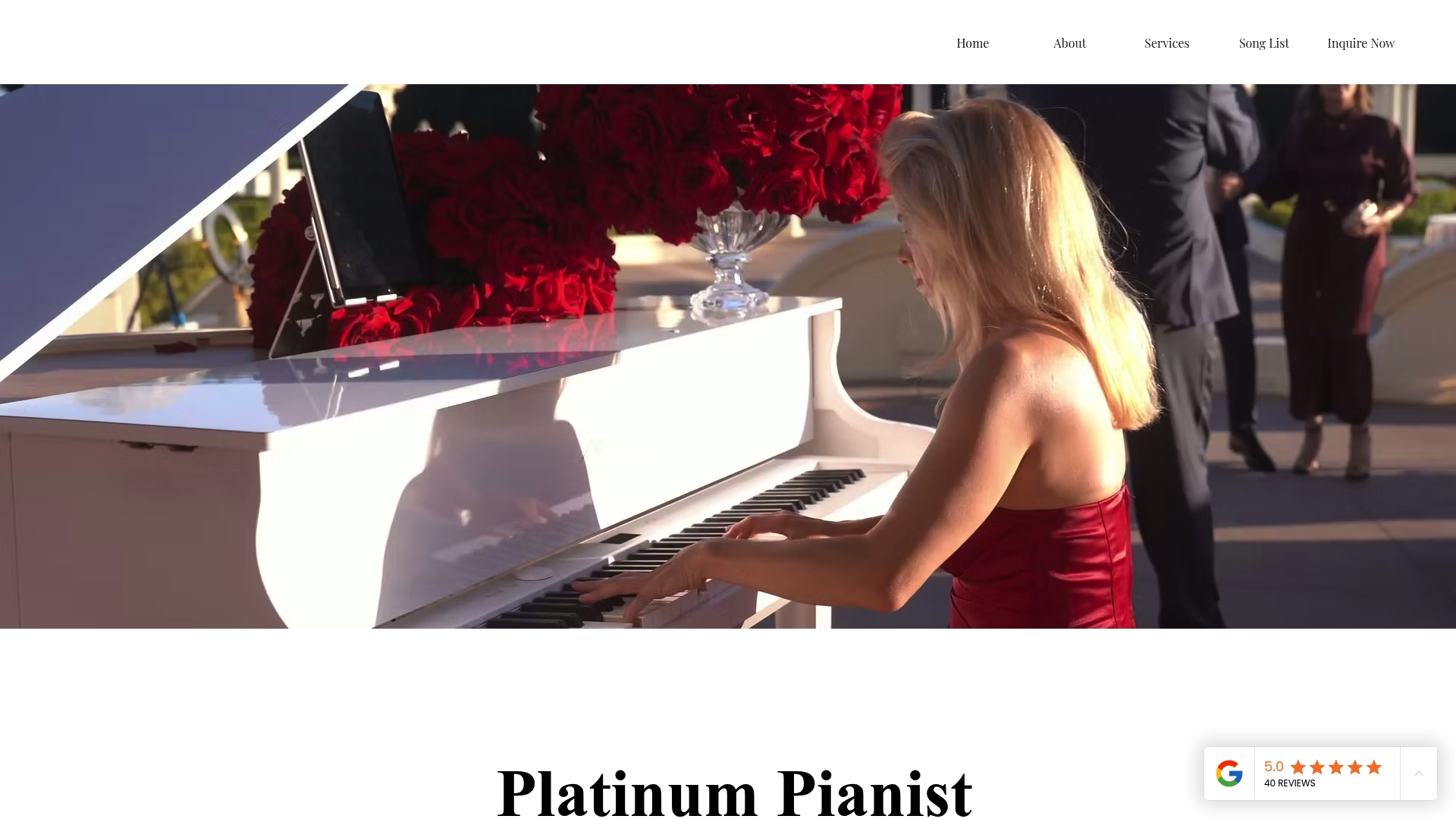
Whether you want a classical processional, a modern love song played live, or a custom arrangement of a song that means something to you both, Platinumpianist works with couples to build a ceremony soundtrack that fits the day. If you are planning a ceremony in the Los Angeles area, explore live pianist options for your wedding. For couples planning in Beverly Hills, Platinumpianist’s Beverly Hills services offer the same personalized live music experience with full setup included.
FAQ
How long should a wedding ceremony be?
A civil ceremony typically runs 20–30 minutes. Religious ceremonies run 45–60 minutes. Most guests stay fully engaged for ceremonies up to 35 minutes.
What is the standard order of a wedding ceremony?
The standard order is: prelude, processional, welcome, readings, address, vows, ring exchange, unity ritual, pronouncement, kiss, and recessional.
How do you write personal wedding vows?
Use a three-part structure: reflect on a specific moment in your relationship, name qualities you love, and make concrete future promises. Keep each set of vows to 2–3 minutes.
What is a ring warming ceremony?
A ring warming ceremony passes the wedding rings through guests’ hands before the exchange, allowing each person to offer a silent blessing. It works best for guest lists under 60 people.
When should you book a wedding officiant?
Book your officiant as one of the first four vendors, alongside your venue, photographer, and caterer. Popular officiants fill their calendars 12–18 months in advance.
Recommended
