Corporate Music Entertainment: A Planner's Complete Guide

Corporate music entertainment is the curated live musical experience designed to shape atmosphere, drive guest engagement, and reinforce brand identity at professional events. Unlike background playlists, it is a deliberate production choice that directly influences how attendees feel, connect, and remember the event. 82% of corporate attendees cite event atmosphere as the primary factor in overall satisfaction. That number makes live music a business decision, not a decoration. Planners who treat corporate music entertainment as a strategic investment consistently outperform those who treat it as an afterthought.
What is corporate music entertainment and why does it matter?
Corporate music entertainment refers to professionally performed live music tailored to the specific goals, audience, and atmosphere of a business event. The industry term is “live event music,” and it covers everything from a solo pianist at a cocktail reception to a full band headlining a company gala. The distinction from general entertainment is intentional alignment: every musical choice serves the event’s purpose.
72% of event professionals believe entertainment quality defines overall event success. That belief is backed by measurable outcomes. Events with well-matched live music generate stronger attendee engagement, more productive networking, and higher post-event satisfaction scores than those relying on recorded audio.
Music also carries brand weight. A tech company hosting a product launch communicates very differently through a jazz quartet than through a DJ set. The format, genre, and energy level of the music signal the brand’s personality before a single speaker takes the stage. Planners who understand this use music as a brand communication tool, not just a schedule filler.
How does live music enhance corporate events beyond background noise?
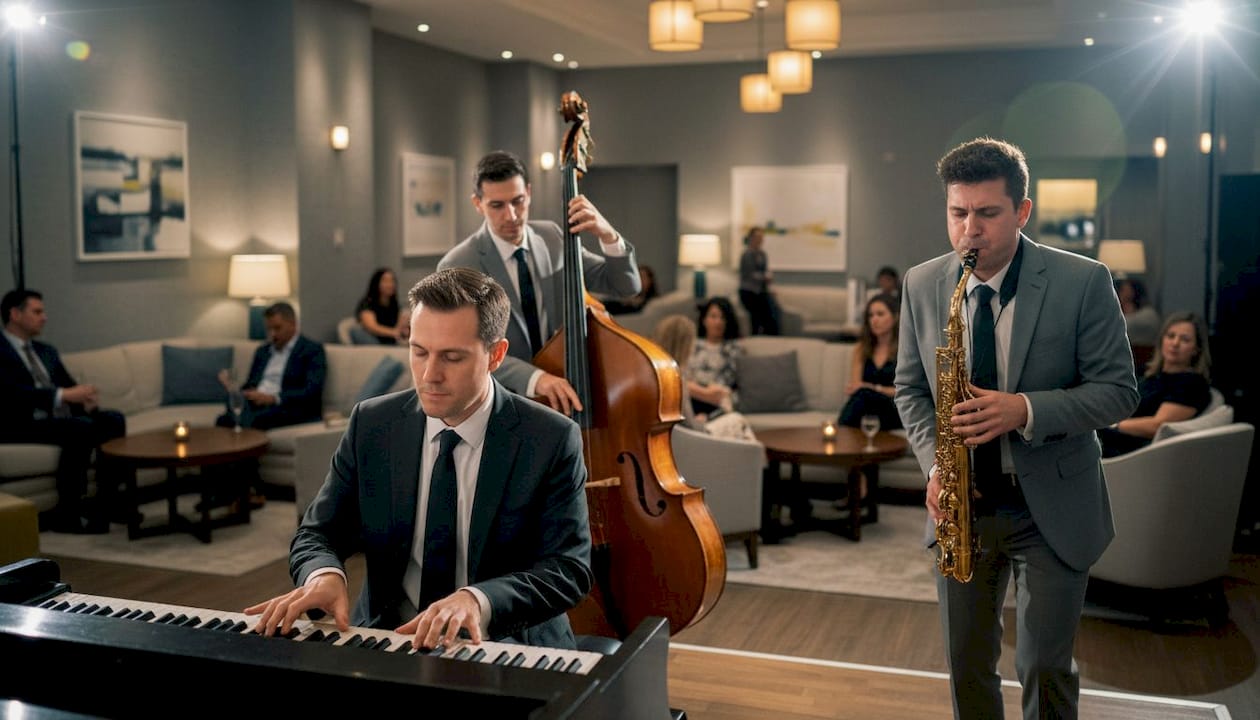
Live music elicits stronger emotional and physiological responses than recorded music. It increases group connectivity and physical synchronization among attendees. That effect is not subtle. Guests at a live performance move differently, talk more freely, and stay longer than guests listening to a playlist.
Music acts as a social lubricant and psychological regulator at corporate events. It sets the pace of conversation, signals transitions between program segments, and maintains the professional decorum that high-stakes gatherings require. When the music is right, guests feel it without noticing it. When it is wrong, everyone notices.
This social function is why 84% of event attendees prefer live music over recorded music in corporate settings. Live performance creates shared moments. A musician who reads the room and adjusts tempo or volume in real time delivers something no playlist can replicate.
Top planners now treat entertainment budget as an ROI lever, selecting music formats based on engagement potential rather than cost alone. A well-chosen performer at a leadership summit can generate more goodwill and brand recall than a keynote speaker. That is a measurable return.
Pro Tip: Brief your performer on the event’s business objective, not just the schedule. A musician who understands whether the goal is networking, celebration, or brand launch will make better real-time decisions about energy and pacing.
How to match live music format to your corporate event type
Format selection is where most planners make their most expensive mistakes. The wrong band size in the wrong room creates volume problems that kill conversation. The wrong genre at the wrong event type signals a disconnect between the brand and its guests.
85% of high-level summits use acoustic ensembles for the first 90 minutes to create an atmosphere that supports networking. That preference is not accidental. Acoustic formats keep volume at conversation level while still delivering the warmth and presence of live performance.
Common formats and when to use them
Solo pianist or acoustic duo: Best for cocktail hours, executive dinners, and VIP receptions. Volume stays low, elegance stays high, and the performer can adapt in real time. Platinumpianist specializes in exactly this format, bringing a grand piano to corporate events across Southern California.
Jazz trio or acoustic ensemble: Ideal for mid-size dinners and award ceremonies with 50–200 guests. The ensemble adds depth without overwhelming the room.
Mid-size party band (4–7 pieces): Suited for company celebrations, holiday parties, and product launches where energy and dancing are part of the program.
Full band (8+ pieces): Reserved for large ballroom galas and annual conferences with dedicated performance stages and professional AV infrastructure.
DJ-emcee combos: Work well for high-energy celebrations where audience participation and crowd interaction are primary goals.
Event type | Ideal format | Key reason |
Executive dinner (under 80 guests) | Solo pianist or acoustic duo | Keeps volume at conversation level |
Award ceremony (100–300 guests) | Jazz trio or acoustic ensemble | Adds elegance without overpowering |
Company gala (300+ guests) | Mid-size to full band | Fills large rooms and drives energy |
Product launch or brand event | Format matched to brand identity | Music signals brand personality |
Team-building event | Interactive formats or live band karaoke | Drives participation and engagement |
Matching band size and volume to venue acoustics directly improves guest experience and networking quality. A 3-piece jazz trio in a 500-person ballroom gets lost. A full band in a private dining room becomes a noise complaint.
Pro Tip: Request a venue acoustic assessment before confirming your music format. Many hotel ballrooms have hard surfaces that amplify sound unpredictably. Your performer or AV team can advise on format adjustments before contracts are signed.
For planners exploring corporate entertainment options beyond music, pairing live performance with interactive activities creates layered engagement that guests remember.
What technical and logistical factors determine live music success?
Technical failure is the most common cause of live music going wrong at corporate events. 64% of corporate event planners cite audio glitches as their primary stress source during live performances. That number reflects a planning gap, not a talent gap.
Critical technical requirements
Sound check scheduling: Build a minimum 90-minute sound check window before doors open. Rushed sound checks produce the audio problems planners dread.
AV team coordination: Coordination between musical talent and AV teams is the single most effective way to prevent audio gaps and maintain event momentum. Assign one point of contact who bridges both teams.
Stage and power requirements: Confirm stage dimensions, power outlets, and load-in access with the venue at least two weeks before the event.
Run-of-show integration: Map every music cue, transition, and volume change into the master run-of-show document. Surprises during a live event cost credibility.
Backup contingency: Identify what happens if a performer or piece of equipment fails. A professional vendor has a plan. An amateur does not.
Compliance and vendor requirements
Professional vendors provide certificates of insurance naming the venue as additionally insured. Most hotels and corporate venues require this documentation for vendor approval. Missing a COI can cancel a booking on event day. Verify this requirement with your venue at least 30 days out, and confirm your performer carries the correct coverage.
Collaboration between planners and musical talent is a documented success factor. Planners who work closely with performers before the event consistently report fewer disruptions and stronger guest responses.
How should you budget for corporate music entertainment?
Budget allocation for live music follows a consistent pattern among experienced planners. Up to 40% of total event budgets go toward entertainment. Yet less than 15% of planning time is dedicated to vetting technical and reliability aspects of that entertainment. That imbalance explains why so many expensive performances underdeliver.
Budget consideration | Guidance |
Entertainment as % of total budget | Up to 40% is standard for premium events |
Technical vetting time | Allocate at least 15% of planning hours to this |
Performer experience level | Higher fees for proven corporate experience pay off in reliability |
Production costs | Budget separately for AV, staging, and lighting |
The ROI case for quality live music is direct. Events with strong entertainment generate higher post-event satisfaction scores, stronger brand recall, and greater likelihood of repeat attendance. Viewing music as a continuous thread through the event rather than a standalone act produces a cohesive experience that guests describe as “memorable” rather than “fine.”
Balancing quality and cost means prioritizing performer reliability and technical competence over headcount. A skilled solo pianist with professional production support often delivers more impact than a large band with poor sound management.
How to book and brief live music for your corporate event
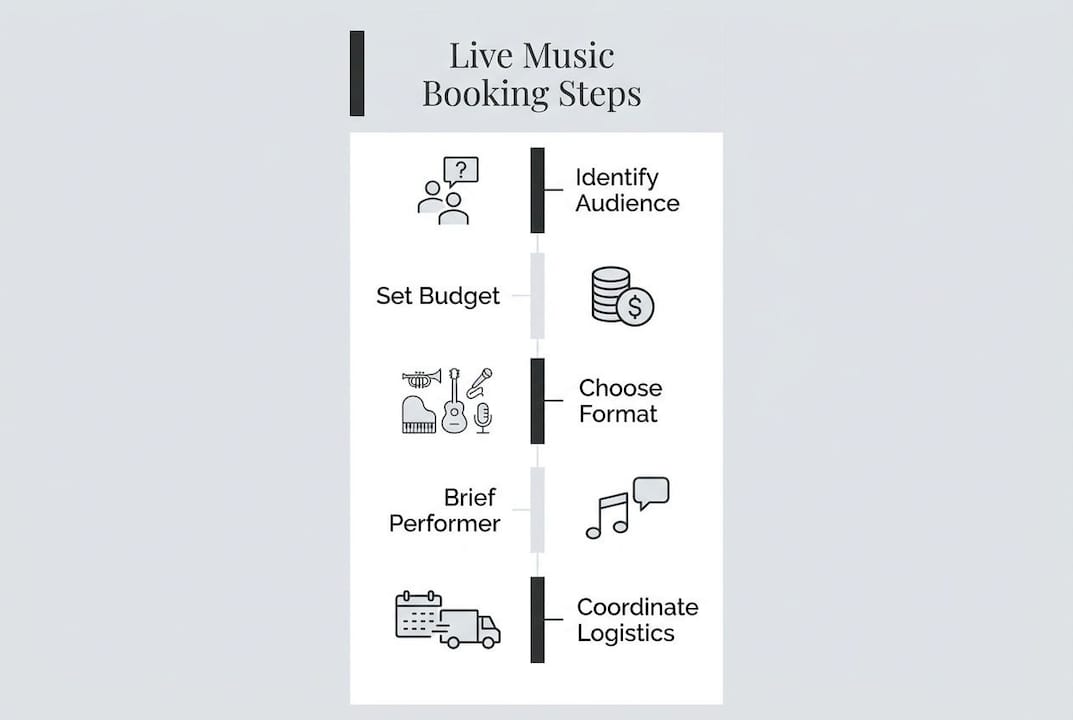
The booking process starts with your guest demographic, not your budget. Identify the age range, professional background, and cultural mix of your attendees before selecting a genre or format. A setlist built for a room of 30-year-old tech professionals differs significantly from one built for a financial services awards dinner.
Briefing your performer effectively
A thorough performer brief covers six elements:
Event purpose: Is this a celebration, a networking event, a product launch, or a leadership summit?
Guest profile: Age range, industry, cultural background, and expected energy level.
Venue specifications: Room size, acoustics, stage setup, and any volume restrictions.
Brand alignment: Colors, values, and the emotional tone the brand wants to project.
Run-of-show timing: Exact start and end times for each music set, plus transition cues.
Restrictions: Any songs, genres, or volume levels that are off-limits.
Interactive live music formats like live band karaoke transform guests from passive listeners into active participants. These formats work especially well for team-building events and company celebrations where engagement is the primary goal.
Platinumpianist offers a detailed pre-event consultation process that covers all six briefing elements. Planners working on executive-level events benefit from this level of preparation because it eliminates guesswork on event day.
Pro Tip: Request a sample setlist from your performer before signing the contract. A setlist tells you more about fit than a demo video. It shows whether the performer has done the homework on your audience.
Key Takeaways
Live music is the single most controllable factor in corporate event atmosphere, and format selection determines whether it supports or disrupts the event’s business goals.
Point | Details |
Entertainment drives satisfaction | 82% of attendees cite atmosphere as the top factor in event satisfaction. |
Format must match the room | Band size and genre should align with venue acoustics and event purpose. |
Technical vetting is underfunded | Less than 15% of planning time goes to technical vetting despite 40% budget share. |
COI compliance is non-negotiable | Verify certificates of insurance naming the venue at least 30 days before the event. |
Brief performers on business goals | Performers who understand the event’s purpose make better real-time decisions. |
What I’ve learned from watching live music make or break corporate events
The most common mistake I see planners make is booking music last. By the time the venue, catering, and AV are locked, the entertainment decision gets made under time pressure with whatever is available. That is how you end up with a band that is too loud for the room or a setlist that has nothing to do with your audience.
The second mistake is treating the performer as a vendor rather than a collaborator. The best corporate music experiences I have witnessed came from planners who shared the full event brief with their performer weeks in advance. The performer showed up knowing the brand, the guest profile, and the program flow. The music felt like it belonged there.
Live music also has a compounding effect that planners underestimate. When the music is right during the cocktail hour, guests arrive at dinner already warmed up. Conversations are easier. The room has energy. That energy carries through the program. When the music is wrong or absent, planners spend the rest of the evening trying to manufacture momentum that should have been built from the start.
My honest advice: treat your music entertainment budget the same way you treat your keynote speaker budget. Vet for experience, check references from similar events, and invest in proper production support. The return shows up in every post-event survey.
— Petra
Platinumpianist: live music built for corporate events
Platinumpianist brings professional live piano entertainment to corporate events, galas, and executive functions across Southern California. Every performance is built around a custom setlist aligned to the event’s brand, guest profile, and program flow.
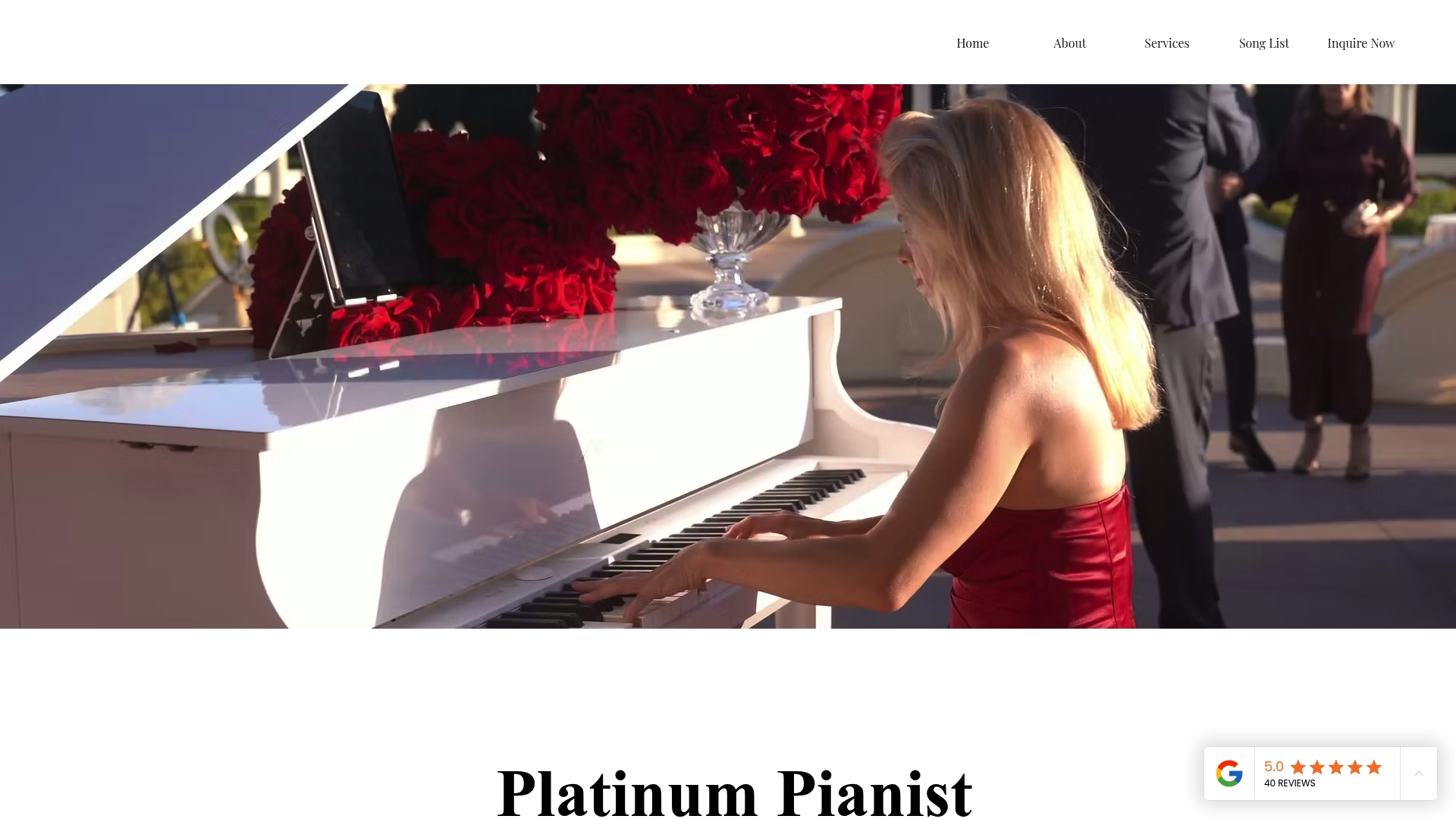
Platinumpianist arrives with her own grand piano, handles full coordination with your AV team, and carries the professional insurance documentation your venue requires. For planners seeking upscale corporate music that requires zero day-of troubleshooting, this is the standard. Luxury event planners working on brand launches, fashion shows, and galas can also explore specialized luxury entertainment options tailored to high-profile productions.
FAQ
What is corporate music entertainment?
Corporate music entertainment is professionally performed live music tailored to the goals, audience, and atmosphere of a business event. It covers formats from solo piano to full bands, all selected to support the event’s specific purpose.
How much of an event budget should go toward live music?
Up to 40% of total event budgets typically go toward entertainment at premium corporate events. Planners should also allocate separate budget for production costs including AV, staging, and lighting.
What music format works best for corporate networking events?
Acoustic ensembles and solo performers work best for networking events because they keep volume at conversation level. 85% of high-level summits use acoustic formats during the first 90 minutes for exactly this reason.
Why does live music outperform recorded music at corporate events?
Live music produces stronger emotional and physiological responses than recorded audio, increasing group connectivity and engagement. 84% of corporate event attendees prefer live music over recorded alternatives.
What should I verify before booking a live music performer?
Verify that the performer carries a certificate of insurance naming your venue as additionally insured, confirm their technical requirements match your venue’s capabilities, and request a sample setlist to assess audience fit before signing a contract.
Recommended


